Nikon ACULON A30 10×25 Binoculars: Technical Spec & Optical Analysis
The Nikon ACULON A30 10×25 represents an engineered optical compromise designed specifically for daylight distance viewing in an ultralight, pocketable dual-hinge chassis. Built around a 10x magnification factor and a 25mm objective lens configuration,…
As Amazon Associates, we earn from qualifying purchases. This means we may receive a small commission at no extra cost to you if you click through and make a purchase.
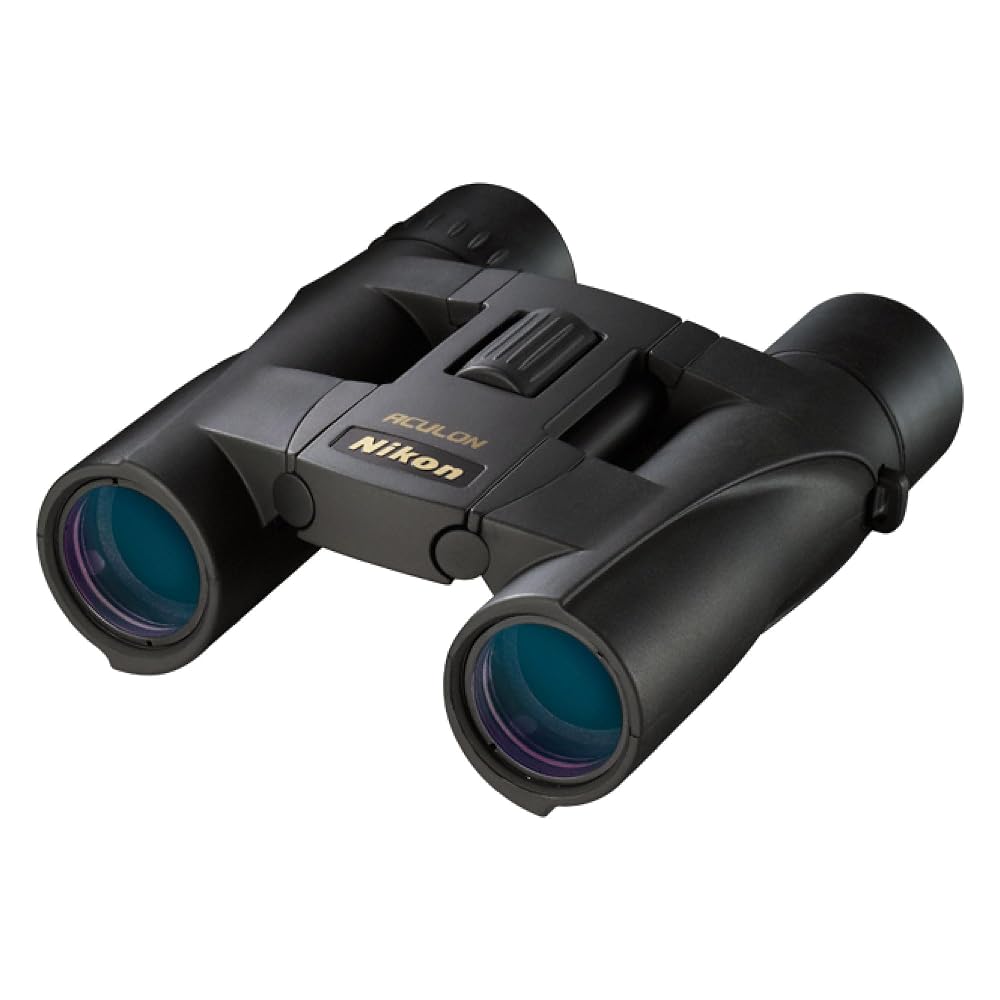
The Nikon ACULON A30 10×25 represents an engineered optical compromise designed specifically for daylight distance viewing in an ultralight, pocketable dual-hinge chassis. Built around a 10x magnification factor and a 25mm objective lens configuration, these compact roof prism binoculars deliver notable optical reach while minimizing carrying mass for backpackers, hunters, and travelers. Our technical assessment concludes that the ACULON A30 succeeds admirably as a portable scouting optic for bright conditions, though its mechanical and optical physical limits require clear operational understanding.
Outdoor observers requiring maximum reach during high-mileage backcountry excursions will appreciate how easily the dual-hinge body stows into chest pockets and daypacks without creating excess bulk. However, observers seeking dawn-to-dusk low-light performance or those who wear thick eyeglasses will find the physical constraints of a 2.5mm exit pupil and 10.6mm eye relief restrictive, making larger Porro prism alternatives such as the nikon aculon a211 a more practical choice for stationary dusk observation.
Spec sheet
Nikon ACULON A30 10×25
- Magnification
- 10x
- Objective Lens Diameter
- 25 mm
- Prism Design
- Compact Roof Prism
- Exit Pupil Diameter
- 2.5 mm
- Eye Relief
- 10.6 mm
- Apparent Angle of View
- 5.2 degrees
- Field of View
- 262 inches
- Diopter Adjustment Range
- ±5 diopters
- Lens Coating
- Multilayer-Coated Anti-Reflective Eco-Glass
- Dimensions (L x W x H)
- 4.8 x 4.5 x 1.7 inches
- Water Resistance Level
- Waterproof
Figures as published by the manufacturer on the Amazon listing.
Optical Architecture and Exit Pupil Dynamics
Evaluating the optical performance of any compact optic begins with the mechanical relationship between magnification and the objective lens aperture. The Nikon ACULON A30 pairing of a 10x magnification with a 25mm objective diameter yields an exit pupil diameter of exactly 2.5 millimeters. In daylight conditions, the human eye pupil naturally contracts to roughly 2 to 3 millimeters, meaning this optical cone aligns closely with the observer’s physiological pupil aperture during peak sun. This optical synergy delivers sharp, high-contrast imagery across open terrain, making the optic capable of resolving fine feather structures or distant trail markers with crisp edge separation.
However, the physics of a 2.5mm exit pupil inherently restricts photon throughput when ambient illumination declines. In dawn, dusk, or deep forest canopies, the human pupil dilates to 5 millimeters or wider, searching for available light. Because the beam emerging from the ACULON A30 ocular remains fixed at 2.5mm, the image visible to the observer appears noticeably dimmer than the surrounding naked-eye scenery. While Nikon incorporates multilayer anti-reflective coatings across all optical surfaces to minimize internal reflection and maximize light transmission through the roof prism cluster, no coating formula can alter the baseline geometry of a 25mm objective lens dividing light across a 10x magnification factor.
To further bolster visual contrast and color rendition without environmental hazards, Nikon constructs the internal lens array using lead- and arsenic-free Eco-Glass. This glass choice ensures uniform color balance and minimal chromatic aberration across the optical axis. For daylight glassing across open valleys, coastal ridges, and sporting venues, the optical assembly offers dependable sharpness that holds true across the sweet spot of the field, though users seeking brighter twilight visuals would need a smaller magnification ratio, like that found on the nikon aculon t02 8×21, or significantly larger glass apertures.
Form Factor, Dual-Hinge Folding, and Ergonomics
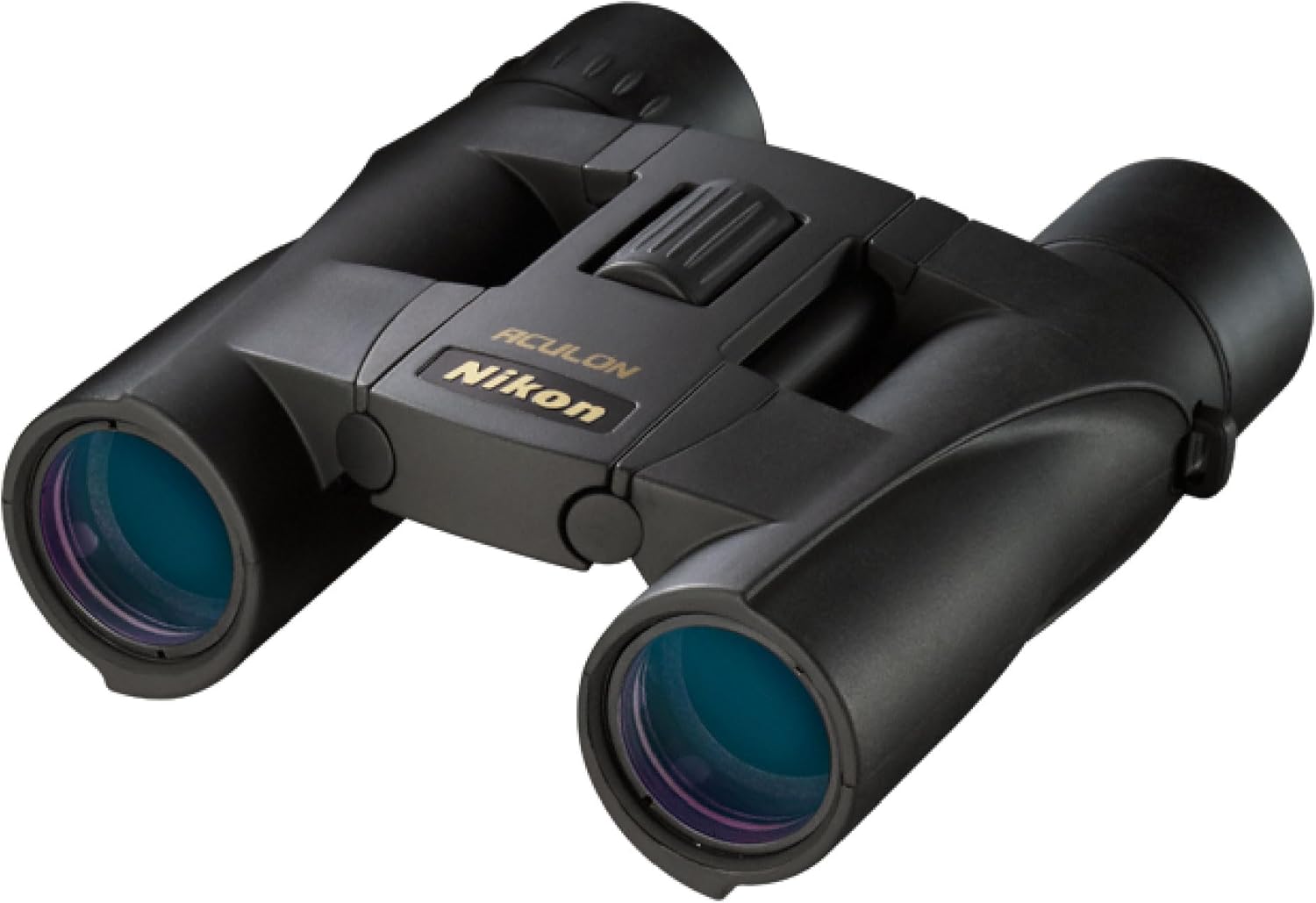
The mechanical architecture of the ACULON A30 revolves around a dual-hinge roof prism chassis. Unlike single-hinge bridges that fold inward along a single pivot point, a dual-hinge design features two parallel folding axes flanking the central optical bridge. When fully folded, the barrels tuck tightly inward beneath the central bridge, compressing the total footprint to an exceptionally slim 4.8 inches long, 4.5 inches wide, and 1.7 inches tall. This geometry enables the optic to slide smoothly into outerwear pockets, harness pouches, or tactical daypacks without creating obtrusive leverage points that catch on brush or gear straps.
Ergonomically, the chassis incorporates a durable polyester blend exterior that creates a textured, slip-resistant grip surface. During prolonged scanning sessions, the contouring aligns naturally against the palm pads and fingers, mitigating muscle tension and hand fatigue. The roof prism layout maintains a straight-line barrel orientation, which keeps the balance of the unit centered between the thumbs and index fingers. This balanced center of gravity is crucial for handheld stability, particularly because a 10x magnification optic amplifies microscopic hand tremors far more severely than an 8x or 7x equivalent.
Focal control is driven by a large, centrally positioned manual focus wheel. The mechanical travel of the center focus mechanism is calibrated to provide smooth resistance without binding, allowing micro-adjustments when tracking active wildlife across varying depth planes. The closed-bridge configuration adds structural rigidity across both optical barrels, ensuring that the dual-hinge assembly maintains accurate mechanical alignment and optical collimation over long miles of pack travel and dynamic handling.
Eye Relief and Field of View Metrics
A rigorous inspection of the Nikon ACULON A30 10×25 specs highlights two critical visual parameters: an apparent angle of view of 5.2 degrees and an eye relief measurement of 10.6 millimeters. The 5.2-degree apparent angle translates to a focused viewing window calibrated for precise target identification rather than expansive panoramic sweeps. The listing indicates a linear field of view figure of 262 inches, prioritizing pinpoint distant detail over sweeping horizon tracking. When tracking fast-moving subjects across dense brush, users must actively orient their sightline before bringing the eyecups to the face to acquire the subject quickly within the narrow sight picture.
The 10.6mm eye relief represents a deliberate mechanical trade-off intended to keep the overall prism housing as compact as physically possible. For observers who do not wear spectacles, 10.6mm offers adequate eye clearance to perceive the complete circular image plane without edge vignetting or intrusive kidney-bean shadowing. The observer’s pupil can settle naturally within the optimum focal plane of the ocular lens, taking full advantage of the multicoated field.
Conversely, eyeglass wearers will face noticeable physical limitations due to this 10.6mm eye relief. Eyeglass lenses generally introduce a mechanical barrier of 12 to 16 millimeters between the corneal surface and the binocular ocular, which prevents spectacle wearers from placing their eyes close enough to access the peripheral margins of the sight picture. Nikon mitigates this factor for non-astigmatic users by providing a generous diopter adjustment range of ±5 diopters. This extensive manual adjustment enables observers with nearsightedness or farsightedness to calibrate the right ocular to their exact prescription, permitting sharp, unencumbered naked-eye viewing without wearing glasses during observation.
Chassis Durability and Field Reliability
Nikon engineered the ACULON A30 for active outdoor use, backing its lightweight framing with certified waterproof environmental sealing. The internal roof prism channels are sealed against ambient moisture, dust, and rain, protecting delicate interior optical coatings from moisture ingress during sudden backcountry squalls or high-humidity river tracking. This level of environmental defense provides peace of mind when operating across damp mountain environments where weather transitions occur without warning.
The structural materials, pairing rigid inner housings with an outer protective polyester blend shell, provide structural defense against minor field impacts, pack compression, and rough surface contact. Because roof prism binoculars rely on tight mirror-coating alignments and precise prism positioning within internal cells, structural rigidity is critical. The closed-bridge chassis and precision-machined hinge pins of the ACULON A30 resist torsional flex, preventing optical misalignment that would otherwise cause binocular vision double imaging or eye strain during long glassing sessions.
Maintenance requirements for the ACULON A30 are minimal due to its streamlined exterior profile. The smooth surfaces around the central focus knob and hinge barrels prevent trail grit, dried mud, and plant residue from collecting in hard-to-clean crevices. The exterior glass surfaces benefit from Nikon anti-reflective coatings, which help preserve lens integrity and simplify cleaning with a standard optical microfiber cloth when outdoor dust or moisture accumulates on the objective bells.
Nikon ACULON A30 10×25 Pros and Cons
What works
- Lightweight dual-hinge pocketable roof prism design
- Multilayer-coated lead- and arsenic-free Eco-Glass
- Generous ±5 diopter adjustment range
- Durable waterproof outdoor construction
- Smooth center focus knob for precise tracking
What to weigh up
- Restricted 2.5mm exit pupil limits low-light brightness
- Short 10.6mm eye relief restricts eyeglass wearers
- Narrow 5.2-degree apparent field of view
Check Nikon ACULON A30 10×25 on Amazon
Who Should Buy the Nikon ACULON A30 10×25
Buy It If
- You prioritize extreme packability and want a dual-hinge pocket optic for daylight hiking, travel, and stadium viewing.
- You need 10x magnification reach to identify distant landmarks and wildlife in well-illuminated terrain.
- You observe without thick eyeglasses and can utilize the ±5 diopter adjustment to fine-tune your eyesight independently.
- You require a waterproof, ruggedly sealed chassis capable of handling unpredictable weather on remote outdoor trails.
Skip It If
- You conduct the majority of your wildlife glassing during dawn, dusk, or heavily shaded twilight conditions where a 2.5mm exit pupil dims the image.
- You must wear eyeglasses during observation and require 15 millimeters or more of eye relief to prevent visual field clipping.
- You need an ultra-wide panoramic field of view to scan continuously for high-speed avian targets in flight.
Final Verdict
4.6 / 5Amazon buyer rating
The Nikon ACULON A30 10×25 demonstrates how smart optical engineering can maximize reach while preserving extreme portability. By pairing a 10x magnification power with a 25mm Eco-Glass optical system and a dual-hinge roof prism frame, Nikon has created a binocular that stows away effortlessly while delivering the reach necessary for identifying distant details across open landscapes. In bright daytime environments, its multicoated optics yield sharp, contrast-rich visual clarity with accurate color rendering and dependable structural stability.
Deciding if this optic fits your kit comes down to understanding its clear operational limits. The compact 2.5mm exit pupil and modest 10.6mm eye relief are structural choices made to achieve pocketable dimensions, meaning twilight hunters and spectacle wearers should look toward larger full-size platforms. For weight-conscious hikers, backpackers, and daylight observers who require robust magnification without carrying pack weight, the ACULON A30 delivers an exceptional combination of mechanical durability, optical precision, and pocket-friendly utility.
FAQ
What are the primary specifications of the Nikon ACULON A30 10×25?
The Nikon ACULON A30 10×25 features a 10x magnification factor, a 25mm objective lens diameter, a compact roof prism design, and a 2.5mm exit pupil diameter. It provides an apparent angle of view of 5.2 degrees, a field of view of 262 inches, 10.6mm of eye relief, and a ±5 diopter adjustment range. The chassis measures 4.8 inches long by 4.5 inches wide by 1.7 inches high and features waterproof protection with multilayer anti-reflective coated Eco-Glass lenses.
How does the 2.5mm exit pupil perform in low-light environments?
The 2.5mm exit pupil is calculated by dividing the 25mm objective diameter by the 10x magnification. In daylight, this 2.5mm light cone matches the contracted human pupil, delivering bright, sharp images. In low-light conditions such as dusk, dawn, or thick tree cover, human pupils dilate up to 5mm to 7mm, causing the 2.5mm light cone from the binocular to appear significantly dimmer than the ambient naked-eye environment.
Can you comfortably use the Nikon ACULON A30 10×25 while wearing eyeglasses?
Because the ACULON A30 has an eye relief of 10.6 millimeters, observers wearing thick eyeglasses may experience peripheral field cut-off or vignetting. However, for users with standard near- or farsightedness who do not require astigmatism correction in the field, the built-in ±5 diopter adjustment range allows sharp, naked-eye viewing without keeping eyeglasses on during observation.
Is the Nikon ACULON A30 10×25 waterproof?
Yes, according to the manufacturer specifications, the Nikon ACULON A30 10×25 features a waterproof construction level. Its sealed internal roof prism housing protects delicate internal optics and anti-reflective lens coatings from water intrusion, moisture, and inclement weather during outdoor use.
What advantage does the dual-hinge design offer for travel and hiking?
The dual-hinge design incorporates two folding axes alongside the central bridge rather than a single pivot point. This enables the optical barrels to fold inward tightly against each other, drastically reducing the width and profile of the binocular down to a pocketable 4.8 x 4.5 x 1.7-inch footprint that fits cleanly into jacket pockets and compact backpack compartments.
See this listing on Amazon We may earn a commission if you buy through this link.
More in Optics & Outdoors


The weekly shortlist
Specs worth reading, once a week
New teardowns, spec sheets and buying notes from across the desk.
This demo form is not connected to a mailing service.