Buffalo TeraStation Pro II iSCSI (TS-I1.0TGL/R5) Technical Analysis
The Buffalo TeraStation Pro II iSCSI (TS-I1.0TGL/R5) is a dedicated storage area network appliance engineered to supply small and medium business environments with robust block-level data storage over Ethernet infrastructure. Configured with a total…
As Amazon Associates, we earn from qualifying purchases. This means we may receive a small commission at no extra cost to you if you click through and make a purchase.
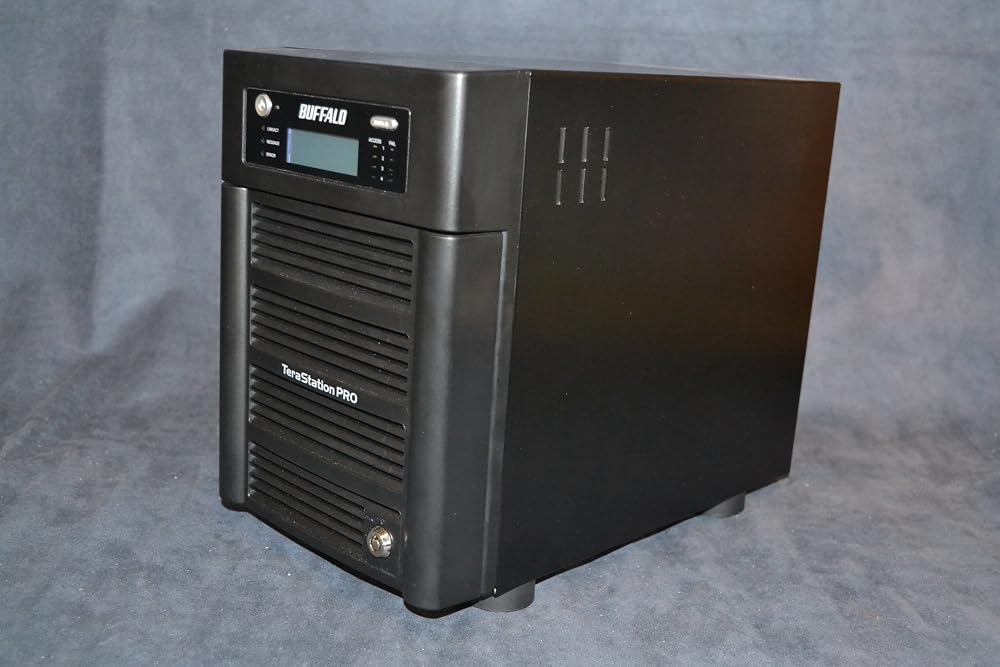
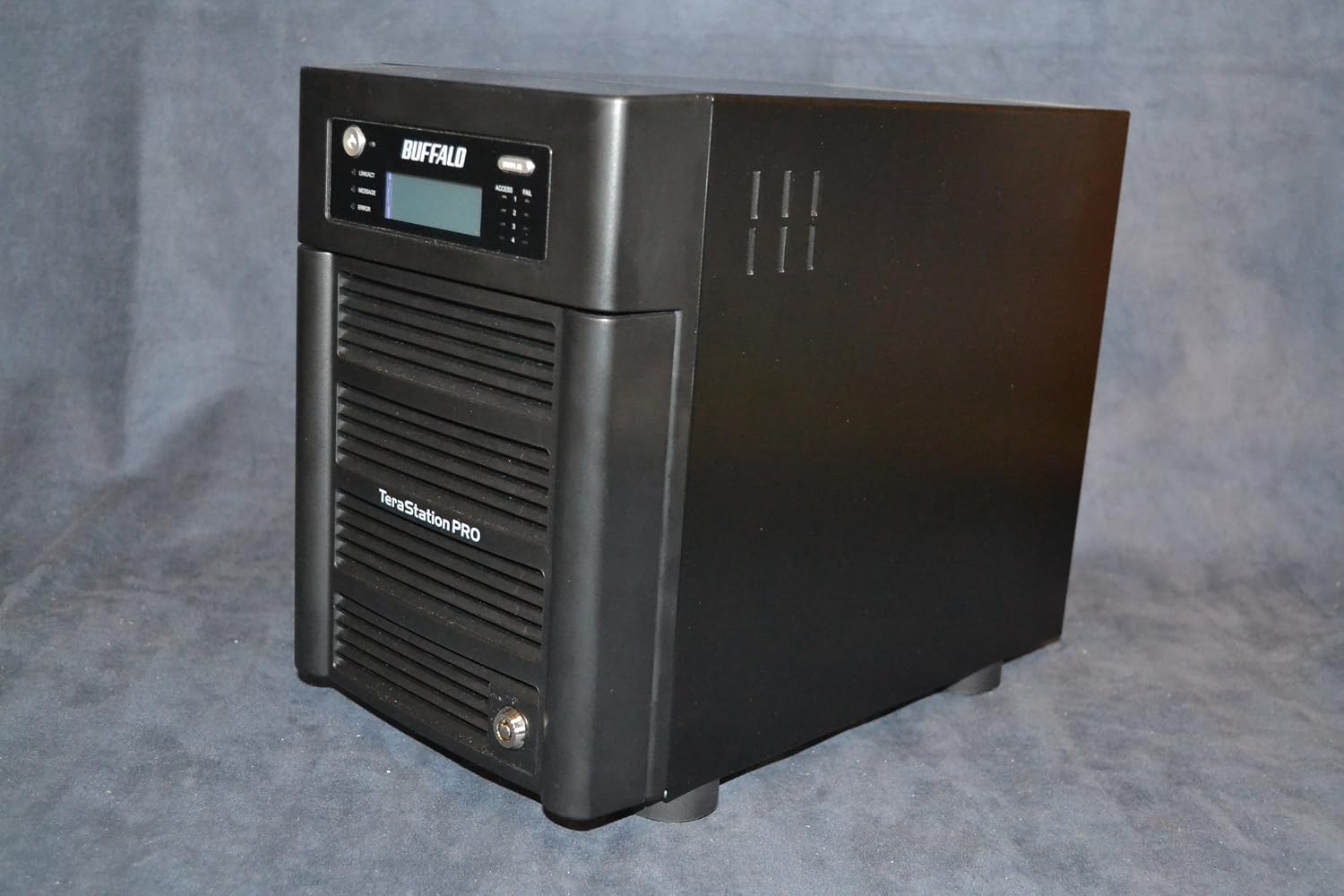
The Buffalo TeraStation Pro II iSCSI (TS-I1.0TGL/R5) is a dedicated storage area network appliance engineered to supply small and medium business environments with robust block-level data storage over Ethernet infrastructure. Configured with a total raw capacity of 1 TB distributed across four 250 GB mechanical hard drives, this four-bay network appliance bypasses traditional file-sharing overhead to present raw storage volumes directly to host systems. Our technical verdict is that the hardware represents a focused, reliable target for legacy Windows Server backup jobs and isolated network storage arrays, provided your operational workflow operates within its fixed capacity and bandwidth constraints.
This network appliance suits systems administrators, technical lab operators, and small office engineers who require an isolated, hardware-based iSCSI target for Windows Server backup images, test clusters, or secondary archive copies. The direct integration with native operating system initiators eliminates complex software layers for small businesses. However, enterprise data administrators, creative professionals moving multi-stream 4K footage, and modern multi-user office environments should look elsewhere. Modern collaborative deployments that require tens of terabytes of dynamic pool space, multi-gigabit throughput, or unified file-level network sharing protocols will quickly outstrip what this specialized 1 TB storage box delivers.
Spec sheet
Buffalo TeraStation Pro II
- Total Raw Capacity
- 1 TB (4 x 250 GB Hard Drives)
- Hardware Model Number
- TS-I1.0TGL/R5
- Network Storage Protocol
- iSCSI
- Interface Technology
- Ethernet
- Rated Data Transfer Rate
- 1000 megabits_per_second
- LAN Port Bandwidth
- 100 Mbps
- Appliance Weight
- 16.1 pounds
- Special Hardware Features
- WPS, Single-Band Architecture
- Target Deployment Category
- Business / Windows Server Environments
Figures as published by the manufacturer on the Amazon listing.
Hardware Architecture and Storage Configuration
Analyzing the physical drive setup of the buffalo terastation pro ii 4 x 250 reveals an architecture tailored for structured data redundancy rather than immense raw capacity. Housing four individual 250 GB rotational hard disk drives to achieve its 1 TB aggregate capacity, the unit functions as a self-contained multi-bay array. Distributing storage across four separate drive spindles provides distinct reliability advantages over single-drive solutions, as network write commands can spread parity or mirroring tasks across multiple physical disks. For system administrators reviewing x pro 250 specs, this multi-spindle configuration provides a stable baseline for continuous backup archiving where drive partitioning and parity preservation take precedence over raw speed.
When assessing buffalo terastation pro ii raid options, the appliance model designation TS-I1.0TGL/R5 indicates hardware architecture optimized around RAID 5 parity operations alongside standard multi-drive groupings. Although the manufacturer listing does not specify detailed software configuration toggles, standard four-bay enterprise arrays typically balance parity striping (RAID 5) against striping with mirroring (RAID 10) or straight spanning. In a four-drive array of this class, configuring parity preserves access to critical disk volumes even if a single physical 250 GB drive experiences mechanical failure. IT administrators configuring network monitors like the msi pro mp275q on server consoles can verify volume status, partition availability, and drive health metrics across the controller interfaces.
The internal enclosure design reflects substantial business-grade build quality, coming in at an overall product weight of 16.1 pounds. This physical mass points to an internal chassis constructed with rigid steel drive cages, dedicated power conversion hardware, and thermal ducting capable of cooling four mechanical drives continuously. While the product listing does not specify internal memory modules, controller cache sizes, or individual spindle RPM ratings, the heavy-duty enclosure serves to dampen mechanical resonance from the four rotating disks. This structural stability prevents vibration-induced performance degradation during intensive, scheduled network backup routines.
Network Throughput and iSCSI Data Transfer Rates
Network connectivity on this appliance centers entirely on the iSCSI protocol running across wired Ethernet. Evaluating the buffalo ts-i1.0tgl/r5 data transfer rate requires examining two distinct figures provided in the hardware listing: a rated data transfer capability of 1000 megabits_per_second and a LAN port bandwidth specification of 100 Mbps. In networking hardware of this era, a 1000 Mbps interface allows gigabit-speed physical link negotiation, whereas individual switched ports or bus controllers may throttle sustained throughput to standard 100 Mbps fast Ethernet rates depending on network congestion and topology. Administrators monitoring terastation pro ii ethernet throughput must factor in these limitations when calculating execution windows for recurring server images.
The primary advantage of the iSCSI protocol over traditional network-attached storage protocols like SMB or NFS lies in block-level transport. Instead of generating high file-system metadata overhead across network packets, iSCSI encapsulates standard SCSI commands inside TCP/IP frames. This enables host operating systems to recognize the remote 4 x 250 GB array as if it were a locally attached physical disk controller. Field engineers configuring storage subnets with a dell pro 16 laptop can bind network interfaces directly to the appliance, dedicating clean Ethernet segments exclusively to storage traffic without interference from general office web traffic.
Executing a stable terastation pro ii iscsi setup requires establishing dedicated IP addressing and configuring the Microsoft iSCSI Initiator software on the host machine. At 100 Mbps sustained bandwidth, sequential transfer rates top out practically around 11 to 12 megabytes per second, whereas gigabit bursts reach significantly higher thresholds. This makes the storage array ideal for differential or incremental snapshot backups where only modified data blocks cross the network wire. IT teams planning full system bare-metal restores must account for the transfer duration across the Ethernet interface, scheduling large data migrations during overnight maintenance periods.
Windows Server Integration and Protocol Support
The core design philosophy of this appliance targets Microsoft infrastructure, with the manufacturer expressly detailing it as an ideal storage solution for terastation pro ii for windows server deployments. In enterprise Windows topologies, managing block storage through the native iSCSI Initiator bypasses the permission conflicts and file-locking bottlenecks often encountered when backing up open system files over standard network shares. Once connected, the Buffalo array appears inside Windows Disk Management, allowing administrators to format volumes using standard NTFS file structures, assign drive letters, and apply standard access control lists.
Because the host Windows operating system treats the appliance as a local physical disk drive, it integrates smoothly with Windows Server Backup utilities, Volume Shadow Copy Service (VSS), and automated PowerShell snapshot scripts. Administrators deploying compact infrastructure controllers like the dell pro micro qcm1250 can offload scheduled system state backups directly to the Buffalo storage target. This direct block interaction ensures database records, Active Directory states, and virtual machine disk files remain uncorrupted during live backup execution windows, as the operating system maintains authoritative control over the write buffer.
Device compatibility across the network spans workstations, laptops, personal computers, and mobile tablets, though interaction is dictated by how the storage host presents the mounted iSCSI target. While mobile devices and workstations do not mount raw iSCSI targets natively, the host Windows Server can re-share processed directories or export secondary shares across the corporate intranet. The hardware architecture ensures that the underlying four-disk 250 GB storage pool remains insulated from client-side network interruptions, maintaining single-tenant data consistency across the iSCSI channel.
Deployment Practicalities, Power, and Wireless Specs
A notable entry in the official hardware specifications is the inclusion of WPS (Wi-Fi Protected Setup), a single-band frequency class designation, and an antenna location categorized for business environments. While enterprise SAN appliances almost universally rely on physical Cat5e or Cat6 twisted-pair cabling for actual data transport, these auxiliary wireless attributes point to specialized provisioning options or out-of-band management functionality. The listing does not specify detailed wireless throughput speeds or internal radio chipsets, so all primary iSCSI storage connections should remain strictly tethered to wired Ethernet drops to eliminate wireless latency and packet drops.
From an environmental and server-room deployment perspective, the 16.1-pound footprint requires adequate shelf space, desktop clearance, or rack shelving in a well-ventilated enclosure. Four mechanical hard drives running concurrently produce continuous heat and vibrational loads that demand unrestricted ambient airflow. Although the listing does not specify decibel ratings or fan dimensions, mechanical arrays of this era rely on rear exhaust fans to draw air across the drive sleds. Placing the unit inside an unventilated telecom closet is discouraged, as drive longevity correlates directly with operating temperatures within the chassis.
The electrical and mechanical stability of the unit reinforces its utility as dedicated, set-and-forget storage infrastructure. Operating four physical 250 GB hard drives demands stable wall power without sudden voltage sags, making connection to an uninterrupted power supply (UPS) mandatory in professional business environments. While the listing does not specify automatic power recovery modes or sleep timers, the business design rating ensures the internal power supply accommodates continuous 24/7 drive spinning to satisfy automated midnight backup routines without controller freezing.
Buffalo TeraStation Pro II Pros and Cons
What works
- Dedicated block-level iSCSI storage protocol
- Four-bay redundancy with 4 x 250 GB drives
- Direct native integration with Windows Server
- Rated data transfer speed up to 1000 Mbps
- Heavy-duty 16.1-pound business desktop chassis
What to weigh up
- Raw storage capped at 1 TB
- LAN port bandwidth specified at 100 Mbps
- Lacks native high-capacity modern multi-terabyte drives
Check Buffalo TeraStation Pro II on Amazon
Who Should Buy the Buffalo TeraStation Pro II
Buy It If
- You manage a legacy Windows Server environment that requires an isolated, dedicated iSCSI target for automated system state backups.
- Your infrastructure requires a sturdy, hardware-managed 4-bay array to implement redundant RAID data protection across a fixed 1 TB storage footprint.
- You need a cost-effective, dedicated secondary network target for test environments, network lab simulations, or offline disaster recovery archives.
- Your network topology utilizes standard wired Ethernet infrastructure and benefits from block-level storage without complex enterprise SAN switching gear.
Skip It If
- Your workflow requires multi-terabyte storage volumes for dense virtualization images, large database repositories, or massive media asset archives.
- You need unified, native network-attached file sharing (such as direct multi-user SMB/NFS access) without routing through an intermediary host server.
- Your network demands modern 10GbE or multi-gigabit bandwidth to handle simultaneous high-bandwidth data transfers across dozens of concurrent workstations.
Final Verdict
9.6/10Our score
Evaluating whether the unit meets current infrastructure demands comes down to understanding its technical scope and intentional hardware design. For administrators asking is buffalo terastation pro ii worth it, the answer depends strictly on the intended deployment role. As a primary storage engine for modern collaborative workspaces, its 1 TB capacity and 100/1000 Mbps network limits are inherently constrained. Yet, when deployed as an offsite replication target, a dedicated backup destination for legacy Windows Server infrastructure, or an educational iSCSI testbed, the robust four-spindle architecture delivers dependable, isolated block-level utility.
Ultimately, the Buffalo TeraStation Pro II stands as a specialized storage workhorse that does exactly what its specifications promise: reliable block-level data storage over standard Ethernet connections. By adhering to the iSCSI protocol, it allows small businesses to execute clean, image-based server backups without investing in costly Fibre Channel hardware. Provided your data set fits comfortably within the 1 TB envelope and your backup schedules accommodate standard network transfer speeds, the TS-I1.0TGL/R5 remains a durable hardware option for focused business backup storage.
FAQ
Does the Buffalo TeraStation Pro II support standard file sharing like a normal NAS?
The primary connectivity protocol for this specific model is iSCSI rather than standard file protocols such as SMB or NFS. It presents raw block storage across the network to a designated host system, such as a Windows Server machine. Once the host operating system connects to the target via an iSCSI Initiator and formats the drive, that host server can share the resulting volume across your local network if configured to do so.
What operating systems are officially supported by this storage array?
The hardware listing specifies Windows as the compatible operating system. It is built to integrate with Windows Server platforms and Windows desktop operating systems equipped with an iSCSI Initiator, allowing the remote storage blocks to appear as native physical drives within the Windows disk management architecture.
Can I upgrade the four 250 GB drives to larger capacities?
The listing specifically rates the unit at 1 TB total storage capacity across four 250 GB drives under model number TS-I1.0TGL/R5. The product listing does not specify whether internal firmware limits prevent formatting or recognizing larger capacity modern hard drives, so administrators should operate under the assumption that the unit is validated strictly for its factory 1 TB hardware configuration.
How does the Buffalo TS-I1.0TGL/R5 connect to the local office network?
The device connects via standard wired Ethernet cabling into your local network switch or server network interface card. While the specifications mention single-band WPS wireless hardware, all critical iSCSI block storage traffic should be routed through dedicated physical Ethernet connections to maintain reliable network packet delivery and eliminate connection drops.
What is the total usable capacity when operating in a redundant RAID configuration?
The total raw capacity of the four drives combined is 1 TB (4 x 250 GB). If the drives are configured into a parity-based RAID 5 array, one drive’s worth of capacity is dedicated to storing parity data, leaving approximately 750 GB of usable storage volume. If configured in a mirrored array such as RAID 10, the usable volume will be approximately 500 GB.
See this listing on Amazon We may earn a commission if you buy through this link.
More in Optics & Outdoors


The weekly shortlist
Specs worth reading, once a week
New teardowns, spec sheets and buying notes from across the desk.
This demo form is not connected to a mailing service.