Intel Core i9-10900K Deep Dive: Architecture, Clocks, and Chipset Limits
The Intel Core i9-10900K represents the pinnacle of the 14-nanometer refinement era for desktop computing, delivering ten physical cores and twenty threads clocked at unprecedented peak frequencies out of the box. Designed as the…
As Amazon Associates, we earn from qualifying purchases. This means we may receive a small commission at no extra cost to you if you click through and make a purchase.
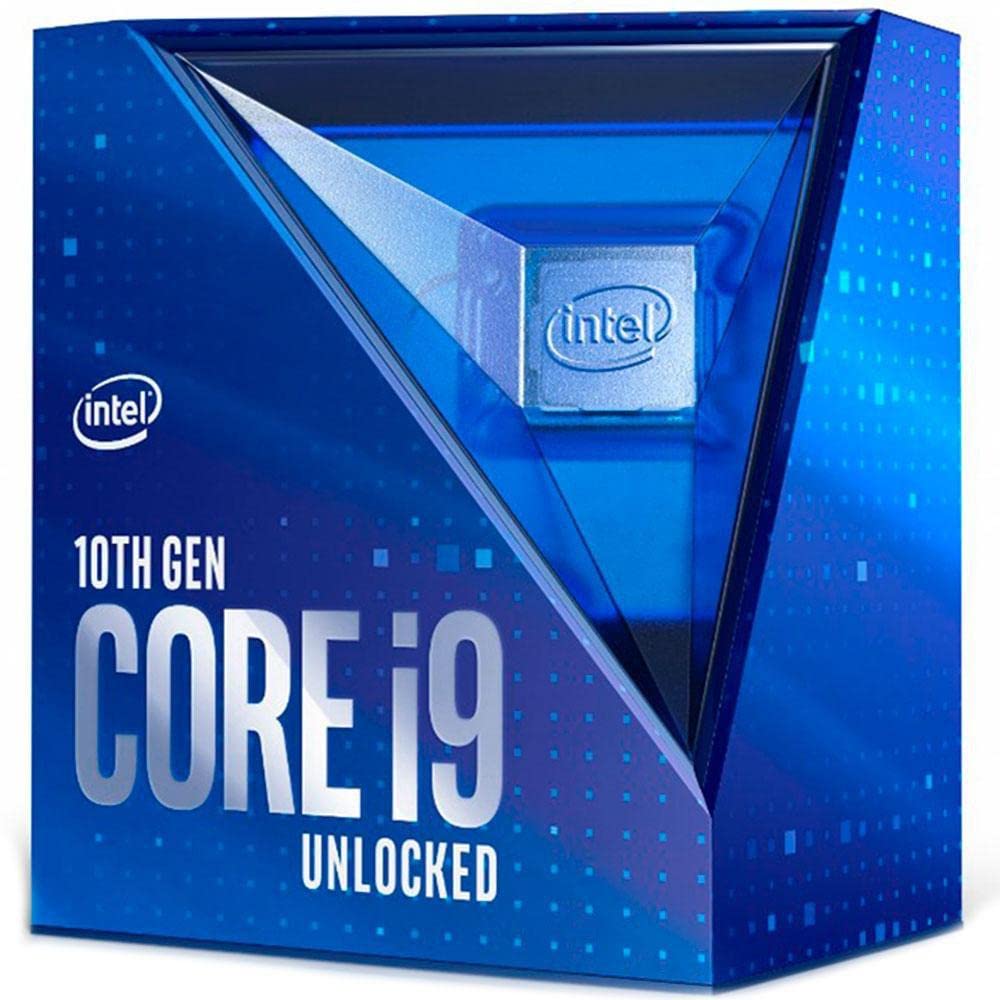
The Intel Core i9-10900K represents the pinnacle of the 14-nanometer refinement era for desktop computing, delivering ten physical cores and twenty threads clocked at unprecedented peak frequencies out of the box. Designed as the flagship entry for the LGA 1200 desktop platform, this processor is engineered to extract the highest possible frame rates in latency-sensitive applications while supplying ample thread parallelism for heavy computational tasks. Our comprehensive specification analysis indicates that this processor remains an exceptionally capable compute engine for enthusiasts who operate within supported platforms, balancing high clock ceilings with robust multi-threaded throughput.
This unlocked desktop component is ideally matched for hardware enthusiasts, competitive gamers, and workstation users who currently possess a compatible 400-series motherboard and demand maximum single-threaded velocity alongside dense core counts. Conversely, system integrators planning a brand-new build from the ground up or those who lack high-end thermal dissipation solutions should look toward newer architectural ecosystems like the intel core i9-13900k before committing to this hardware platform.

Spec sheet
Intel Core i9-10900K
- Processor Model
- BX8070110900K
- Physical Core Count
- 10 Cores
- Concurrent Thread Count
- 20 Threads
- Base Operating Frequency
- 3.7 GHz
- Maximum Turbo Frequency
- Up to 5.3 GHz
- Secondary / Installed Cache
- 20 MB
- Thermal Design Power (TDP)
- 125 Watts
- Socket Designation
- LGA 1200
- Motherboard Compatibility
- Intel 400 Series Chipset Based Motherboards
- Bundled Cooling Solution
- None (Thermal Solution Not Included)
Figures as published by the manufacturer on the Amazon listing.
Single-Core Frequencies and Gaming Performance
When assessing the Intel Core i9-10900K gaming performance, the primary driving metric is raw execution speed per core. Operating with a robust 3.7 GHz base clock, the chip leverages Intel Turbo Boost Max Technology 3.0 to identify the best-performing physical cores on the die, driving individual core workloads up to an unlocked 5.3 GHz. In gaming environments where the primary rendering loop is constrained by single-thread latency, this aggressive frequency scaling eliminates frame presentation bottlenecks, ensuring high sustained frame rates and consistent frame pacing across modern gaming titles.
The aggressive i9-10900k clock speed profile provides an advantage in esports and simulation engines that demand immediate instruction dispatch. Because modern game logic, draw calls, and physics engines frequently favor frequency over sheer core saturation, having ten cores capable of bursting beyond 5.0 GHz provides a remarkably smooth gaming experience. While newer middle-tier processors like the intel core i5-13600k desktop processor 14 introduce different core architectures, the monolithic die design of the 10900K guarantees uniform core-to-core latency without inter-die communication penalties.
Additionally, the 20 MB secondary cache plays a pivotal role in maintaining gaming fluidity. High-speed cache buffers reduce the frequency of round trips to system memory, feeding the instruction pipeline efficiently during demanding physics calculations and large multiplayer server updates. The listing indicates support for Intel Optane Memory, which can further accelerate disk retrieval operations, preventing storage bottlenecks from intruding upon active simulation pipelines.
Ten-Core Architecture and Creator Workflows
For demanding workstation tasks, the Intel Core i9-10900K 10 core configuration provides twenty concurrent processing threads via Intel Hyper-Threading. This architectural layout ensures substantial parallel processing capacity for intensive digital content creation tasks such as multi-pass 3D rendering, video encoding, real-time audio compilation, and large software development builds. The presence of twenty logical processors allows system schedulers to assign background OS tasks without degrading foreground rendering loops.
Evaluating the Intel Core i9-10900K for creators highlights its utility in production suites that thrive on high-frequency symmetric multiprocessing. Video timeline manipulation, raw file scrubbing, and audio sampling benefit from the high baseline clock speed, while exporting high-resolution media takes full advantage of all twenty threads. Although specialized chips like the intel core i7-13700k gaming desktop processor 16 cores provide alternative hybrid configurations, the symmetrical nature of the ten identical performance cores in this model simplifies CPU affinity management in legacy workstation software.
The shared 20 MB cache memory installed on the package ensures that multi-threaded media pipelines maintain fast access to shared data buffers. When performing complex video composition or running simultaneous virtual machines on the Windows 10 platform, the generous cache allocation keeps compute cores fed, preventing pipeline starvation and maximizing throughput across all active threads.
Power Draw, Wattage, and Thermal Demands
Understanding the i9-10900k power consumption 125W rating requires looking closely at enthusiast thermal dynamics. The 125-watt figure represents the baseline thermal design power at nominal operating frequencies. Under sustained heavy computational loads or when pushing all ten cores toward peak turbo thresholds, the processor draws substantial electrical current, transforming electrical energy into localized heat that must be moved away from the integrated heat spreader immediately.
A critical specification detail from the product listing is that a thermal solution is not included in the box. Intel Core i9-10900K overclocking and sustained boost operations necessitate an elite aftermarket cooling solution, such as a large dual-tower air cooler or an advanced liquid cooling radiator. Attempting to cool a high-frequency ten-core processor with entry-level hardware will result in thermal throttling, causing the clock frequencies to drop below their potential maximums under full system load.
Power delivery from the motherboard is equally crucial. Builders must ensure their power supply unit has sufficient continuous capacity on the 12-volt rail to feed the CPU auxiliary power connectors. Robust motherboard voltage regulator modules with adequate surface area heatsinks are mandatory to prevent motherboard VRM thermal saturation during extended rendering sessions or extensive benchmarking runs.
Socket LGA 1200 and Chipset Compatibility
A central technical consideration for prospective buyers is the Intel Core i9-10900K motherboard compatibility. The listing explicitly states that this unlocked desktop processor uses the LGA 1200 socket and is only compatible with Intel 400 series chipset based motherboards. Builders cannot install this processor in older LGA 1151 sockets or disparate platform layouts, as the pin count, mechanical socket indexing, and power pin assignments differ completely.
The Intel Core i9-10900K LGA 1200 platform was built specifically to handle higher current loads and expanded I/O capabilities for 10th Gen desktop silicon. The mechanical design of the LGA 1200 socket features twelve hundred surface land pads that match the processor underside precisely, providing dedicated contacts for system memory channels, power delivery planes, and PCIe lanes. When pairing this chip with a 400 series motherboard, builders should prioritize boards equipped with multi-phase digital VRMs, substantial copper grounding, and thick heat pipes.
Ensuring system stability on the 400 series platform also involves verifying motherboard firmware revisions. While 400 series boards natively support this processor generation, updating to the latest vendor BIOS guarantees refined memory timing profiles, optimized thermal threshold management, and full deployment of Intel Turbo Boost Max Technology 3.0 algorithms across all operational scenarios.
Platform Features and Comprehensive Specifications
Analyzing the comprehensive Intel Core i9-10900K specs reveals an enthusiast-grade feature set tailored for custom tuning. The processor ships with an unlocked multiplier, providing enthusiasts the technical freedom to manually adjust core ratios, core voltages, and load-line calibration profiles in the system BIOS. This makes the processor a premier candidate for hardware enthusiasts aiming to extract maximum clocks from a refined monolithic architecture.
Beyond the core compute blocks, the processor package measures 6.1 inches by 5.24 inches in overall packaging dimensions, under model number BX8070110900K. The silicon die integrates high-speed interconnects that link the ten physical cores, the 20 MB shared cache, and the dual-channel memory controller. Support for Intel Optane Memory provides storage caching flexibility, bridging the performance gap between mechanical drives or conventional solid-state media and high-speed memory subsystems.
Operating system support is validated for Windows 10, ensuring that hardware scheduler calls match the execution resources of the ten physical cores. Because the silicon utilizes a uniform core topology without asymmetric core types, operating system thread scheduling is entirely straightforward, directing high-priority threads to the designated preferred cores enabled by Intel Turbo Boost Max Technology 3.0 without requiring complex thread director logic.
Intel Core i9-10900K Pros and Cons
What works
- Ten cores and twenty concurrent processing threads
- Peak unlocked clock speed up to 5.3 GHz
- Intel Turbo Boost Max Technology 3.0 support
- Installed 20 MB secondary cache memory
- Intel Optane Memory technology support
What to weigh up
- Thermal solution not included in the box
- Compatible only with 400 series chipset motherboards
- High baseline power rating of 125 watts
Check Intel Core i9-10900K on Amazon
Who Should Buy the Intel Core i9-10900K
Buy It If
- You own an existing Intel 400 series chipset motherboard and want the fastest multi-core processor available for your socket.
- You prioritize high clock speeds up to 5.3 GHz for competitive gaming engines that rely heavily on single-core instruction speed.
- You run multi-threaded creator workloads requiring ten physical cores and twenty logical threads on a uniform, monolithic architecture.
- You plan to implement custom liquid cooling and manual overclocking profiles using an unlocked CPU multiplier.
Skip It If
- You are assembling a completely new computer build from scratch without existing 400-series platform hardware.
- You do not have an existing high-end aftermarket CPU cooler, as no cooling fan or heatsink is provided in the package.
- Your existing motherboard uses an older socket such as LGA 1151, which is mechanically and electrically incompatible.
Final Verdict
4.7 / 5Amazon buyer rating
When asking is Intel Core i9-10900K worth it, the evaluation depends heavily on platform context and user infrastructure. As the definitive flagship for the Intel 400 series ecosystem, this processor represents the ultimate performance upgrade for users already invested in an LGA 1200 motherboard. Its capability to deliver up to 5.3 GHz clock speeds alongside ten physical cores and twenty threads allows it to maintain exceptional frame rates in modern titles and complete demanding rendering queues with reliable efficiency.
However, the performance of this processor requires significant accompanying hardware. With a 125-watt base power rating, strict requirement for a compatible 400-series motherboard, and no bundled thermal solution, realizing the full potential of this silicon demands robust system components, adequate power reserves, and premium thermal management. For users with the proper hardware foundation, the Intel Core i9-10900K stands as a formidable desktop engine.
FAQ
Does the Intel Core i9-10900K include a cooling fan in the box?
No, the product listing explicitly confirms that a thermal solution is not included in the box. Buyers must purchase an aftermarket cooling solution capable of dissipating substantial heat under heavy multi-threaded workloads.
What socket is required to install the Intel Core i9-10900K?
The processor requires an LGA 1200 socket and is specifically compatible with Intel 400 series chipset based motherboards. It cannot be installed on older LGA 1151 sockets.
What is the maximum clock speed of this processor?
The processor features a base clock speed of 3.7 GHz and can reach turbo boost frequencies of up to 5.3 GHz unlocked using Intel Turbo Boost Max Technology 3.0.
How many cores and threads does the Intel Core i9-10900K feature?
The processor features 10 physical cores and 20 concurrent threads, supported by 20 MB of installed secondary cache memory.
Does this processor support overclocking?
Yes, this is an unlocked desktop processor with an unlocked multiplier, allowing builders with compatible motherboards and thermal solutions to adjust operating parameters for added performance.
See this listing on Amazon We may earn a commission if you buy through this link.
More in PC Components & Storage


The weekly shortlist
Specs worth reading, once a week
New teardowns, spec sheets and buying notes from across the desk.
This demo form is not connected to a mailing service.