Celestron Advanced VX 6-Inch Refractor: In-Depth Mount and Optical Analysis
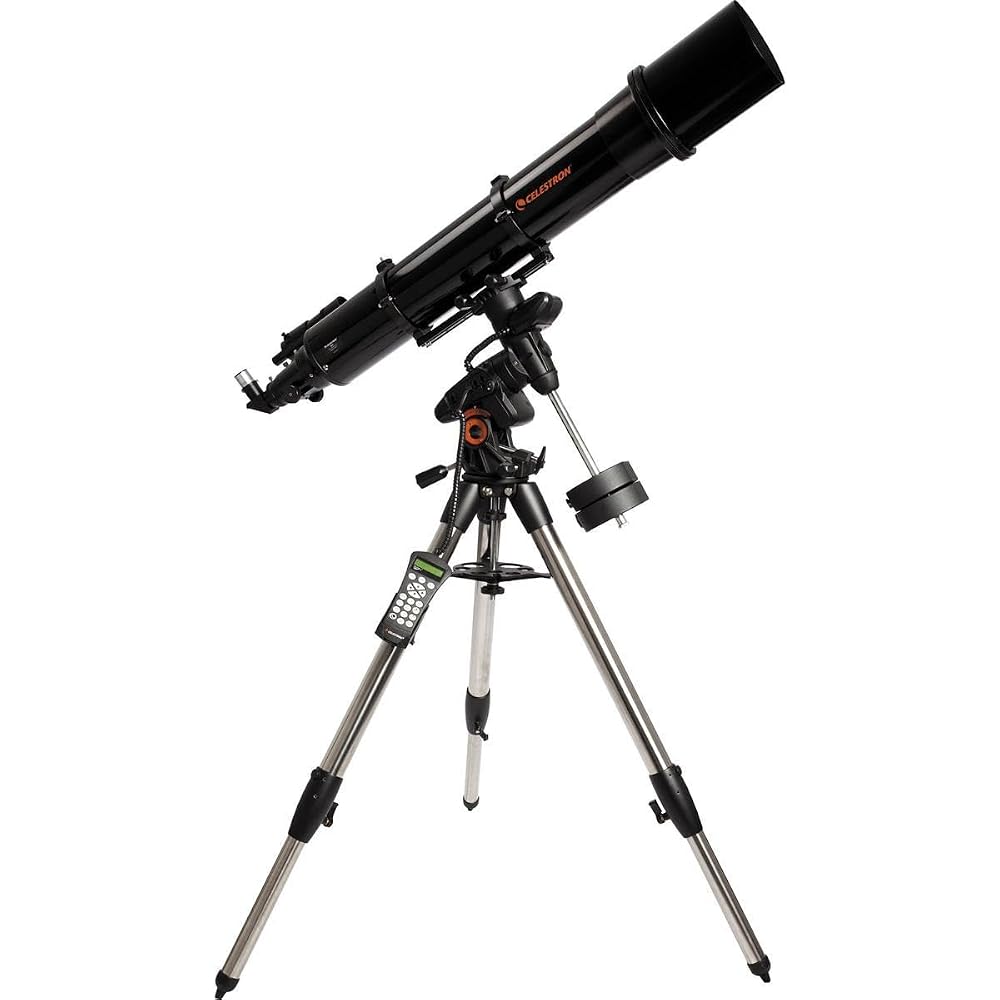
The Celestron Advanced VX 6 Refractor pairs a massive 150-millimeter achromatic optical tube with a computerized German equatorial platform designed to deliver razor-sharp planetary contrast and automated celestial tracking. Operating at a native focal…
As Amazon Associates, we earn from qualifying purchases. This means we may receive a small commission at no extra cost to you if you click through and make a purchase.
The Celestron Advanced VX 6 Refractor pairs a massive 150-millimeter achromatic optical tube with a computerized German equatorial platform designed to deliver razor-sharp planetary contrast and automated celestial tracking. Operating at a native focal length of 1200mm with an f/8 focal ratio, this system eliminates the central optical obstruction inherent to reflector designs, producing pristine diffraction patterns and pinpoint star images across an unobstructed light path. While computerized GoTo mounts frequently struggle when loaded with lengthy optical tubes, Celestron addresses structural stability through reinforced base castings and high-torque motors engineered to maintain tracking fidelity under challenging mechanical leverage.
This optical and mount configuration primarily serves dedicated lunar and planetary observers, high-contrast double-star splitters, and planetary imagers who prioritize high-resolution clarity without secondary mirror diffraction spikes. However, casual observers seeking quick backyard deployments or mobile astronomers operating from remote dark-sky sites may find the 99-pound total system weight and 65-inch dimensional footprint demanding to transport, making more compact catadioptric packages like the celestron nexstar 5se a more manageable alternative for travel-oriented stargazers.

Spec sheet
Celestron Advanced VX 6 Refractor
- Optical Design
- Achromatic Refractor (Unobstructed Aperture)
- Objective Lens Diameter
- 150 mm (15 cm / 6 inches)
- Focal Length and Ratio
- 1200 mm, f/8
- Optical Coatings
- Fully Multi-Coated
- Mounting Platform
- Celestron AVX GoTo Equatorial Mount
- Alignment and Control System
- SkyAlign, All-Star Polar Alignment, NexStar+
- Tracking Features
- Periodic Error Correction (PEC) with High-Torque Motors
- Field of View and Exit Pupil
- 1.1 Degrees, 2.5 mm Exit Pupil Diameter
- Mount Compatibility
- Vixen-Format Dovetail (100 mm or Longer)
- Total System Weight
- 99 Pounds
Figures as published by the manufacturer on the Amazon listing.
Optical Performance and Aperture Mechanics
The core optical engine of the Celestron Advanced VX 6 Refractor relies on an expansive 150mm objective lens assembly that delivers 100 percent unobstructed light throughput. Unlike Schmidt-Cassegrain or Newtonian optical designs that place secondary mirrors and spider vanes directly into the incoming wavefront, this refractor eliminates diffraction spikes and scattered light artifacts around bright targets. At a native 1200mm focal length, the f/8 focal ratio provides an optimal optical compromise for high-contrast planetary viewing, rendering subtle cloud belts on Jupiter, fine festoons in the Jovian atmosphere, and the intricate Cassini Division within Saturn’s ring structure with exceptional clarity.
Light transmission across the optical train is optimized through fully multi-coated surfaces that suppress internal glass-to-air reflections and maximize photon throughput to the focal plane. In standard viewing configurations utilizing Plossl eyepiece optics, the optical system yields an exit pupil diameter of 2.5 millimeters and a wide 1.1-degree true field of view, presenting expansive star clusters and extended planetary nebulae against a clean, pitch-black background. Evaluating the complete celestron advanced vx 6 specs reveals that this f/8 focal profile maintains a flat field that suppresses off-axis aberration better than faster refractors, preserving crisp detail across the entire visual frame.
Target acquisition and focus calibration rely on a smooth manual focus mechanism alongside an included reflex finderscope for initial sighting. The manual focus assembly allows deliberate, incremental focal plane travel essential for isolating high-power planetary details during moments of steady atmospheric seeing. Because an f/8 system exhibits a more forgiving depth of focus compared to fast f/4 or f/5 astrographs, micro-positioning the drawtube manually remains reliable for visual observation, giving users precise mechanical authority over focal point placement without mandatory motorization.
Mount Engineering and Tracking Accuracy
Supporting a 6-inch refractor optical tube assembly demands exceptional structural stability due to the elongated physical leverage generated by a 1200mm chassis. The celestron avx goto equatorial mount utilizes large base castings and an updated industrial geometry designed to minimize structural flexure under substantial physical loads. While the celestron advanced vx mount payload is engineered to provide optimum imaging performance for smaller telescopes, the upgraded drive mechanics on this platform feature higher-torque DC servo motors capable of overcoming minor load imbalances without stalling or dropping steps during high-speed slewing operations.
Positional tracking consistency is critical when operating at narrow apparent fields of view, and the mount integrates permanently programmable Periodic Error Correction (PEC) to eliminate recurring mechanical track errors originating from the worm gear teeth. By mapping and compensating for the inherent periodic eccentricity of the internal drive brass worm gears, the celestron advanced vx 6 tracking accuracy remains dependable over extended observation sessions, keeping planetary targets centered within the eyepiece crosshairs without drifting out of frame.
Alignment workflows are streamlined through Celestron’s integrated SkyAlign technology, NexStar+ hand controller software, and All-Star Polar Alignment routines. Observers do not need extensive knowledge of individual celestial coordinates; instead, the SkyAlign routine allows the user to point the optical tube at any three bright objects in the night sky to calculate an accurate spatial model of the local horizon. Much like calibrating optical alignments on handheld optics such as the celestron nature dx, establishing an accurate initial geometric baseline on the AVX platform ensures the computerized GoTo database slews reliably toward faint celestial targets across the night sky.
Astrophotography Capabilities and Meridian Transit
Utilizing the celestron advanced vx 6 for astrophotography unlocks serious opportunities for high-resolution solar system imaging and targeted captures of brighter deep-sky objects. The absence of a central secondary obstruction ensures that lunar craters and planetary disks retain pristine contrast profiles, enabling planetary imagers to capture fine surface variations using high-speed video capture techniques. The 1200mm native focal length allows imagers to resolve fine structural details across planetary features without requiring extreme magnification Barlow optics.
A persistent mechanical obstacle in equatorial astrophotography is the physical clearance required when tracking objects past the local celestial meridian. The industrial design of the Advanced VX mount repositions the motor housings and internal drive axes, allowing the optical tube to track continuously across the meridian without colliding with the mount base. This non-interfering architecture permits uninterrupted long-exposure sequences during the most critical imaging window when targets reach their highest celestial elevation and experience the lowest levels of atmospheric distortion.
Deep-sky astroimaging with this system requires careful management of exposure durations and optical balancing due to the optical tube’s physical leverage on the declination axis. The equatorial base can be adjusted across an operational latitude envelope extending from 7 degrees to 77 degrees, accommodating observers across virtually all populated landmasses. The platform runs on external battery power, supplying consistent electrical current to the drive motors, hand controller, and automated tracking systems during extended imaging runs away from fixed utility grids.
Structural Rigidity and Physical Form Factor
Mechanical scale represents the most significant operational consideration when assessing the celestron avx 6 inch refractor package. With overall item dimensions measuring 65 inches in depth by 10.98 inches in width and height, the substantial tube length generates a considerable physical moment arm. At a total system weight of 99 pounds including the equatorial head, counterweight assembly, tripod legs, and optical tube assembly, assembling and balancing this instrument requires deliberate physical effort and dedicated workspace.
The telescope optical tube connects to the equatorial saddle via a Vixen-format dovetail measuring 100 millimeters or longer, providing an industry-standard interface that ensures secure clamping against rotational slip. The broad stance of the tripod legs combined with the reinforced mount head effectively dampens vibrational energy transferred from local ground movement or light wind currents, preserving image stability at the eyepiece.
Maintaining mechanical equilibrium on both the right ascension and declination axes is critical for reducing gear wear and preserving tracking accuracy over years of operation. The Advanced VX mount chassis incorporates robust manual clutch levers on both axes, permitting effortless balancing sweeps before the electric drives are locked into position. The physical solidity of the assembly ensures that once balanced and aligned, the optical path maintains rigid collimation even after repeated slewing movements across disparate quadrants of the sky.
Celestron Advanced VX 6 Refractor Pros and Cons
What works
- Unobstructed 150mm aperture delivers high planetary contrast
- Continuous meridian imaging without motor housing interference
- Integrated Periodic Error Correction stabilizes tracking accuracy
- Intuitive SkyAlign routine simplifies GoTo celestial calibration
- High-torque motors easily manage slight load imbalances
What to weigh up
- Hefty 99-pound total system weight restricts portability
- Substantial 65-inch dimensional footprint demands ample storage
- Focus adjustment relies entirely on manual drawtube controls
Check Celestron Advanced VX 6 Refractor on Amazon
Who Should Buy the Celestron Advanced VX 6 Refractor
Buy It If
- You prioritize unobstructed high-contrast planetary, lunar, and double-star viewing free from secondary mirror diffraction spikes.
- You require automated GoTo celestial positioning coupled with continuous tracking across the meridian without motor housing interference.
- You possess a dedicated observation space, observatory, or permanent backyard viewing area capable of accommodating a 99-pound setup.
- You intend to capture high-resolution planetary imaging utilizing a native 1200mm focal length optical system.
Skip It If
- You require an ultra-portable, grab-and-go optical system designed for rapid transport in compact passenger vehicles.
- You lack the physical storage room necessary to accommodate an optical system measuring 65 inches in physical length.
- You exclusively pursue wide-field, fast deep-sky astrophotography that necessitates compact optical tubes with short focal lengths.
Final Verdict
8.8/10Our score
Completing this comprehensive celestron advanced vx 6 review demonstrates that pairing an unapologetically large 150mm achromatic refractor with Celestron’s rigid computerized equatorial platform yields an exceptional planetary observation instrument. The 1200mm focal length and unobstructed aperture deliver crisp, contrast-rich visual fidelity that reflector telescopes with secondary obstructions struggle to match. When considering whether the system justifies its footprint, the combination of high-torque motors, Periodic Error Correction, and full meridian transit tracking ensures the equatorial base provides reliable mechanical support for its substantial optical tube.
When asking is celestron advanced vx 6 worth it, the answer depends entirely on your observational priorities and physical space requirements. For amateur astronomers with the dedicated space to manage a 99-pound, 65-inch instrument, the optical clarity, mechanical rigidity, and automated SkyAlign tracking make this system an outstanding long-term centerpiece for high-resolution planetary viewing and dedicated lunar exploration.
FAQ
What is the focal length and focal ratio of the Celestron Advanced VX 6 Refractor?
The optical tube assembly features an objective lens diameter of 150 millimeters (6 inches) paired with an optical focal length of 1200 millimeters, producing a native focal ratio of f/8. This optical profile delivers high magnification and contrast for planetary and lunar observation while preserving a wide 1.1-degree field of view.
How does Periodic Error Correction improve tracking accuracy on this mount?
Periodic Error Correction (PEC) records the minor physical variations and recurring tracking errors inherent to the mount’s internal brass worm gear teeth. Once mapped into the system’s non-volatile memory, the mount automatically applies micro-adjustments during tracking to counteract these rotational imperfections, keeping celestial targets centered without manual guiding corrections.
Can the Celestron Advanced VX 6 Refractor track across the meridian without collisions?
Yes, the updated industrial design of the Advanced VX equatorial mount features re-engineered motor housings that provide clearance for the optical tube assembly as it tracks across the celestial meridian. This structural layout allows continuous viewing or imaging during meridian transit without physical interference or the immediate need for a meridian flip.
What alignment methods does the Advanced VX GoTo system support?
The system incorporates Celestron’s SkyAlign technology alongside All-Star Polar Alignment and the NexStar+ computerized hand control system. Observers can initialize automated pointing by centering any three bright celestial objects in the sky, allowing the internal computer to model local coordinates without requiring manual star identification.
What dovetail standard is required to mount optical tubes to the Advanced VX mount?
The equatorial mount’s saddle is engineered to accept standard Vixen-format dovetail bars measuring 100 millimeters or longer. This provides broad mechanical compatibility with the included 6-inch refractor optical tube and various alternative optical assemblies utilizing Vixen-style mounting plates.
See this listing on Amazon We may earn a commission if you buy through this link.
More in Optics & Outdoors



The weekly shortlist
Specs worth reading, once a week
New teardowns, spec sheets and buying notes from across the desk.
This demo form is not connected to a mailing service.