Wireless or Cellular Trail Cameras? Compared by Specs
Compare 2 trail cameras by specs. We analyze wireless and cellular connectivity, night vision, and app features to help you pick the right model.

Warning: Undefined array key "caption" in /www/wwwroot/keenlist.net/wp-content/themes/site-tastemaker/single.php on line 63
Wireless or Cellular Trail Cameras? Compared by Specs Photo: Amazon product listing
As Amazon Associates, we earn from qualifying purchases. This means we may receive a small commission at no extra cost to you if you click through and make a purchase.
As an Amazon Associate we earn from qualifying purchases. Links on this page are affiliate links.
Choosing between a wireless vs cellular trail camera depends on your location and maintenance preferences. Both the MAXDONE and SPYPOINT models offer remote viewing via smartphone apps and include night vision for low-light monitoring. The main difference lies in connectivity. The MAXDONE uses a local Wi-Fi hotspot for direct phone access, while the SPYPOINT relies on cellular networks for remote transmission. This choice affects where you can place the camera and how often you need to visit the site.
Connectivity
Wi-Fi 6, Bluetooth (non-cellular)
Cellular
Power Source
Solar panel, 6000mAh battery
Not listed
Photo Resolution
64 MP
Not listed
Video Resolution
4K
Not listed
Night Vision Range
60 ft
Not listed
Choose the first if
- You need a self-sustaining power system with a solar panel and large internal battery for long-term deployment.
- You prefer direct, local Wi-Fi access to view footage without relying on cellular signal or monthly plans.
- You want high-resolution 64MP photos and 4K video with H.264 encoding for efficient file sizes.
Choose the second if
- You require remote image transmission over cellular networks for locations without Wi-Fi coverage.
- You want a free photo transmission plan that sends up to 100 photos per month without fees.
- You need cross-carrier compatibility and AI species filtering via the SPYPOINT app.
Verdict
Choose the MAXDONE model if you prioritize local Wi-Fi connectivity and a built-in solar power system for low-maintenance operation. Select the SPYPOINT model if you need reliable remote monitoring through cellular networks and want access to a free photo transmission plan. Your decision should hinge on whether your site has cellular signal and if you prefer local or remote data access.
Wireless or Cellular Trail Camera Specs
Connectivity type
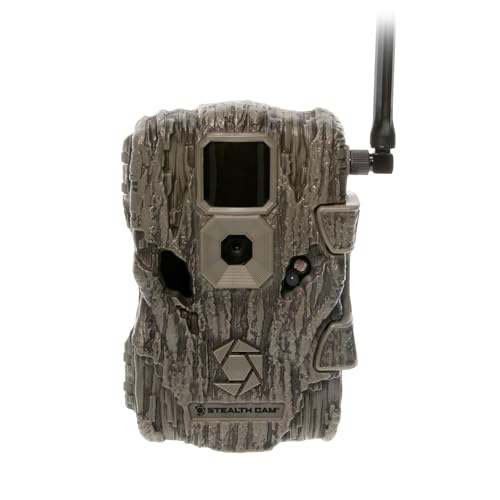
Edge: SpyPoint Flex-M Cellular Trail Camera
The MAXDONE Solar Trail Camera relies on a local Wi-Fi 6 hotspot created by the device itself. You must be within 50 feet to connect your phone directly via Bluetooth or Wi-Fi. It does not support home Wi-Fi networks, cellular networks, or 4G/5G connections. You cannot receive real-time motion alerts or push notifications from a distance. The SPYPOINT Flex-M uses cellular technology for remote access. It connects to carrier networks automatically without needing to swap SIM cards. You can view photos and manage settings from anywhere using the SPYPOINT app. This allows you to check your property without being physically present near the camera.
Power source
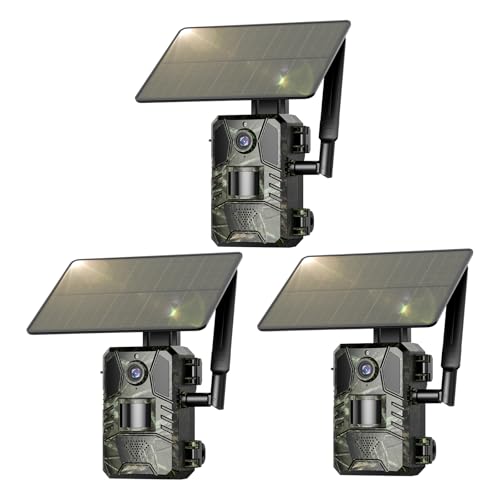
Edge: MAXDONE Solar Trail Camera 2 Pack
The MAXDONE model features a split-type solar hybrid power system with a massive 6000mAh internal lithium battery. This setup is designed for year-round operation in various environments, from deep timber to sun-scorched plains. You do not need to frequently swap disposable AA batteries. The camera creates a self-sustaining ecosystem for low maintenance. The SPYPOINT Flex-M does not list an internal battery or solar panel in its key specifications. The product data notes that you can pair it with compatible solar panels sold separately. It also mentions extended autonomy, but the core unit relies on external power sources that are not included in the base kit.
Image resolution
Edge: MAXDONE Solar Trail Camera 2 Pack
The MAXDONE camera captures 64MP photos and 4K video. It uses a 100-degree wide-angle lens to cover a broad field of view. The device utilizes H.264 video encoding to reduce file sizes for faster wireless transfers without losing pixel quality. The SPYPOINT Flex-M specifications do not list specific photo megapixel counts or video resolution details. The product data focuses on its cellular transmission capabilities and capture modes like photo, video, and time-lapse. Without explicit resolution data for the SPYPOINT model, you cannot compare the maximum detail or video clarity between the two units based on the provided specifications.
Night vision range
Edge: MAXDONE Solar Trail Camera 2 Pack
The MAXDONE trail camera is equipped with an enhanced 850nm infrared LED array. This lighting system provides a night vision range of up to 60 feet. The camera automatically adjusts its output to balance long-range illumination with tactical stealth, avoiding white-out imagery. The SPYPOINT Flex-M lists night vision as a feature in its attributes but does not provide a specific range in feet or inches. The product data mentions constant capture technology and species filtering via AI, but it lacks the technical specification for how far the infrared LEDs can effectively illuminate a subject in total darkness.
Storage options
Edge: MAXDONE Solar Trail Camera 2 Pack
The MAXDONE kit includes a pre-installed 32GB SD card, so you do not need an extra purchase to start. The camera supports storage cards up to 256GB for long-term deployments. All media transfers directly to your device without cloud storage or external servers. The SPYPOINT Flex-M requires a micro SD card that is not included in the package. You must format the card using on-camera buttons. The data does not specify the maximum supported storage capacity for the SPYPOINT model. You rely on the cellular plan for transmitting photos, but local storage is still necessary for the device to function.
Which trail camera fits your needs?
Users in deep woods with no cell signal
Our pick: MAXDONE Solar Trail Camera 2 Pack
The MAXDONE model creates its own Wi-Fi hotspot, allowing direct phone connection up to 50 feet away. It does not require cellular service or home Wi-Fi. You can view live video and download 4K footage locally. This setup ensures functionality in remote areas where cellular networks are unavailable or weak.
Hunters needing remote monitoring without visiting the site
Our pick: SpyPoint Flex-M Cellular Trail Camera
The SPYPOINT Flex-M uses cellular connectivity to send photos directly to your phone via the app. It supports cross-carrier coverage and offers a free plan for 100 photos monthly. You can monitor your property from anywhere with cell service, receiving real-time alerts without needing to be near the camera.
Buyers wanting low maintenance and solar power
Our pick: MAXDONE Solar Trail Camera 2 Pack
This camera features a split-type solar panel and a 6000mAh internal battery for year-round operation. It reduces the need for frequent battery swaps or disposable AA batteries. The self-sustaining power system allows for set-it-and-forget-it deployments in various environments, from deep timber to open plains, minimizing physical maintenance visits.
| # | Product | Best for | Price |
|---|---|---|---|
| 1 | MAXDONE Solar Trail Camera 2 Pack | high-resolution solar trail monitoring | |
| 2 | SpyPoint Flex-M Cellular Trail Camera | Remote monitoring with cellular connectivity and a free photo plan |

MAXDONE Solar Trail Camera 2 Pack
Best for: high-resolution solar trail monitoring
- Connectivity
- Wireless
- Photo Resolution
- 64 MP
- Video Resolution
- 4K
- Power Source
- Solar panel, 6000mAh battery
- Night Vision Type
- IR LED (850nm)
- Night Vision Range
- 60 ft
This MAXDONE kit offers 64MP photos and 4K video with a split-type solar panel and 6000mAh battery for low maintenance. It uses Wi-Fi 6 and Bluetooth to create a direct hotspot for phone access within 50 feet. The 850nm IR night vision reaches 60 feet. It suits users who want high resolution and solar power but do not need remote cellular alerts or home Wi-Fi integration.
- 64MP photo resolution and 4K video recording
- Split-type solar panel with 6000mAh internal battery
- Wi-Fi 6 hotspot for direct phone connection up to 50 feet
- 850nm IR night vision with 60-foot range
- Wi-Fi 6 hotspot range limited to 50 feet
- Night vision range capped at 60 feet
- IP66 rating instead of higher weatherproofing
- You want high-resolution 4K video and 64MP photos
- You prefer solar power to reduce battery changes
- You can stay within 50 feet of the camera for data access
- You need remote cellular connectivity for alerts
- You want to connect to your home Wi-Fi network
- You require night vision beyond 60 feet
Verdict: MAXDONE Solar Trail Camera 2 Pack delivers high-resolution imaging and solar power for users who can access the camera directly via Wi-Fi 6. It fits those who prioritize image quality and low maintenance over remote cellular monitoring.

SpyPoint Flex-M Cellular Trail Camera
Best for: Remote monitoring with cellular connectivity and a free photo plan
- Connectivity
- Cellular
- Night Vision
- Night Vision
- Dimensions
- 3.15 × 3.93 × 5.1 inches
- Weight
- 1 pounds
The SPYPOINT Flex-M is a cellular trail camera designed for remote monitoring without WiFi. It features cross-carrier coverage and Constant Capture technology to send images seamlessly. The device supports photo, video, and time-lapse modes. It includes a free plan for up to 100 photos monthly. This model suits users who need reliable connectivity in areas with varying network conditions.
- Includes a free photo transmission plan for 100 images per month
- Offers cross-carrier coverage with automatic network performance monitoring
- Supports Constant Capture technology for simultaneous sending and capturing
- Provides multiple capture modes including photo, video, and time-lapse
- Weighs 1 pound, which is heavier than the MAXDONE 2-pack option
- Requires a separate micro-SD card for storage
- Solar panels are sold separately for extended operation
- You need cellular connectivity in areas without WiFi
- You want to start monitoring with a free monthly photo plan
- You require cross-carrier network compatibility
- You prefer a wireless camera with WiFi and Bluetooth
- You want a bundled solar panel included in the box
- You are looking for a multi-pack deal for lower cost per unit
Verdict: The SPYPOINT Flex-M Cellular Trail Camera fits hunters and wildlife observers who need reliable remote monitoring via cellular networks. Its free photo plan and cross-carrier support make it a strong option for single-camera setups in remote locations.
Specifications side by side
| Spec | MAXDONE Solar Trail Camera 2 Pack | SpyPoint Flex-M Cellular Trail Camera |
|---|---|---|
| Connectivity | Wi-Fi 6, Bluetooth (non-cellular) | Cellular |
| Photo Resolution | 64 MP | – |
| Video Resolution | 4K | – |
| Power Source | Solar panel, 6000mAh battery | – |
| Night Vision Type | IR LED (850nm) | – |
| Night Vision Range | 60 ft | – |
| Storage Options | SD card slot (up to 256GB) | – |
| Resolution | 4K | – |
| Night Vision | Night Vision | Night Vision |
| Use | Outdoor | – |
| Features | Motion Activated | – |
| IP Rating | IP66 | – |
| Dimensions | 3.9 × 2.6 × 1.7 inches | 3.15 × 3.93 × 5.1 inches |
| Weight | – | 1 pounds |
| Color | Dark Gray | Flex-M |
| Model | PH960W | FLEX-M US |
| Size | – | Pack of 1 |
Frequently asked questions
Does a wireless trail camera need home Wi-Fi?
No. The MAXDONE Solar Trail Camera creates its own local Wi-Fi 6 hotspot. You connect your phone directly to this signal when you are within 50 feet. It does not rely on your home network or cellular service. This setup works well for remote outdoor locations where standard internet is unavailable.
Can I view footage remotely with a cellular trail camera?
Yes. The SPYPOINT Flex-M uses cellular networks to send photos to your smartphone. This allows you to monitor your property from any distance. It supports cross-carrier connectivity and includes a free photo plan. You do not need to be near the camera to see what it captures.
Which camera is better for deep woods without cell service?
The MAXDONE model is the better choice. It operates independently of cellular signals by using a local Wi-Fi connection. You simply walk up to the camera to retrieve data or view live feeds. The SPYPOINT Flex-M requires a cellular signal to function, making it unsuitable for areas with no coverage.
Do these trail cameras work in the dark?
Both models include night vision capabilities. The MAXDONE Solar Trail Camera captures high-resolution 4K images even in low light. The SPYPOINT Flex-M also features night vision for clear monitoring after sunset. You can rely on these features to track wildlife or security activity during nighttime hours without additional lighting.
How is the MAXDONE camera powered?
It uses solar power. The MAXDONE Solar Trail Camera 2 Pack includes a solar panel to keep the battery charged. This reduces the need for frequent manual battery replacements. It is designed for continuous outdoor use, making it ideal for users who want low maintenance and consistent operation in various weather conditions.
Is the SPYPOINT camera suitable for a single setup?
Yes. The SPYPOINT Flex-M is designed for single-camera installations. It offers reliable remote monitoring via a free photo plan. Its compact size and cross-carrier support make it easy to deploy in one location. You get consistent cellular connectivity without the complexity of managing multiple devices or extensive wiring.
What resolution does the MAXDONE camera record?
It records in 4K resolution. This provides high-detail images for better identification of subjects. The MAXDONE model prioritizes image quality for users who need clear visual data. You benefit from sharper footage compared to standard HD options, which is useful for both wildlife observation and security monitoring purposes.
Are these cameras weatherproof?
The MAXDONE camera has an IP66 rating. This means it is protected against dust and powerful water jets. It is built for outdoor use in various weather conditions. The SPYPOINT Flex-M is also designed for outdoor deployment. Both units are constructed to withstand typical environmental challenges in the field.
See also
See this listing on Amazon We may earn a commission if you buy through this link.
More in Trail Cameras


The weekly shortlist
Specs worth reading, once a week
New teardowns, spec sheets and buying notes from across the desk.
This demo form is not connected to a mailing service.