Xbox One X Technical Review: Architecture, Throughput, and 4K Limits
The Xbox One X represents one of the most radical mid-generation hardware redesigns in console history, engineered specifically to eliminate the compute and bandwidth bottlenecks of eighth-generation gaming. Marketed as the world’s most powerful…
By Maria Carver

As Amazon Associates, we earn from qualifying purchases. This means we may receive a small commission at no extra cost to you if you click through and make a purchase.
The Xbox One X represents one of the most radical mid-generation hardware redesigns in console history, engineered specifically to eliminate the compute and bandwidth bottlenecks of eighth-generation gaming. Marketed as the world’s most powerful console during its release window and often referenced in hardware searches as the vbox one x, this machine was built from the silicon up to deliver uncompromised native 4K framebuffers and high-dynamic-range visuals. Rather than simply boosting clock speeds on existing silicon, Microsoft overhauled the entire pipeline, combining custom compute units with high-speed unified memory to push visual fidelity beyond standard high-definition limits.
This hardware profile suits audiovisual purists, physical media collectors, and spec-focused enthusiasts who demand native 4K rendering alongside dedicated disc playback. Players upgrading from an xbox one console brand new hardware baseline will appreciate the massive leap in raw computational headroom and asset loading efficiency. However, those seeking modern ninth-generation software exclusives, high-framerate variable refresh targets beyond historical limits, or active production support should direct their attention elsewhere, as this machine remains an eighth-generation powerhouse anchored to its specific architectural era.
Spec sheet
Xbox One X
- Model Number
- CYV-00001
- Platform
- Xbox One
- Graphical Processing Power
- 6 Teraflops
- Memory Bandwidth
- 326 GB/sec
- Internal Storage Capacity
- 1 TB
- Display Output Resolution
- Native 4K / Ultra HD / HDR
- Optical Drive
- 4K Ultra HD Blu-ray Player
- Input Device Included
- Xbox Wireless Controller (Gamepad)
- Wireless Connectivity
- Wi-Fi
- Physical Weight
- 8.4 pounds
Figures as published by the manufacturer on the Amazon listing.
GPU Architecture and Compute Ceiling: The 6-Teraflop Pipeline
At the center of the console’s technical appeal is its graphics processor, which delivers 6 teraflops of graphical processing power. In the context of eighth-generation consoles, this compute ceiling represented a 40 percent performance advantage over any competing home console of its day. The raw floating-point throughput was calculated specifically to accommodate the mathematical demands of rendering native 3840 by 2160 framebuffers without relying entirely on aggressive dynamic resolution scaling or rudimentary spatial upscaling techniques.
This computational headroom transforms how modern rendering pipelines execute geometry passes, volumetric lighting, and shadow filtering. In standard rendering workflows, shifting from standard 1080p to full 4K requires four times the pixel fill capacity. The custom silicon accommodates this computational load by running dedicated compute units tuned for parallel arithmetic. This architecture gives developers the ability to apply anisotropic filtering and preserve sub-pixel geometry detail that previously dissolved into temporal anti-aliasing blur on less capable silicon.
Crucially, this compute budget is not wasted if you connect the console to a standard high-definition display. The hardware pipeline leverages its excess rendering capacity on 1080p screens through hardware-level supersampling. The internal render engine resolves the scene at high resolution and scales it down to the display’s native output. This process eliminates jagged edges, reduces crawling artifacts on fine geometry like foliage and power lines, and delivers a noticeably cleaner image than native 1080p hardware can achieve.
Memory Subsystem and Throughput: The 326 GB/sec Pipeline
Compute performance is functionally useless without an interconnect capable of feeding texture assets to the execution units without stalling the pipeline. The xbox one x memory bandwidth is rated at an impressive 326 GB/sec. This massive throughput bypasses the memory choke points that plagued early iterations of eighth-generation hardware, including the memory bottlenecks encountered on the baseline x box one s.
High-resolution framebuffers require high-resolution textures. Running games at native 4K demands massive uncompressed or lightly compressed surface maps, diffuse layers, and depth buffers stored directly in unified memory. At 326 GB/sec, the system possesses the throughput required to cycle massive asset pools into the rendering core without dropping frames or triggering severe texture pop-in during fast camera pans.
This rapid data transfer rate directly improves asset streaming throughout large open-world environments. When paired with the integrated 1 TB storage drive, game engines can maintain higher-quality level-of-detail mipmaps across greater drawing distances. The architecture ensures that memory latency does not bottleneck the GPU compute engines, maintaining frame pacing and eliminating the micro-stutter commonly associated with insufficient bandwidth.
Optical Media and Display Output: Integrated 4K Blu-ray Playback
The console functions as an audiophile- and videophile-grade home theater hub thanks to its physical optical assembly. An integrated xbox one x 4k bluray optical drive gives users access to ultra-high-definition physical media playback directly through its HDMI output interface. While digital streaming services heavily compress 4K content to save network bandwidth, physical Ultra HD Blu-ray discs provide substantially higher bitrates for pristine visual clarity and lossless multichannel audio tracks.
This optical playback capability makes the machine a dual-purpose appliance for gaming and home theater entertainment. The HDMI connection supports High Dynamic Range (HDR) data transmission, expanding the contrast ratio between peak specular highlights and deep shadow detail. Color gradients benefit from wider color gamuts, reducing color banding in skies, explosions, and finely graded film stock.
The physical drive assembly operates quietly within the chassis during disc playback, dampening rotational vibration through solid internal mountings. Combined with broadband internet connectivity for online media services and Xbox Live functionality, the console maintains a dominant position as a dedicated multimedia platform for users with calibrated 4K home theater setups.
Software Optimization and Compatibility: The Enhanced Ecosystem
Raw hardware parameters require software support to reach their full potential, which Microsoft addressed via the Xbox One X Enhanced program. Under this initiative, developers deployed targeted title updates engineered specifically to leverage the console’s compute and memory capabilities. Titles designated as xbox one x enhanced games feature higher native rendering resolutions, accelerated loading routines, improved draw distances, and enhanced texture filtering passes.
Beyond enhanced eighth-generation releases, xbox one x backward compatibility remains one of the system’s standout architectural strengths. The machine runs legacy titles natively, applying hardware supersampling, automatic anisotropic filtering, and rock-solid framerate stabilization without requiring game modifications. Legacy software that suffered from drops under target frame rates on older consoles runs with complete consistency on this hardware platform.
The system also preserves full compatibility with the complete ecosystem of platform controllers and peripherals. Advanced inputs such as the xbox one wireless controller – elite series 2 link to the console effortlessly, retaining custom paddle mappings and trigger profiles. Whether navigating the operating system or executing frame-precise competitive inputs, the machine treats modern and legacy accessories with equal functional parity.
Form Factor, Mass, and Thermal Density
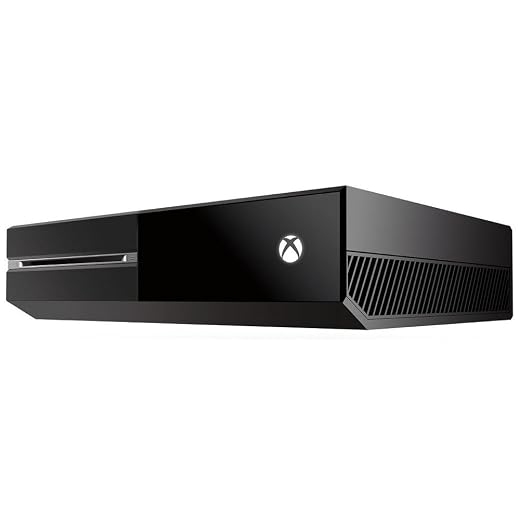
Despite housing a dense 6-teraflop processing engine, an internal power supply, and an optical disc drive, the console maintains a compact footprint finished in matte black. The system weighs in at 8.4 pounds, reflecting an unusually dense internal layout built around an advanced cooling structure. The mass of the machine is a direct result of heavy internal shielding, an integrated power conversion unit, and high-density heat-dissipation hardware.
The structural rigidity prevents thermal warping and chassis vibration while handling intensive graphical rendering workloads. Air intake and exhaust channels are distributed along the perimeter, moving warm air out of the back of the case via a single low-noise radial fan. This thermal management keeps component temperatures in check during sustained 4K gaming sessions without generating disruptive acoustic signatures.
Connectivity remains robust, featuring integrated Wi-Fi for networking and HDMI output for video and audio routing. The xbox one x 1tb console provides ample onboard storage capacity for multiple large-scale game installations, media apps, and system updates, ensuring you have enough space to manage complex game libraries out of the box.
Xbox One X Pros and Cons
What works
- 6 teraflops of graphical processing power
- Massive 326 GB/sec memory bandwidth
- Integrated 4K Ultra HD Blu-ray drive
- Native 4K rendering and supersampling
- Generous 1 TB internal storage capacity
What to weigh up
- Heavy chassis weighing 8.4 pounds
- Discontinued hardware status
- Unknown ongoing software update timeline
Who Should Buy the Xbox One X
Buy It If
- You own an extensive physical 4K Ultra HD Blu-ray movie collection and want a dedicated player alongside your gaming console.
- You want legacy eighth-generation titles to render at native 4K with improved texture filtering and stable target frame rates.
- You display games on a 1080p television or monitor and want system-level supersampling for superior edge smoothing and visual clarity.
- You already own a library of Xbox One games and accessories that you want to run on powerful hardware.
Skip It If
- You prioritize upcoming ninth-generation exclusive game releases that bypass eighth-generation architecture entirely.
- You require lightweight, portable hardware rather than an 8.4-pound home theater console.
- You are searching for a current-production machine with ongoing, active hardware manufacturing support.
Final Verdict
4.4 / 5Amazon buyer rating, 5,974 ratings
Determining whether the Xbox One X is worth it depends entirely on your specific hardware needs and media consumption habits. As an engineering showcase of eighth-generation console architecture, the system remains a masterclass in balanced component design. By pairing a 6-teraflop GPU with an exceptional 326 GB/sec memory bandwidth pipe and 1 TB of storage, the hardware completely eliminated the compromises that defined early eighth-generation gaming, delivering legitimate 4K rendering and whisper-quiet operation.
While newer console generations have since emerged to push frame rate ceilings and solid-state storage speeds, the Xbox One X retains immense practical value as a high-performance backward compatibility engine and 4K Ultra HD Blu-ray entertainment hub. For gamers with large existing libraries and film enthusiasts who demand uncompromising physical disc playback, this console stands as one of the most capable, durable, and well-engineered hardware revisions ever built.
FAQ
Can the Xbox One X play physical 4K Ultra HD Blu-ray discs?
Yes. The console features an integrated 4K Ultra HD Blu-ray optical drive capable of playing high-resolution physical discs alongside standard Blu-ray and DVD formats with HDR output support.
How does the 6-teraflop GPU benefit standard 1080p screens?
On 1080p displays, the console uses hardware supersampling. It renders game scenes at higher internal resolutions and scales them down to 1080p, resulting in sharper edges, reduced aliasing, and improved detail retention.
What does the 326 GB/sec memory bandwidth do for gaming performance?
The 326 GB/sec memory bandwidth ensures that high-resolution 4K textures, framebuffers, and asset data stream into the compute pipeline without causing memory bottlenecks, frame drops, or texture pop-in.
Are older Xbox One controllers compatible with this console?
Yes. The hardware maintains full backward and forward compatibility with the complete family of Xbox One controllers, gamepads, and official accessories without requiring special adapters.
Does this console support High Dynamic Range (HDR) content?
Yes. When connected to an HDR-capable television via HDMI, the console outputs HDR content for enhanced color depth, brighter peak highlights, and deeper black levels across compatible games and media.
See this listing on Amazon We may earn a commission if you buy through this link.
More in Gaming



The weekly shortlist
Specs worth reading, once a week
New teardowns, spec sheets and buying notes from across the desk.
This demo form is not connected to a mailing service.