Sony HDR-CX405 Review: Optical Zoom and Codec Analysis
The Sony HDR-CX405 is an ultra-compact Full HD camcorder designed around a dedicated 30x optical zoom lens, a 1/4-inch back-illuminated Exmor R CMOS sensor, and the Bionz X image processor. In a market dominated…
As Amazon Associates, we earn from qualifying purchases. This means we may receive a small commission at no extra cost to you if you click through and make a purchase.
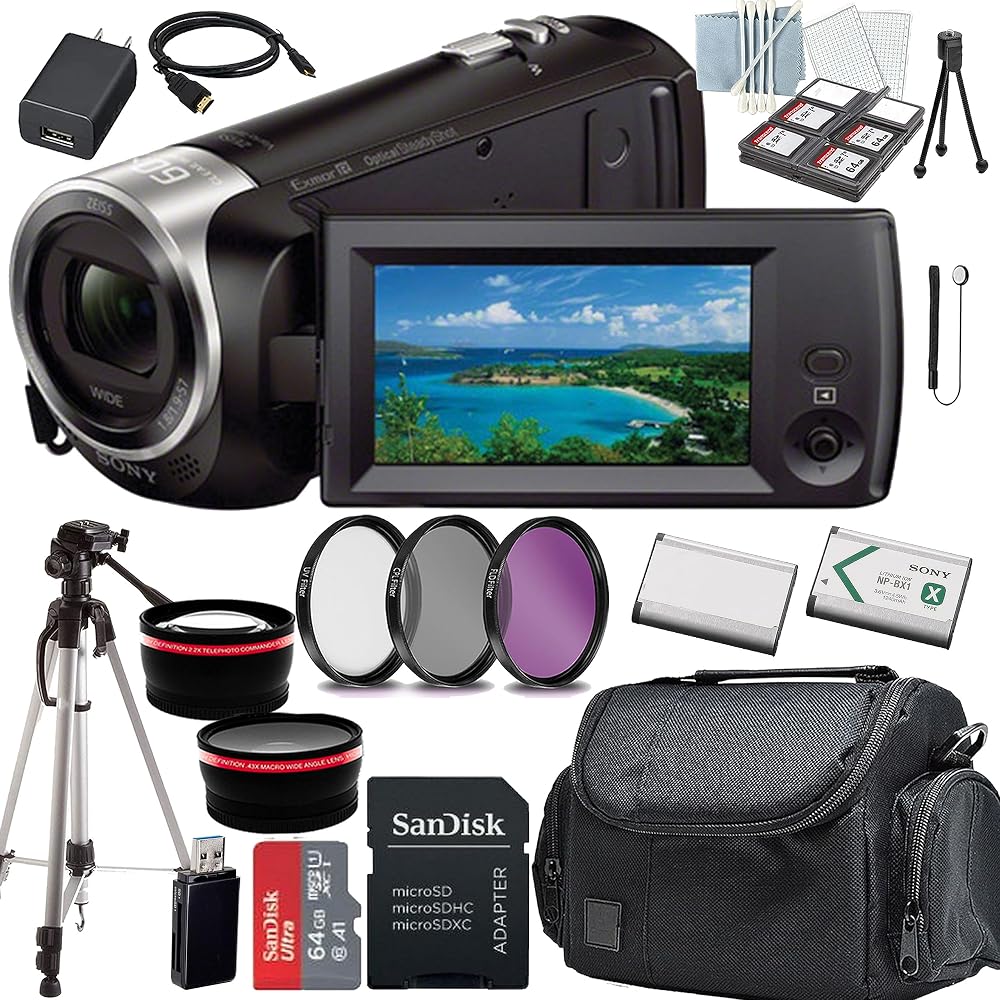
The Sony HDR-CX405 is an ultra-compact Full HD camcorder designed around a dedicated 30x optical zoom lens, a 1/4-inch back-illuminated Exmor R CMOS sensor, and the Bionz X image processor. In a market dominated by fixed-focal-length smartphones, this dedicated video camera delivers true mechanical telephoto reach alongside 50 Mbps XAVC S recording to capture sharp 1080p footage at sixty frames per second without digital degradation.
This camcorder setup is engineered primarily for budget-conscious hobbyists, school event recorders, and families requiring massive optical zoom range without handling complex system menus. Discerning content creators who require shallow depth of field, wide manual exposure wheels, or 4K capture will be better served by stepping up to an advanced interchangeable-lens platform such as the sony 6700 camera.
Spec sheet
Sony HDR-CX405
- Sensor Type and Size
- 1/4-inch Exmor R CMOS Sensor
- Effective Resolution
- Full HD Video / 9.2 Megapixel Stills
- Processing Engine
- Bionz X Image Processor
- Lens Configuration
- Carl Zeiss Vario-Tessar with 30x Optical Zoom (26.8mm wide equivalent)
- Video Recording Formats
- XAVC S (up to 50 Mbps), AVCHD, MP4 (1080p at 60 fps)
- Image Stabilization
- Optical SteadyShot Image Stabilization
- Display System
- 2.7-inch Flip-Out LCD Screen (spec sheet also lists 3 inches)
- Media Card Compatibility
- MicroSD, MicroSDHC, MicroSDXC, Memory Stick Micro
- Battery Interface
- Sony NP-BX1/M8 Rechargeable Lithium-Ion (3.6V, 1240mAh)
Figures as published by the manufacturer on the Amazon listing.
Optical Zoom and Carl Zeiss Lens Architecture
The defining technical feature of the camcorder is its Carl Zeiss Vario-Tessar optic, providing a 30x mechanical optical zoom range. At its widest focal setting, the lens delivers a 35mm-equivalent field of view of 26.8mm, allowing operators to capture wide establishing scenes, group gatherings, and indoor spaces without excessive barrel distortion. Unlike digital zoom solutions that crop into pixel grids, the mechanical elements physically shift to magnify distant subjects while preserving true 1080p optical resolving power across the entire focal corridor.
When zoomed to the full 30x telephoto limit, the lens significantly compresses backgrounds, drawing distant subjects such as stage performers, athletes on sports fields, or wildlife into crisp focus. Achieving this level of telephoto reach on compact vloggers like the sony zv-1 camera is physically impossible without bulky auxiliary teleconverters. The barrel mechanics operate smoothly via a proportional top-mounted zoom rocker, permitting slow, disciplined creeping zooms or rapid shifts across the focal range depending on finger pressure.
Optical clarity remains consistent through the mid-zoom sector, although extreme telephoto positions require sufficient environmental lighting to offset the natural physical closure of the lens aperture. Maintaining optical sharpness without chromatic aberration is supported by the Zeiss glass coatings, which help suppress internal internal reflections and stray flare during direct daylight tracking.
Video Quality and 50Mbps XAVC S Codec Performance
Evaluating the imaging pipeline requires examining the pairing of the 1/4-inch Exmor R CMOS sensor with the proprietary Bionz X processing engine. Video resolution tops out at Full HD 1920×1080 at 60 progressive frames per second, offering fluid motion rendition suitable for tracking fast action. While modern standards increasingly highlight 4K benchmarks, clean 1080p capture backed by sufficient bit allocation offers sharper edges and fewer motion artifacts than heavily compressed streaming alternatives.
The inclusion of the professional-grade XAVC S format represents a major technical upgrade over legacy AVCHD architectures. By supporting encoding bitrates up to 50 Mbps using MPEG-4 AVC/H.264 compression, the camera records over double the data footprint of standard AVCHD formats. This extra bandwidth eliminates macroblocking, smearing, and banding across complex high-frequency patterns like moving water, grass, and confetti. The camera also supports dual video recording, allowing simultaneous generation of high-bitrate archival files alongside lightweight MP4 proxies designed for direct mobile sharing.
For still image capture, the processor interpolates sensor data to produce 9.2-megapixel still photos. While these still images lack the raw dynamic range and post-processing elasticity of dedicated mirrorless files, they provide adequate color separation and detail for documentation purposes and basic web printing when good lighting is present.
Low-Light Limitations and Sensor Dynamics
The compact physical footprint of the unit requires utilizing a small 1/4-inch sensor footprint. While Sony utilizes an Exmor R back-illuminated architecture to position light-gathering photodiodes closer to the lens elements, physical surface area dictates overall sensitivity. In bright daylight or properly illuminated indoor studios, the sensor delivers clean chroma rendering, accurate skin tones, and balanced highlight roll-off.
Under dim conditions, evening sports, or indoor auditoriums with poor staging illumination, the small sensor encounters physical thresholds. The expanded ISO minimum starts at 100, but as the automatic exposure system ramps gain to compensate for low lumens, chroma noise becomes visible in shadow areas. Users cannot completely override noise via deep manual exposure controls, as the device leans heavily on automated program tracking. The inclusion of a built-in camera flash with red-eye reduction assists still captures in low light, though continuous video relies strictly on ambient light.
Sony integrates an Intelligent Auto mode engineered to analyze live scene parameters across 60 potential setting combinations. The camera automatically categorizes faces, movement, background lighting, and landscape conditions, adjusting shutter speed, gain, and white balance dynamically. This automated bias simplifies operation for non-technical users, but restricts technical shooters who prefer setting manual exposure thresholds to manage noise floors in uneven lighting.
Optical SteadyShot and Ergonomics
Handheld stability at 30x optical magnification presents a major engineering challenge, which Sony addresses using Optical SteadyShot image stabilization. Rather than relying solely on digital cropping algorithms that degrade edge resolution, the camera employs physical lens-shift stabilization elements. Internal gyroscopic sensors detect operator tremors and actuate counter-movements in the optical group to neutralize micro-jitter before light strikes the imaging sensor.
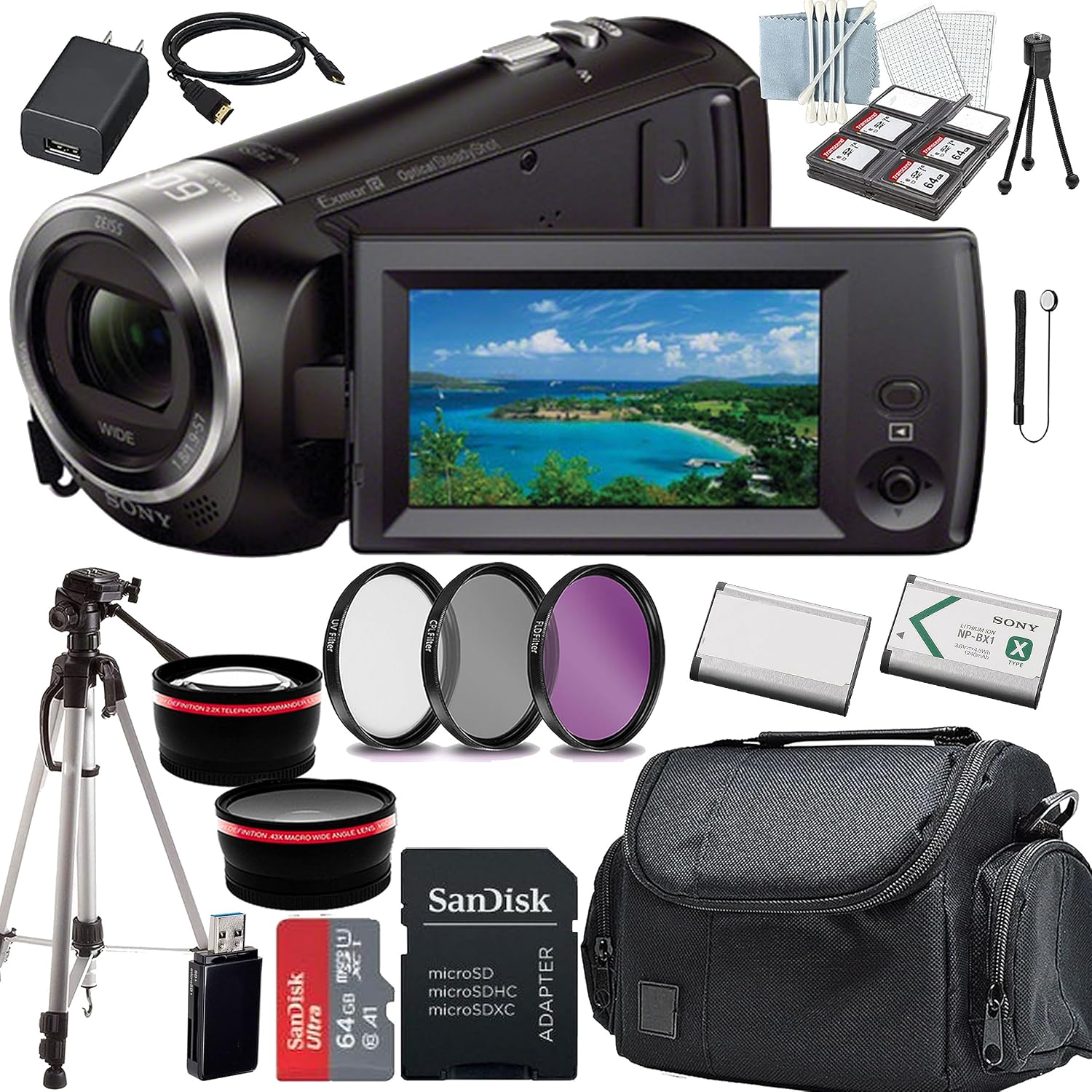
At wide-angle settings, the stabilization delivers steady, float-like handheld footage suitable for walking shots and casual tracking. At maximum 30x extension, handheld operation still requires a disciplined stance or bracing to completely eliminate rolling sway, making the included mini tripod and full-height COMMANDER 50-inch tripod valuable additions for stable broadcast-style framing. The hardware chassis is exceptionally light, allowing extended one-handed operation using the adjustable side grip strap without operator fatigue.
Monitoring is handled by a flip-out 2.7-inch LCD screen (also listed in specs as 3 inches). The panel swings out 90 degrees and rotates to accommodate high-angle or low-angle framing. The physical listing specifications also list an optical viewfinder, though the primary live framing relies on the articulated LCD monitor. A built-in USB 2.0 cable is permanently integrated directly into the physical hand strap, providing instant data transfer and internal battery recharging without requiring loose proprietary charging blocks.
Storage Formats and Battery Workflow
Media compatibility and power management are critical technical considerations when evaluating this camcorder for long-duration recordings. Storage writing workflows support both standard microSD cards and Sony Memory Stick Micro formats. To utilize the high-speed 50 Mbps XAVC S codec, operators must use SDHC or SDXC cards rated for sustained write speeds to avoid buffer overruns and recording stops.
Media Compatibility Requirements
- Supports MicroSD, MicroSDHC, and MicroSDXC memory cards.
- Supports Sony Memory Stick Micro media cards.
- The retail bundle supplies a dedicated 64GB Sandisk memory card and an external USB card reader.
- MicroSD cards must provide sustained Class 10 or UHS ratings to unlock continuous 50 Mbps XAVC S capture.
Power delivery is handled by the Sony NP-BX1/M8 rechargeable lithium-ion battery pack, rated at 3.6 volts and 1240mAh. The compact physical size of the battery helps keep the camcorder body slender and lightweight. Because extended 1080p60 recording and continuous optical stabilization drain single packs over lengthy field sessions, the inclusion of an extra high-capacity battery in this package ensures operators can switch cells without halting day-long documentation.
Direct charging occurs via the integrated USB 2.0 tether strap, which plugs into power banks, wall adapters, or standard computer ports. For external video monitoring and signal output, the camera provides a micro-HDMI port, allowing operators to connect the included micro-HDMI cable directly to television displays or capture cards for monitoring Full HD feeds.
Sony HDR-CX405 Pros and Cons
What works
- 30x optical zoom Carl Zeiss lens
- High-bitrate 50 Mbps XAVC S codec
- Optical SteadyShot image stabilization
- Integrated USB charging cable in strap
- Comprehensive bundle with memory card and tripod
- Compact and lightweight ergonomic body
What to weigh up
- Small 1/4-inch sensor struggles in low light
- Lacks native 4K recording resolution
- Limited manual exposure controls
Check Sony HDR-CX405 on Amazon
Who Should Buy the Sony HDR-CX405
Buy It If
- You need an extreme 30x optical zoom lens in an ultra-lightweight body to record school events, track meets, or wildlife from a distance.
- You want simple, dependable Full HD 1080p video recorded in high-bitrate 50 Mbps XAVC S without managing complicated camera settings.
- You prefer an integrated shooting kit featuring extra batteries, tripods, a 64GB card, and a built-in USB charging cord for fast operation.
- You want optical image stabilization that smooths out handheld tracking shots without cropping your sensor field of view.
Skip It If
- You require native 4K video resolution, advanced color grading profiles, or professional flat log recording gamuts.
- You routinely record in dark venues where a small 1/4-inch sensor will introduce visible noise and loss of dynamic range.
- You need full manual exposure wheels, physical audio gain dials, or a standard 3.5mm external microphone input.
Final Verdict
9.2/10Our score
The Sony HDR-CX405 occupies a specialized and highly useful niche in contemporary video capture. By focusing its hardware on a 30x Carl Zeiss optical zoom, dependable Optical SteadyShot stabilization, and a robust 50 Mbps XAVC S 1080p codec, it delivers telephoto video capabilities that smartphones cannot replicate. The lightweight form factor and Intelligent Auto presets allow anyone to pick up the device and track distant action with zero setup friction.
The trade-offs stem directly from its compact design and entry-level target audience. Its 1/4-inch Exmor R CMOS sensor is constrained in dim environments, and the lack of advanced manual exposure dials limits creative depth-of-field control. However, as an accessible, all-in-one recording bundle engineered for sports, lectures, family events, and long-range documentary needs, the camcorder offers dependable optical utility and sharp Full HD encoding.
FAQ
Can the camcorder record video in 4K resolution?
No. The camera records video up to Full HD 1080p resolution at 60 progressive frames per second. It does not support native 4K video recording.
What memory cards can be used with this camcorder?
The camera supports microSD, microSDHC, and microSDXC memory cards, as well as Sony Memory Stick Micro cards. A 64GB Sandisk memory card is included with this specific bundle.
How do you charge the camcorder battery?
The camcorder features a built-in USB 2.0 cable integrated directly into the hand strap. You can connect this cable to a computer USB port or a compatible USB wall adapter to recharge the included NP-BX1 battery internally.
Does the camera feature optical image stabilization?
Yes. The camera incorporates Sony Optical SteadyShot image stabilization, which shifts optical elements inside the lens barrel to counteract shake and hand tremor during handheld filming.
Can I connect the camera directly to a television or monitor?
Yes. The camcorder features a micro-HDMI output port, and this bundle includes a micro-HDMI cable to connect the camera directly to high-definition monitors or televisions for playback.
See this listing on Amazon We may earn a commission if you buy through this link.
More in Cameras & Drones


The weekly shortlist
Specs worth reading, once a week
New teardowns, spec sheets and buying notes from across the desk.
This demo form is not connected to a mailing service.