Samsung Odyssey OLED G8 Breakdown: 4K 240Hz QD-OLED Architecture
The Samsung Odyssey OLED G8 represents a major technical evolution in premium desktop displays, pairing a 32-inch flat QD-OLED panel with a native 3840 x 2160 resolution and a rapid 240Hz refresh cycle. Identified…

As Amazon Associates, we earn from qualifying purchases. This means we may receive a small commission at no extra cost to you if you click through and make a purchase.
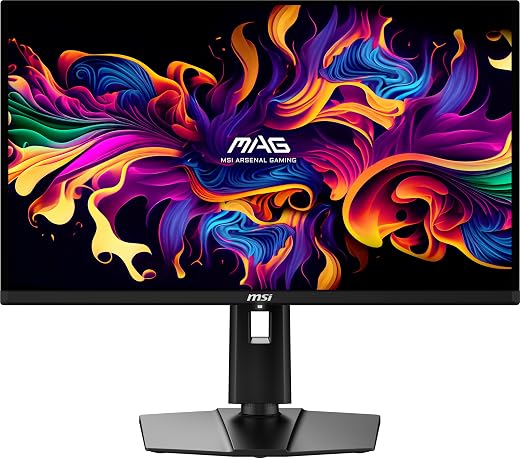
The Samsung Odyssey OLED G8 represents a major technical evolution in premium desktop displays, pairing a 32-inch flat QD-OLED panel with a native 3840 x 2160 resolution and a rapid 240Hz refresh cycle. Identified under the hardware code G81SF, this monitor unites self-emissive quantum dot technology, an ultra-fine 0.18 mm pixel pitch, and an innovative internal thermal dissipation loop designed specifically to prevent panel degradation. The definitive verdict on this display is that it delivers industry-leading pixel response times and exceptional color accuracy for high-tier PC configurations capable of driving uncompromised 4K frame rates.
This monitor is engineered directly for competitive gamers, simulation enthusiasts, and demanding visual professionals who require instantaneous 0.03ms pixel responsiveness paired with genuine deep-black contrast. Shoppers running high-end hardware who prioritize motion clarity over traditional backlighting will find it an ideal command center. Conversely, users whose daily routines revolve primarily around static productivity spreadsheets in brightly illuminated commercial spaces or those operating legacy hardware should consider alternatives, such as our breakdown of the samsung g5 monitor for general desktop use or the samsung odyssey g4 for high-frame-rate entry-level gaming.

Spec sheet
Samsung Odyssey OLED G8
- Screen Size and Aspect Ratio
- 32 inches, 16:9 aspect ratio
- Panel Type and Screen Contour
- QD-OLED, flat surface profile
- Native Resolution
- 3840 x 2160 pixels (4K UHD)
- Refresh Rate
- 240Hz native vertical frequency
- Pixel Transition Response Time
- 0.03ms Gray-to-Gray (GtG)
- Static Contrast Ratio
- 1,000,000:1
- Baseline Brightness
- 260 cd/m²
- Color Gamut Metric
- 99 (per manufacturer specifications)
- Pixel Pitch
- 0.18 mm
- Power Consumption
- 180 watts maximum operational rating
- Dimensions and Weight
- 10.37" D x 28.33" W x 23.01" H; 18.5 lbs
Figures as published by the manufacturer on the Amazon listing.
QD-OLED Panel Architecture and 240Hz Motion Dynamics
The core structural advantage of the Samsung Odyssey OLED G8 lies in its subpixel architecture. By marrying blue OLED self-emissive organic layers with printed quantum dot color converters, this panel eliminates the need for a separate liquid crystal layer or edge-lit backlight array. When analyzing the samsung odyssey g8 oled 4k specs, the 3840 x 2160 grid across a 32-inch diagonal yields an exceptionally fine 0.18 mm pixel pitch. This high pixel density overcomes the fringing historical to earlier generation non-standard subpixel layouts, rendering crisp text contours alongside photorealistic textures in complex 3D environments.
Motion performance is where the monitor separates itself from legacy display designs. The panel achieves a 0.03ms Gray-to-Gray pixel transition time, which effectively eliminates the trailing and smearing common to traditional IPS and VA panels. Operating at the full samsung g81sf refresh rate of 240Hz, the display refreshes its visual buffer every 4.16 milliseconds. This timing ensures that each new frame is drawn with instantaneous clarity, giving fast-twitch esports competitors an unobstructed view of moving targets without the inverse ghosting artifacts introduced by aggressive overdrive voltages.
For demanding titles, deploying the samsung odyssey g8 oled for gaming yields an exceptionally responsive visual pipeline. The seamless fusion of the 240Hz refresh rate and the 0.03ms response time delivers pristine motion resolution. While massive panoramic displays like the samsung odyssey oled g9 49-inch offer wider peripheral immersion, the standardized 16:9 aspect ratio of the 32-inch G8 ensures immediate universal game compatibility without letterboxing, stretched user interfaces, or specialized field-of-view tweaks.
Optical Coating and Ambient Reflection Performance
Ambient light management has historically challenged self-emissive monitors, but the integration of samsung odyssey g8 oled glare free engineering addresses this limitation directly. Certified by Underwriters Laboratories (UL), this specialized surface treatment reduces specular glare, rendering the screen 54% less glossy than conventional anti-reflection films. By diffusing incident light rays without softening pixel clarity, the coating prevents harsh overhead ceiling fixtures or adjacent window reflections from washing out the visual field.
Contrast stability remains paramount on organic panels. Because the monitor boasts a native 1,000,000:1 contrast ratio, preserving black depth in real-world ambient conditions is critical. Traditional glossy screens often act as dark mirrors when exposed to ambient illumination, reflecting the room back at the user. The optical layer on the G8 scatters incoming light across a controlled micro-structure, maintaining clean dark levels without creating the heavy graininess or sparkle often seen on aggressive matte monitor finishes.
The display also meets the strict compliance standards of VESA DisplayHDR TrueBlack 400. In dark scenes, pixels can power off entirely, achieving true zero-nit luminance without the haloing, blooming, or light bleed inherent to multi-zone local dimming mini-LED screens. Combined with wide 178-degree viewing angles, the panel maintains its color fidelity and deep contrast uniformity whether viewed directly on-axis or from wide peripheral viewing angles.
Thermal Dissipation and Burn-In Mitigation Architecture
Thermal management is the critical engineering hurdle when driving organic emitters at high refresh rates, and the odyssey g8 oled burn in prevention framework approaches this challenge via hardware-level thermodynamic cooling. Built into a gaming monitor for the first time, Samsung implements a Pulsating Heat Pipe cooling system within its Safeguard+ thermal suite. This sealed internal loop circulates a specialized coolant that diffuses thermal energy away from the core panel assembly five times faster than traditional passive graphite sheets, significantly dampening continuous junction temperatures.
Supplementing the physical heat pipe is an active Thermal Modulation System. This algorithmic sub-routine continuously reads hardware thermal telemetry across the panel matrix, automatically regulating brightness levels to prevent hot spots from forming during intense visual scenes. By controlling localized thermal spikes before they stress the organic compounds, the system preserves long-term pixel longevity without jarring, perceptible drops in full-screen illumination.
The panel architecture further integrates proactive software-level safeguards, including Logo & Taskbar Detection. When static graphic interface elements—such as Windows taskbars, radar minimaps, or streaming overlays—are identified as persistent across multiple frame cycles, the monitor automatically attenuates brightness on those exact coordinates. Drawing up to 180 watts during peak operation, this multi-tiered thermal apparatus ensures that the samsung qd-oled 240hz 4k platform sustains high luminance output while actively guarding against cumulative differential pixel aging.
Synchronization Standards, Physical Ergonomics, and Immersion
Display synchronization on the Samsung Odyssey OLED G8 covers all primary hardware ecosystems. The unit features native G-Sync compatibility alongside AMD FreeSync Premium Pro certification and standard Variable Refresh Rate (VRR) support. These adaptive sync technologies dynamically align the refresh timing of the monitor with the frame output of the graphics card, completely eliminating screen tearing and mitigating frame stutter during demanding 4K rendering swings.
From a physical perspective, the monitor is housed in a sleek, premium metal enclosure that balances rigidity with minimalist desk aesthetics. The included Ergonomic Stand provides customizable comfort with tilt and height adjustments, allowing players to align the display accurately within their primary line of sight. Measuring 10.37 inches deep, 28.33 inches wide, and 23.01 inches high on its stand, the chassis occupies a focused footprint, weighing 18.5 pounds to ensure stability during intensive desk movement.
Immersion is extended beyond the active display surface via integrated CoreSync and CoreLighting+ modules positioned on the rear chassis. CoreSync reads the dominant color values from active screen borders and projects matching ambient illumination into the surrounding room using a spectrum of 16.7 million colors. CoreLighting+ adds customizable lighting presets that adapt to gameplay tempos. For users researching technical comparisons within our odyssey oled g8 documentation, this external ambient lighting also serves as a bias light, helping reduce perceived eye strain during prolonged sessions in darkened rooms.
System Bandwidth and Hardware Requirements
Evaluating whether the display fits an existing desk configuration requires a realistic appraisal of GPU bandwidth. Pushing a 3840 x 2160 canvas at 240 cycles per second demands immense data throughput across the visual interface. Prospective buyers must ensure their graphics hardware supports modern high-bandwidth DisplayPort or HDMI protocols capable of sustaining uncompressed or visually lossless Display Stream Compression (DSC) data rates.
When asking is samsung odyssey g8 oled worth it, prospective owners should assess their specific library of applications. High-end PC titles require substantial graphics horsepower to achieve 240 frames per second at native 4K. However, because the panel operates with instantaneous 0.03ms pixel responsiveness and true 1,000,000:1 contrast, visual clarity remains exceptional even when running titles at 120Hz or 144Hz, scaling effortlessly as future hardware upgrades expand graphical capabilities.
The baseline luminance rating of 260 cd/m² provides ample brightness for light-controlled gaming dens, personal studios, and home offices. While peak HDR highlights trigger localized dynamic bursts under VESA DisplayHDR TrueBlack 400 parameters, the steady-state brightness is intentionally balanced against the 180-watt operational power budget and the thermal boundaries managed by the internal pulsating heat pipes.
Samsung Odyssey OLED G8 Pros and Cons
What works
- Native 4K 240Hz QD-OLED panel
- Instant 0.03ms GtG response time
- UL-verified Glare Free surface coating
- Pulsating Heat Pipe thermal management
- True 1,000,000:1 contrast ratio
- G-Sync and FreeSync Premium Pro compatible
What to weigh up
- High 180-watt operational power draw
- Requires high-tier GPU for 4K 240Hz
- SDR brightness limited to 260 cd/m2
Check Samsung Odyssey OLED G8 on Amazon
Who Should Buy the Samsung Odyssey OLED G8
Buy It If
- You own a high-end graphics processing unit capable of outputting native 4K resolution at high frame rates over modern display bandwidth standards.
- You demand instantaneous motion clarity with a 0.03ms GtG response time and complete elimination of ghosting in fast-paced competitive games.
- You play in environments with variable ambient lighting where a UL-verified Glare Free coating is necessary to diffuse external reflections without degrading visual depth.
- You desire an advanced thermal architecture featuring a Pulsating Heat Pipe cooling system and automated static element detection to maximize panel longevity.
Skip It If
- Your computing workflow consists almost entirely of static spreadsheets or word processing documents under harsh, non-dimmable commercial office lighting.
- Your graphics card lacks the modern interface bandwidth or processing capacity required to drive 3840 x 2160 resolution smoothly.
- You specifically require an ultra-wide 21:9 or 32:9 curved aspect ratio for expansive horizontal desktop multitasking rather than a standard 16:9 flat profile.
Final Verdict
8.2/10Our score
The Samsung Odyssey OLED G8 sets a benchmark for 32-inch enthusiast monitors by integrating 4K precision with a blazing 240Hz refresh cycle onto a third-generation QD-OLED canvas. The inclusion of the world’s first Pulsating Heat Pipe thermal design in a monitor, alongside active Thermal Modulation and static image detection, demonstrates that Samsung has prioritized long-term structural reliability alongside elite performance specifications. The flat 16:9 form factor guarantees full compatibility across modern titles, while the UL-verified Glare Free finish solves the ambient reflection challenges that have previously compromised organic panels.
For gamers and hardware enthusiasts who possess the processing power to drive its 8.29 million pixels, this display offers an uncompromising visual upgrade. Between its 0.03ms pixel transitions, VESA DisplayHDR TrueBlack 400 dynamic range, and expansive 1,000,000:1 contrast ratio, the monitor delivers visual fidelity and competitive responsiveness of the highest order. Provided your desk space and GPU are prepared for its demands, the G81SF stands as an exceptional showcase of modern display engineering.
FAQ
What cooling mechanisms does the Samsung Odyssey OLED G8 use to prevent burn-in?
The monitor incorporates Samsung’s Safeguard+ Dynamic Cooling System, which features a world-first Pulsating Heat Pipe that circulates coolant to diffuse heat five times faster than traditional graphite sheets. This hardware cooling is augmented by an algorithmic Thermal Modulation System that continuously monitors real-time temperatures and automatically reduces brightness on static elements via Logo & Taskbar Detection.
How effective is the Glare Free technology against room reflections?
The Glare Free coating has been independently verified by Underwriters Laboratories (UL) to be 54% less glossy than traditional anti-reflection films. This treatment diffuses incoming light from lamps and windows across a micro-structured surface layer, dramatically reducing mirror-like reflections without compromising the 1,000,000:1 contrast ratio or muddying fine pixel detail.
What sync technologies are supported on the Samsung Odyssey OLED G8?
The monitor supports full adaptive variable refresh rate technologies, including official NVIDIA G-Sync compatibility and AMD FreeSync Premium Pro certification. These protocols sync the panel’s 240Hz refresh rate directly with your GPU’s rendered output to eliminate screen tearing, reduce input lag, and minimize visual judder.
Can the stand on the Samsung Odyssey OLED G8 be adjusted?
Yes, the included Ergonomic Stand allows users to adjust both the height and tilt of the display. This flexibility ensures that users can position the 32-inch flat panel at an optimal ergonomic viewing height and angle to maintain visibility across its 178-degree viewing range.
What is the native resolution and pixel pitch of the G81SF panel?
The Samsung Odyssey OLED G8 operates at a native 4K UHD resolution of 3840 x 2160 pixels across its 32-inch screen diagonal. This tight pixel distribution yields a fine 0.18 mm pixel pitch, delivering sharp text clarity and intricate texture rendering without noticeable subpixel fringing.
See this listing on Amazon We may earn a commission if you buy through this link.
More in Monitors



The weekly shortlist
Specs worth reading, once a week
New teardowns, spec sheets and buying notes from across the desk.
This demo form is not connected to a mailing service.