Meade ETX-60AT Breakdown: Optical Limits, GoTo Mount & Field Specs
The Meade ETX-60AT is a compact, motorized refractor engineered to combine portable wide-field observing with automated GoTo celestial target tracking. Built around an air-spaced achromatic doublet and an integrated dual-axis motorized fork mount, this…
As Amazon Associates, we earn from qualifying purchases. This means we may receive a small commission at no extra cost to you if you click through and make a purchase.
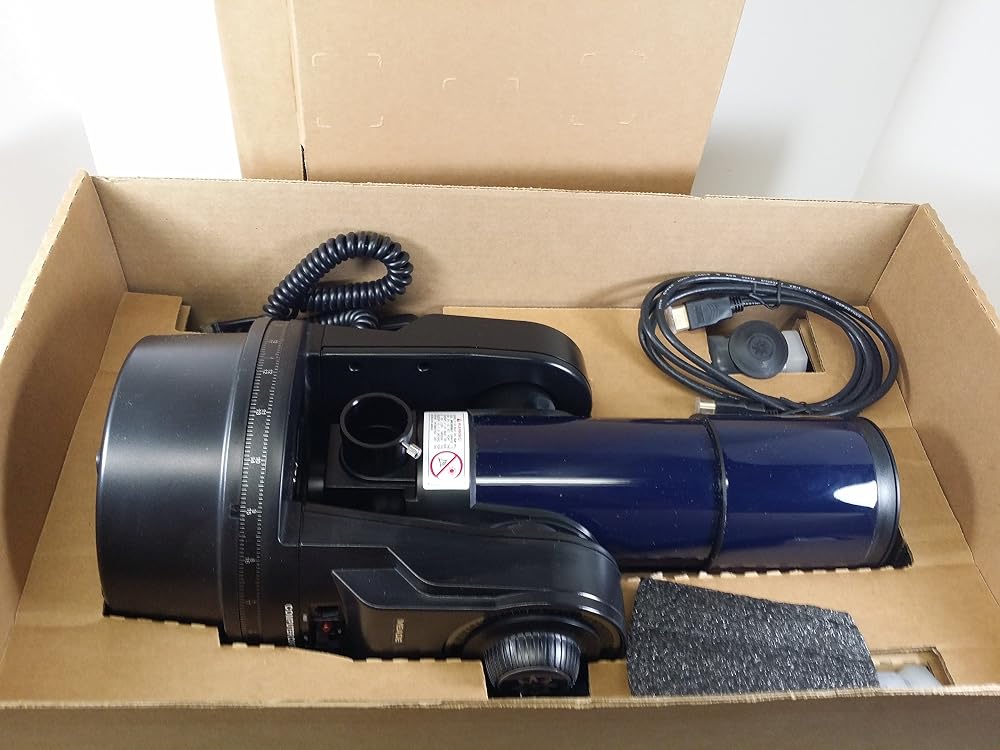
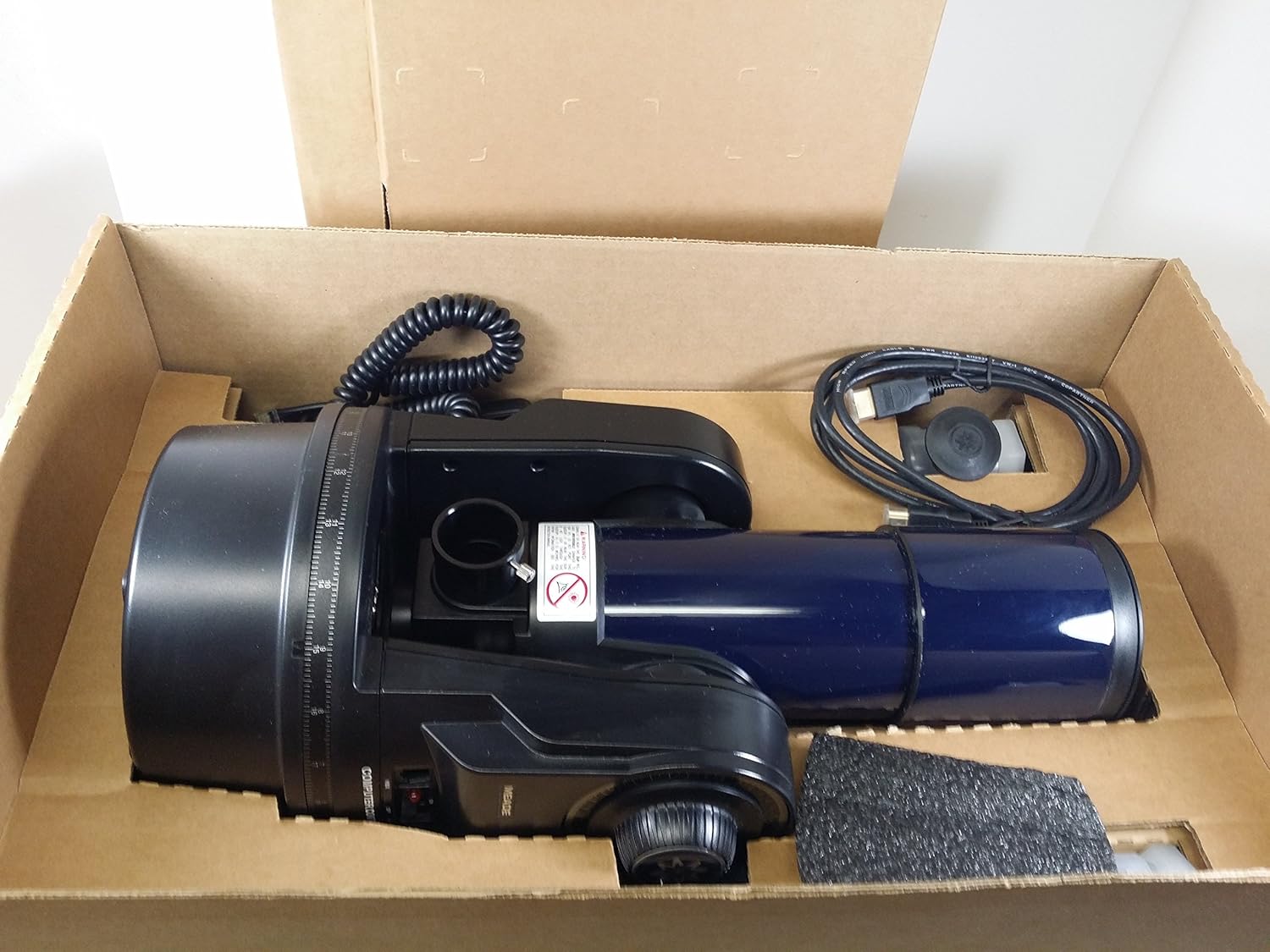
The Meade ETX-60AT is a compact, motorized refractor engineered to combine portable wide-field observing with automated GoTo celestial target tracking. Built around an air-spaced achromatic doublet and an integrated dual-axis motorized fork mount, this instrument serves as a technologically driven alternative to traditional manual starter optics like a polaris telescope by meade. Our technical verdict is that the system delivers consistent, high-contrast views of bright solar system bodies and open star clusters while removing the friction of manual star-hopping, though its 60mm physical aperture naturally bounds its deep-sky resolving potential.
This optical setup is purpose-built for grab-and-go hobbyists, travelers, and backyard skywatchers who prioritize fast alignment and automated tracking over heavy light-gathering bulk. Observers who want to examine lunar rilles, Jupiter’s primary cloud belts, or the distinct ring profile of Saturn will appreciate the motorized assistance and small footprint. Conversely, serious deep-sky astrophotographers and those seeking faint planetary nebulae will quickly exceed the optical boundaries of a 60mm objective and should direct their attention toward larger aperture reflectors or specialized imaging setups.
Spec sheet
Meade ETX-60AT
- Optical Design
- Air-spaced achromatic refractor
- Optical Glass Components
- Grade A crown and flint optical glass
- Objective Lens Diameter
- 60 mm (6 cm)
- Focal Length
- 700 mm
- Optical Coating
- StarBright XLT multicoated optics
- Field of View
- 20 degrees
- Exit Pupil Diameter
- 6 mm
- Mount Architecture
- Motorized Altazimuth Mount
- Hand Controller Database
- Meade Autostar with 1,400+ celestial objects
- Viewing Positions
- Internal flip-mirror system (90-degree or straight-through)
- Eyepiece Included
- Plossl
- Focusing Mechanism
- Manual focus
- Finderscope
- Reflex
- Power Configuration
- Battery powered
- Total Item Weight
- 10.3 lb
Figures as published by the manufacturer on the Amazon listing.
Optical Construction and Resolving Power
The primary lens assembly of this meade achromatic refractor 60mm optical tube relies on Grade A crown and flint optical glass components configured as an air-spaced doublet. By utilizing two distinct glass densities, the optical system minimizes chromatic aberration, bringing primary wavelengths of light into a unified focal plane. The 60mm objective diameter is paired with a 700mm focal length, establishing a moderate focal ratio that yields sharp lunar definition, clear separation of Saturn’s ring system, and views of the primary cloud belts of Jupiter without overwhelming color fringing on high-contrast edges.
Optical throughput is reinforced by multicoated optical surfaces specified with StarBright XLT coatings, which curb internal lens reflections and maximize photon transmission through the glass stack. While modern automated imaging platforms like the seestar s30 smart telescope leverage live digital sensor stacking to amplify faint light, a visual refractor depends strictly on its physical clear aperture. In the field, this 60mm aperture provides roughly seventy times the light-gathering capacity of the human eye, excelling at lunar topography and bright open clusters while presenting faint deep-space targets as delicate, unresolved nebular smudges.
Image delivery at the visual back is governed by the supplied Plossl eyepiece, generating a wide 20-degree field of view and an exit pupil diameter of 6 millimeters for relaxed eye placement during prolonged visual sessions. Focusing is adjusted through a rear manual focus knob that translates internal elements smoothly to achieve pin-point star images. Terrestrial viewing performance is equally competent, allowing observers to track distant mountain ranges, geological features, and wildlife during daylight hours with razor-sharp image clarity.
Autostar GoTo Mount and Tracking Architecture
The structural backbone of this meade altazimuth mount telescope is its dual-fork motorized drive assembly, operated entirely by the proprietary Meade Autostar electronic hand controller. Rather than requiring users to manually balance counterweights and polar align along Earth’s rotational axis, this altazimuth platform levels quickly on its base. The meade autostar hand controller setup utilizes an intuitive 60-second alignment sequence where users level the tube, aim north, and confirm two bright alignment stars, allowing the onboard computer to map local celestial coordinates accurately.
Once calibrated, the Autostar hand controller grants direct motorized access to an internal database containing over 1,400 celestial objects. Observers can browse categories spanning major solar system planets, double stars, lunar features, and prominent deep-sky targets from the Messier catalog. Internal gearboxes on both axes slew the optical tube assembly smoothly toward selected targets and immediately initiate sidereal tracking, counteracting Earth’s rotation so that objects remain centered in the Plossl eyepiece without drifting across the field of view.
The entire drive system runs on battery power, eliminating the need for trailing extension cables or cumbersome external power stations when operating away from home. While high-end robotic observation platforms such as the vaonis vespera ii manage coordinate acquisition via wireless smart device interfaces, the Meade Autostar provides a tangible, tactile keypad and display interface that functions reliably without an active wireless network or smartphone companion app.
Internal Flip-Mirror System and Mechanical Versatility
A distinctive mechanical attribute highlighted across the meade etx-60at specs is the meade internal flip-mirror system positioned inside the rear housing. Standard refractor telescopes generally rely on external star diagonals that must be physically inserted, locked, and swapped out whenever switching between straight-through camera imaging and visual stargazing. Meade integrates an internal optical flat mirror within the chassis, governed by a mechanical external lever that switches the optical path instantly between two dedicated observing ports.
Engaging the internal optical flat redirects the focal cone upward at a 90-degree angle into the top eyepiece holder, providing an ergonomic viewing angle for high-altitude celestial targets near the zenith where straight viewing causes severe neck strain. Flipping the lever up moves the mirror completely out of the optical path, letting light pass uninterrupted straight through the rear axial port. This straight-through configuration provides an uninhibited optical train for terrestrial viewing accessories and forms a direct, non-deflected light path for camera sensors.
The integrated chassis also houses a reflex finderscope, which projects an illuminated sighting reticle to aid in rough manual orientation before electronic GoTo slewing takes command. Because both the flip mirror and primary light baffle reside within a sealed rear housing, internal optical surfaces remain shielded from moisture, dew accumulation, and airborne dust during overnight field sessions, minimizing the maintenance required when traveling between observation sites.
Sensor Compatibility and Astrophotography Realities
Examining the meade etx-60at for astrophotography requires understanding the physical parameters of an altazimuth motorized tracking system versus an equatorial platform. The manufacturer listing notes direct compatibility with cameras and smartphones, facilitated primarily by the rear straight-through port of the internal flip-mirror assembly. By attaching compatible camera adapters directly to the rear threads, users can mount lightweight camera bodies or mobile phone brackets along the prime focal plane without detaching the 90-degree visual eyepiece.
Because the motorized fork base operates along altitude and azimuth axes, the telescope tracks objects across the sky using stepped dual-motor adjustments. While this keeps celestial targets centered in the field, it does not counteract field rotation over extended time windows. Consequently, exposure lengths are naturally restricted to twenty to thirty seconds before peripheral stars begin to exhibit rotational elongation. For this reason, the ETX-60AT shines in short-exposure planetary capture and lunar video processing rather than unguided multi-minute integrations of dim nebular structures.
When evaluated against compact all-in-one digital astrographs like the s30 pro telescope, which rely on integrated sensors and automated plate-solving software, this meade etx 60mm telescope remains an optical-first instrument that accommodates secondary camera gear. For capturing solar system dynamics, the 700mm focal length provides generous scale for recording lunar crater walls, ray structures around Copernicus, and the major equatorial cloud bands of Jupiter using standard high-speed lunar and planetary photography techniques.
Meade ETX-60AT Pros and Cons
What works
- Motorized GoTo tracking across 1,400+ celestial objects
- Integrated flip mirror for dual observing positions
- Multicoated Grade A crown and flint glass optics
- Lightweight 10.3-pound portable battery-powered system
- Swift 60-second initial alignment routine
What to weigh up
- 60mm aperture limits deep-space visibility
- Altazimuth tracking induces field rotation during long exposures
- Manual focus requires careful mechanical touch
Check Meade ETX-60AT on Amazon
Who Should Buy the Meade ETX-60AT
Determining whether this automated refractor suits your astronomical routine involves weighing its portable form factor and motorized finding features against its optical aperture limits.
Buy It If
- You want an automated GoTo system with a 1,400-object electronic hand controller that eliminates manual chart-reading and star-hopping.
- You need a self-contained 10.3-pound telescope system that operates entirely on battery power for travel and quick backyard deployments.
- You appreciate an internal flip-mirror mechanism that switches between comfortable 90-degree visual observing and straight-through camera framing instantly.
- Your primary observational targets are the Moon, bright planets like Saturn and Jupiter, and daytime terrestrial landmarks.
Skip It If
- You plan to observe faint deep-sky nebulae and distant galaxies, which demand far greater aperture than a 60mm lens can deliver.
- You intend to execute multi-minute unguided deep-sky astrophotography, which requires an equatorial tracking platform to avoid field rotation.
- You require integrated wireless device control and automated live stacking rather than traditional eyepiece viewing.
Final Verdict
6.6/10Our score
This meade etx 60 review highlights an instrument engineered to make astronomy approachable through mechanical integration and computerized navigation. By housing an air-spaced Grade A achromatic doublet, an internal flip mirror, and dual-axis drive motors within a single 10.3-pound unit, the system removes the setup barriers common to traditional manual telescopes. The 1,400-object database in the Autostar hand controller delivers dependable automated target acquisition, ensuring beginners spend their time viewing the rings of Saturn, the cloud belts of Jupiter, and lunar craters rather than wandering across unmapped star fields.
When considering whether the meade etx-60at is worth it, buyers must align their expectations with the fundamental physics of a 60mm aperture and an altazimuth tracking base. It is not designed to resolve dim nebular structures or support long-exposure deep-sky photography without encountering field rotation. However, as an ultra-portable, grab-and-go observation platform with motorized sidereal tracking, straight-through camera compatibility, and crisp achromatic optics, it serves as a remarkably practical instrument for portable planetary viewing and terrestrial exploration.
FAQ
How does the Meade Autostar hand controller setup work in the field
The Meade Autostar hand controller plugs directly into the computerized fork mount and initiates an automated setup routine. The user levels the tripod base, points the optical tube toward true north, and proceeds through a 60-second two-star alignment process where the system slews toward reference stars for confirmation. Once calibrated, the hand controller enables automated GoTo navigation across its database of more than 1,400 celestial targets.
Can you use the Meade ETX-60AT for astrophotography with modern cameras
The telescope supports both traditional cameras and smartphones via its straight-through rear port and compatible adapters. Because the altazimuth mount tracks targets using altitude and azimuth coordinates rather than an equatorial axis, long exposures will suffer from field rotation. It is therefore best suited for short-exposure imaging, smartphone eyepiece projection, and high-speed video capture of the Moon and bright planets.
What can you actually see with the Meade achromatic refractor 60mm lens
The 60mm air-spaced doublet resolves major features on the lunar surface including crater rims, maria, and mountain chains. In the planetary realm, it reveals the prominent cloud belts of Jupiter, its four Galilean moons, and the unmistakable ring system of Saturn. It also delivers pleasing views of bright open star clusters like the Pleiades and doubles as a high-magnification spotting scope for daytime terrestrial observation.
What power source does the Meade ETX-60AT altazimuth mount telescope require
The motorized mount and electronic Autostar hand controller run on internal battery power housed within the drive base. This battery-powered configuration eliminates the necessity of hauling heavy external power packs or running extension cords out into the field, preserving the grab-and-go portability of the 10.3-pound total package.
How does the Meade internal flip-mirror system operate
The internal flip-mirror system consists of an optical flat mirror mounted on a pivot inside the rear cell of the telescope tube. Turning an external control lever drops the mirror into the light path to angle light 90 degrees upward into the visual eyepiece, or flips the mirror upward out of the light path to allow incoming light to travel straight through the rear port for direct camera coupling or terrestrial viewing accessories.
See this listing on Amazon We may earn a commission if you buy through this link.
More in Optics & Outdoors


The weekly shortlist
Specs worth reading, once a week
New teardowns, spec sheets and buying notes from across the desk.
This demo form is not connected to a mailing service.