Ray-Ban Meta Hardware Analysis: Generational Specs and Features
The Ray-Ban Meta Smart Glasses represent the current apex of connected eyewear engineering, combining traditional EssilorLuxottica frame construction with integrated imaging, acoustic, and processing hardware. While technical enthusiasts frequently search for details surrounding meta…

As Amazon Associates, we earn from qualifying purchases. This means we may receive a small commission at no extra cost to you if you click through and make a purchase.
The Ray-Ban Meta Smart Glasses represent the current apex of connected eyewear engineering, combining traditional EssilorLuxottica frame construction with integrated imaging, acoustic, and processing hardware. While technical enthusiasts frequently search for details surrounding meta gen 3 hardware, the glasses currently driving the smart wearable market belong to Meta’s refined second-generation hardware platform. Operating under manufacturer part number 0RW4012 with the Ontario square aesthetic, these glasses integrate an ultra-wide 12-megapixel camera sensor capable of 3K media capture, dual open-ear directional audio drivers, and an environmental sensor package directly into a wearable 51.3-gram chassis. For users prioritizing unobtrusive first-person content capture and voice-driven environmental querying without wearing a bulky head-mounted display, this platform provides an exceptionally capable everyday optical solution.
This hardware suits digital content creators, frequent communicators, travelers requiring instant spoken-language translation, and everyday spectacle wearers who demand hands-free operational utility. Individuals looking for augmented reality display heads-up overlays, optical zoom lenses, or underwater ingress protection will find these glasses ill-suited to their operational requirements, as the listing does not specify submersible waterproofing or micro-LED display integration. Understanding how this second-generation hardware performs against user expectations for meta smart glasses gen 3 releases requires a granular evaluation of its imaging system, power architecture, acoustic performance, and dynamic optical elements.
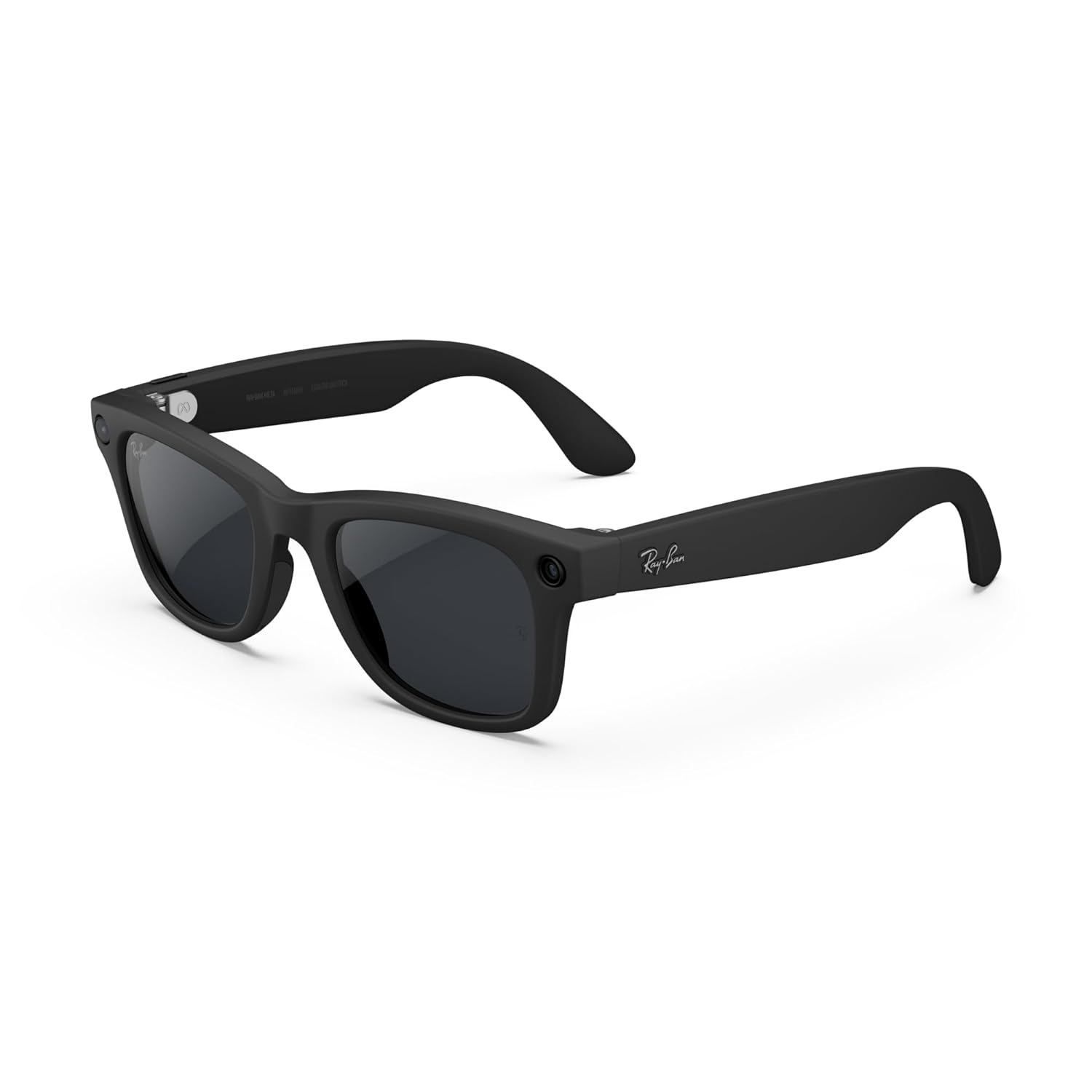
Spec sheet
Ray-Ban Meta Smart Glasses
- Brand and Manufacturer
- Meta / EssilorLuxottica
- Model / Style Number
- 0RW4012 (Ontario Square Frame)
- Chassis Total Weight
- 51.3 grams
- Optics Specification
- Transitions Grey Photochromic Lenses
- Camera Resolution
- 12 MP Ultra-Wide Sensor
- Video Capture Standard
- Up to 3K Ultra HD Resolution
- Maximum Video Clip Duration
- 3 Minutes per Session
- Continuous Battery Runtime
- Up to 8 Hours (Moderate Use)
- Extended Charging Case Capacity
- Up to 48 Hours of Portable Power
- Acoustic Isolation Engineering
- 90% Wind and Street Noise Reduction
Figures as published by the manufacturer on the Amazon listing.
Generational Clarification: Meta Gen 2 vs Gen 3 Hardware
A substantial volume of consumer confusion exists across online technical forums regarding the existence of a designated meta gen 3 device. Meta and EssilorLuxottica originally established their smart eyewear footprint with the initial Ray-Ban Stories generation, which proved the mechanical viability of micro-cameras and temple speakers in acetate frames. The release that followed—frequently cataloged in product inventories as the Gen 2 platform—introduced monumental leaps in compute efficiency, camera fidelity, and battery chemistry, leading many prospective buyers investigating next-stage hardware to query details about ray-ban meta gen 3 advancements before reviewing what the current hardware actually delivers.
When assessing meta gen 2 vs gen 3 expectations, technical analysts must emphasize that the model line designated 0RW4012 represents the cutting edge of Meta’s commercial production run. The current generation resolved critical limitations from earlier attempts by upgrading the optical capture hardware from basic 5-megapixel snapshots to a high-resolution 12-megapixel ultra-wide sensor, doubling overall battery efficiency, and incorporating localized artificial intelligence computation. If you are comparing standard listings for the meta glasses wayfarer gen 2 architecture against future speculative hardware roadmaps, the current second-generation platform remains the active, supported standard delivering modern voice interaction and ultra-high-definition capture.
Speculative discussions around what a theoretical third-generation frame could offer often center on retinal projection displays or cellular modems. However, the current Ray-Ban Meta specs focus strictly on delivering high-utility sensor ingestion, robust Bluetooth data conduits, and audio refinement within a frame that weighs an astonishingly low 51.3 grams. The hardware engineering team deliberately avoided heavy display modules to preserve balance, heat dissipation, and genuine aesthetic parity with traditional Ray-Ban prescription eyewear.
Camera System and Video Capture Capabilities
At the center of the hardware array sits the ray ban meta 12mp camera, embedded seamlessly into the corner hinge of the square Ontario frame. This ultra-wide sensor represents an enormous technical leap over previous wearable iterations, delivering crisp stills and up to 3K resolution video capture. The ultra-wide field of view is calibrated to approximate the human biological visual field, enabling true hands-free point-of-view recording that captures mechanical tasks, culinary prep, sports spectating, or travel walks from natural eye level.
Video recording parameters are engineered around focused operational sessions, supporting continuous clip lengths of up to 3 minutes per session. This hard clip cap represents an engineered thermal and power balance, preventing the micro-sensor from generating excessive surface temperatures along the temple arm while preserving battery life during high-throughput encoding sessions. While long-form documentary videographers might find a 3-minute recording limit restrictive, it serves the intended design paradigm of high-resolution micro-vlogging, social dispatches, and point-of-interest memory archiving.
The imaging package relies on digital stabilization algorithms to balance head articulation, walking gait vibrations, and abrupt horizontal pans. Because the camera is rigidly bound to the wearer’s cranium, standard movement would introduce severe rolling shutter artifacts and rotational shake without active software compensation. Meta’s image signal processing extracts usable, sharp 3K video out of erratic physical movements, giving creators a stable recording tool that bypasses the need for handheld gimbals or chest-mounted action cams.
Power Architecture and Battery Management
Power management remains the most critical engineering challenge in wearable electronics, and the ray ban meta battery life exhibits dramatic generational refinement. Built with miniature lithium-ion cells distributed inside the lightweight 51.3-gram frame, these glasses deliver up to 8 hours of battery life under moderate operating conditions. The listing explicitly confirms that this operational endurance lasts two times longer than previous generations, allowing users to navigate an active workday of periodic communications and photo captures without facing mid-day depletion.
When assessing earlier hardware, users who explored a refurbished meta glasses gen 1 option frequently cited power constraints as their primary friction point. With the current Gen 2 architecture, battery utilization is governed by automated low-power standby states that disengage processor subsystems when the glasses detect inactivity. The companion charging case acts as the primary power reservoir on the move, packing enough reserve capacity to provide up to 48 hours of total charging on-the-go before the external case itself requires electrical reconnection.
Continuous operational scenarios dictate overall battery drain rates. Engaging the 12-megapixel sensor for repeated 3-minute 3K video recordings, streaming open-ear music at peak audio volumes, or running frequent environmental visual analysis queries through Meta AI will consume cell capacity faster than passive standby monitoring. For standard everyday usage consisting of intermittent notifications, spontaneous 30-second video clips, background audio playback, and occasional hands-free calls, the 8-hour operational threshold comfortably accommodates routine daily schedules.
Acoustic Architecture and Communications Clarity
Audio delivery on the Ray-Ban Meta glasses utilizes discreet open-ear speakers positioned along the undersides of both temple arms, directed downward toward the ear canals. This configuration circumvents the auditory isolation caused by in-ear silicone buds, allowing the wearer to maintain acute situational awareness of automotive traffic, ambient office conversations, and environmental warnings while simultaneously listening to podcasts, turn-by-turn navigation, or incoming callers.
Voice transmission and call clarity benefit from a specialized beamforming microphone array. The listing documents that this acoustic array blocks up to 90% of wind and street noise during phone conversations. By actively filtering environmental sound waves through onboard phase-cancellation algorithms, the glasses isolate the wearer’s vocal frequencies, ensuring that colleagues on work conferences or friends on voice calls hear crisp speech rather than ambient gusts or vehicular exhaust rumble.
Hands-free messaging and cellular integration operate across a wireless Bluetooth link connected to the user’s host smartphone. The glasses execute incoming message dictation, voice-driven message replies, and outgoing phone calls without necessitating physical smartphone extraction from pockets or bags. This operational independence makes the platform highly advantageous for commuters, field technicians, and runners who need uninterrupted voice connectivity while keeping their hands fully engaged on external equipment.
Optics, Ergonomics, and Meta AI Processing
Visual comfort and environmental flexibility are anchored by the integrated ray ban meta transition lenses. Engineered with photochromic dyes that react dynamically to ambient ultraviolet radiation, these Transitions Grey lenses darken rapidly when exposed to direct outdoor sunlight and fade back to full optical clarity when stepping indoors. This dual-state capability transforms the glasses into an all-day optical platform, eliminating the friction of constantly swapping between dedicated sunglasses and indoor prescription frames.
On the compute side, the system integrates advanced meta ai smart glasses features driven by voice activation. Wearers can verbally query their eyewear to retrieve real-time suggestions, search answers, set reminders, and execute visual object identification based on what the 12-megapixel camera observes. These features require a persistent Bluetooth link to an iOS or Android smartphone operating the Meta AI companion application with an active mobile data connection.
One of the most technically impressive onboard processing achievements is live speech translation. The system performs real-time audio translation across French, Italian, Spanish, English, German, and Portuguese directly within the hardware architecture without requiring active Wi-Fi connectivity. For international travelers navigating transit hubs or negotiating market transactions abroad, this capability provides instantaneous comprehension through the open-ear drivers without routing audio packets through high-latency cloud networks.
Ray-Ban Meta Smart Glasses Pros and Cons
What works
- Ultra-wide 12 MP camera with 3K video recording
- Up to 8-hour battery with 48-hour charging case
- Transitions lenses darken in sunlight and fade clear indoors
- Offline real-time translation across six major languages
- Microphones block 90 percent of street and wind noise
What to weigh up
- Video recording capped at 3 minutes per session
- Meta AI queries require paired smartphone with internet access
- Listing does not specify submersible waterproof rating
Check Ray-Ban Meta Smart Glasses on Amazon
Who Should Buy the Ray-Ban Meta Smart Glasses
Buy It If
- You want first-person 3K video capture and 12 MP photos without holding a smartphone or mounting an action camera to your body.
- You require photochromic Transitions lenses that adapt seamlessly between indoor work environments and bright outdoor sunlight.
- You travel internationally and benefit from offline real-time voice translation between English, Spanish, French, Italian, German, and Portuguese.
- You conduct frequent calls in noisy outdoor environments and need an acoustic array that suppresses up to 90% of wind and street noise.
Skip It If
- You require augmented reality visual displays, holographic overlays, or an in-lens heads-up digital interface.
- You need continuous, uninterrupted video recording sessions that extend past the hardware’s 3-minute clip limitation.
- You plan to use the eyewear for aquatic sports or submerge it in water, as the listing does not specify water-submersion ratings.
Final Verdict
7.6/10Our score
The technical reality facing hardware researchers is that a distinct meta gen 3 release does not exist in today’s commercial hardware lineup; rather, the current Gen 2 platform—exemplified by this Ontario square model—delivers the exact capabilities consumers expect from next-generation smart eyewear. With its ultra-wide 12-megapixel sensor capturing vivid 3K video clips, an 8-hour battery profile bolstered by a 48-hour charging case, and photochromic Transitions lenses housed within an authentic 51.3-gram Ray-Ban frame, the engineering balance struck here is exceptional.
When determining whether this platform justifies adoption, tech enthusiasts who value immediate point-of-view documentation, hands-free open-ear acoustics, and responsive onboard AI processing will find extraordinary utility. As long as you respect the operational constraints—specifically the 3-minute recording duration and reliance on a host phone’s internet for AI queries—these Ray-Ban Meta glasses represent the most polished, stylistically seamless implementation of consumer smart eyewear currently engineered.
FAQ
Does a Meta Gen 3 smart glasses hardware release exist?
No, there is currently no commercially released Meta Gen 3 smart eyewear platform. The active generation available on the market is the second-generation platform, cataloged under model numbers such as 0RW4012, which upgraded the camera to 12 MP, doubled battery life, and introduced 3K recording capabilities.
What are the primary Ray-Ban Meta Gen 2 specs for recording video?
The glasses feature an ultra-wide 12-megapixel sensor capable of recording video clips in up to 3K Ultra HD resolution. Video recording sessions can capture up to 3 minutes of continuous footage per recording session.
How does the Ray-Ban Meta battery life perform during normal use?
The glasses provide up to 8 hours of operating runtime on a full charge under moderate use conditions, which is twice the operational endurance of previous generations. The included portable charging case supplies up to 48 hours of supplemental power on the go.
Do Ray-Ban Meta transition lenses work indoors?
Yes, the Transitions Grey lenses feature photochromic properties that automatically adapt to light levels. They darken when exposed to outdoor sunlight and fade back to optical clarity when transitioning into indoor environments.
Can real-time language translation function without Wi-Fi?
Yes, the live translation capability functions without Wi-Fi connectivity, supporting real-time two-way translation across English, French, Italian, Spanish, German, and Portuguese.
See this listing on Amazon We may earn a commission if you buy through this link.
More in Audio


The weekly shortlist
Specs worth reading, once a week
New teardowns, spec sheets and buying notes from across the desk.
This demo form is not connected to a mailing service.