Apple MacBook Pro 16 M5 Pro (64GB RAM): Architecture and Hardware Breakdown
The Apple MacBook Pro 16 M5 Pro delivers a high-capacity unified memory footprint paired with a robust 18-core processing subsystem, establishing a high benchmark for sustained professional workstation throughput. Built on Apple silicon architecture,…

As Amazon Associates, we earn from qualifying purchases. This means we may receive a small commission at no extra cost to you if you click through and make a purchase.
The Apple MacBook Pro 16 M5 Pro delivers a high-capacity unified memory footprint paired with a robust 18-core processing subsystem, establishing a high benchmark for sustained professional workstation throughput. Built on Apple silicon architecture, this machine addresses the strict throughput and low-latency demands of enterprise software engineering, complex 3D staging, and uncompressed multi-stream visual effects. For computational professionals balancing resource allocation against real-time feedback, the system offers an uncompromising foundation that maintains predictable execution across intensive concurrent pipelines.
This workstation configuration directly caters to technical specialists, machine learning practitioners, and media directors who routinely push beyond the operational thresholds of standard desktop replacements. Professionals compiling distributed software architectures or grading dense digital cinema assets will benefit directly from the integrated 64GB pool, while mobile generalists or casual users should consider smaller form factors such as the apple macbook pro 14 inch to avoid carrying unnecessary chassis bulk and computational overhead.
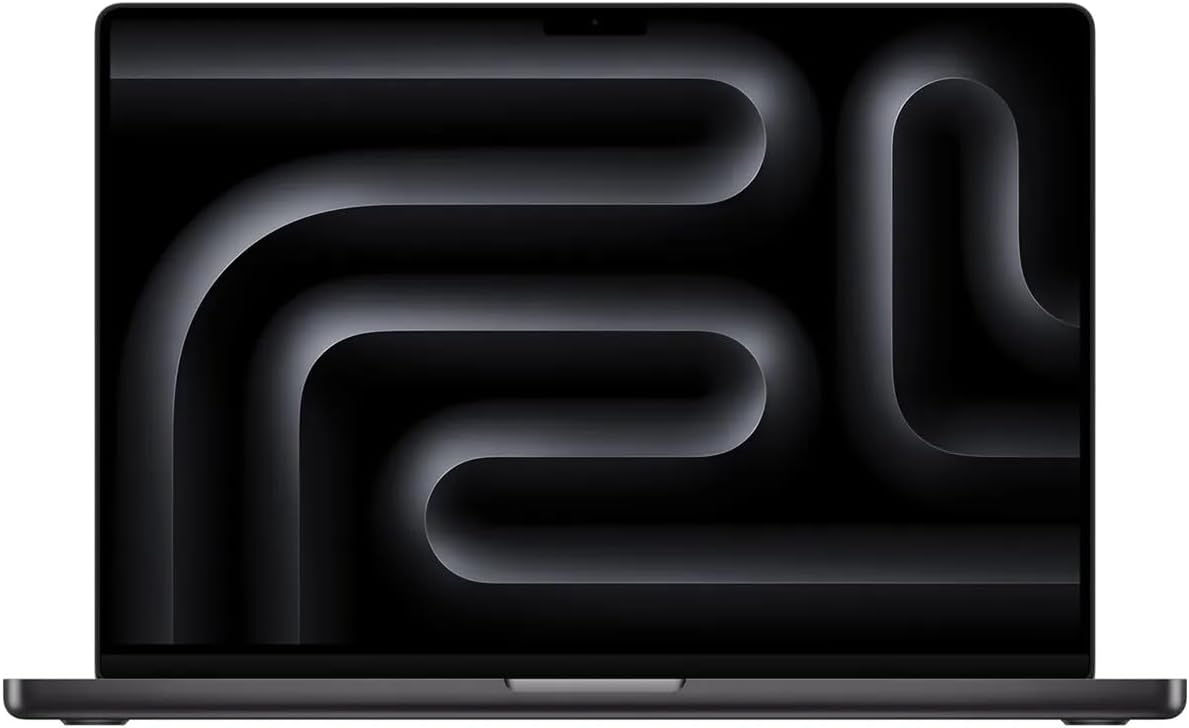
Spec sheet
Apple MacBook Pro 16 M5 Pro
- Central Processing Unit
- Apple M5 Pro (18-Core CPU)
- Graphics Processing Unit
- Apple Integrated (20-Core GPU)
- Unified Memory Allocation
- 64GB High-Bandwidth Unified Memory
- Internal Storage Capacity
- 1TB Solid-State Drive (SSD)
- Display Panel Type
- 16.2-inch Liquid Retina XDR LED (Glossy Finish)
- Native Panel Resolution
- 3456 x 2234 Pixels at 120Hz Refresh Rate
- Expansion Interfaces
- Thunderbolt 5 Connectivity
- Integrated Camera
- 12MP Center Stage Camera
- Physical Dimensions
- 14.01" L x 9.77" W x 0.66" Thickness
Figures as published by the manufacturer on the Amazon listing.
Unified Memory Architecture and High-Throughput Workflows
The defining structural asset of this configuration is the integration of apple m5 pro 64gb unified memory. Unlike traditional computing architectures that separate system RAM from dedicated video memory via a discrete PCI Express bridge, Apple silicon unifies the entire address space under a single high-bandwidth fabric. Both the 18-core CPU and 20-core GPU access the exact same physical memory registers without initiating redundant memory copy operations, completely eliminating the bus saturation bottlenecks that often degrade hybrid rendering and complex physics computations.
Allocating 64GB within this framework fundamentally transforms system multitasking under extreme operational loads. Users deploying multiple Docker containers alongside local test environments and heavy IDEs will observe zero swap-file contention. With a macbook pro m5 64gb ram configuration, the operating system bypasses disk-based virtual memory paging during peak loads, ensuring that memory bus latency remains uniform regardless of how many background services, database daemons, or analytical processes are executing concurrently.
In memory-dense scenarios like training smaller-parameter neural network weights locally or caching massive audio sample libraries, the system ensures real-time operational continuity. The shared memory pool allows the graphics processor to tap into memory capacities far exceeding conventional mobile GPUs, which are typically capped at significantly lower discrete VRAM ceilings. This makes the laptop an elite tool for processing multi-gigabyte spatial datasets and high-resolution textures without encountering out-of-memory kernel panics.
Compute and Graphics Pipeline: 18-Core CPU and 20-Core GPU Performance
Processing scalability is orchestrated by the integrated Apple M5 Pro silicon, configured with an 18-core CPU and a 20-core GPU. The macbook pro m5 pro 18-core cpu performance provides aggressive multithreaded capacity designed to handle deep execution queues without thermal throttling. In parallel compilation jobs, batch asset transcoding, or scientific simulations, work threads distribute efficiently across the core matrix, maximizing instructions per clock cycle while maintaining the power conservation profile typical of modern Apple hardware, as seen across the broader apple 2025 macbook pro laptop lineup.
Graphics throughput is handled by the updated m5 pro 20-core gpu specs. The graphics pipeline utilizes hardware-accelerated compute units capable of executing high-density shader routines, geometry shading, and high-frame-rate rendering simultaneously. By coupling this 20-core graphics array directly to the high-bandwidth memory subsystem, the M5 Pro provides the parallel arithmetic throughput required for dynamic viewport feedback in 3D staging software, high-poly mesh manipulation, and responsive visual computing.
System architecture details from the listing also point to a balanced thermal profile within the 0.66-inch aluminum unibody. The cooling solution is engineered to sustain high clock frequencies across both the 18 CPU cores and 20 GPU cores under sustained multi-hour compute passes. This design prevents the sudden thermal downclocking that frequently handicaps ultra-thin workstations during extended export renders or continuous automated code testing suites.
Production Workloads: Software Development and Creative Media
For engineering teams, the macbook pro m5 pro for software development delivers significant compile-time reductions. Large enterprise codebases composed of thousands of modules compile in parallel without choking the system scheduler. Developers can seamlessly host a full local microservices architecture, complete with multiple virtualized Linux kernels, continuous integration containers, and database instances, while concurrently maintaining active debugging environments with fluid interface responsiveness.
Creative directors will find the macbook pro m5 pro for video editing uniquely tailored to multi-stream post-production. Working with high-bitrate codecs, uncompressed ProRes media, or RAW cinema sequences requires high computational bandwidth to prevent frame drops during timeline scrubbing. The M5 Pro hardware engines handle real-time color grading, multi-camera angle synchronization, and complex composite layers without requiring low-resolution proxy generation, optimizing the overall post-production pipeline.
The combination of computational headroom and rapid system memory access ensures that digital audio workstations run high-track-count projects effortlessly. Hundreds of virtual instruments, dynamic plug-in chains, and low-latency spatial audio monitoring can be executed simultaneously. The 64GB allocation guarantees that dense multi-microphone orchestral libraries reside directly in active RAM, eliminating disc-streaming dropouts and enabling immediate project playback.
I/O Throughput, Storage, and Display Engineering
The physical layout of the MacBook Pro is anchored by its 16.2-inch Liquid Retina XDR display, delivering a resolution of 3456 x 2234 pixels at an adaptive 120Hz refresh rate. The panel utilizes LED illumination with a glossy finish, offering deep black levels, pristine highlights, and exceptional color fidelity essential for color-grading specialists and graphic designers. For users evaluating the standard macbook pro 16 inch display characteristics, this panel provides the desktop-class canvas area required to arrange dual timeline monitors, node-based compositing trees, and expansive code editors on a single mobile screen.
Peripheral expansion and data ingress are driven by next-generation macbook pro 16 m5 pro thunderbolt 5 connectivity. Thunderbolt 5 dramatically elevates bidirectional bandwidth ceiling over preceding interfaces, allowing power users to drive multiple high-resolution external monitors, connect multi-drive RAID storage arrays, and chain high-speed networking adapters through a single cable interface. Video acquisition teams working on set can offload multi-terabyte camera cards in fractions of the time previously required, streamlining field operations.
Internal storage is backed by an integrated 1TB solid-state drive. While the listing does not specify synthetic read and write transfer rates for a macbook pro m5 pro 1tb ssd benchmark, modern Apple NVMe-based flash arrays deliver exceptional throughput that prevents data bottlenecks during massive sequential file transfers and random I/O application launches. This high-speed flash storage ensures that local databases, project caches, and boot operations execute near-instantaneously.
Apple MacBook Pro 16 M5 Pro Pros and Cons
What works
- High-capacity 64GB unified memory architecture
- Potent 18-core CPU and 20-core GPU configuration
- Expansive 16.2-inch 120Hz Liquid Retina XDR display
- High-speed Thunderbolt 5 peripheral connectivity
- Complete 140W MagSafe 3 fast-charging kit included
What to weigh up
- Heavier 16-inch chassis reduces travel portability
- Non-upgradable unified memory and internal SSD storage
- Overpowered hardware for standard daily productivity tasks
Check Apple MacBook Pro 16 M5 Pro on Amazon
Who Should Buy the Apple MacBook Pro 16 M5 Pro
Buy It If
- You manage memory-heavy software engineering workflows featuring continuous Docker containers, local virtual machines, and massive parallel compilation trees.
- Your post-production pipelines demand editing native multi-stream 4K or 8K video timelines without generating intermediate proxy media.
- You require massive memory allocation combined with next-generation Thunderbolt 5 throughput for expansive multi-monitor and high-speed RAID studio configurations.
- You need a mobile color-critical 16.2-inch Liquid Retina XDR workspace operating at 120Hz for rigorous creative grading and visual design.
Skip It If
- Your primary computing routine revolves around basic browser tasks, office document editing, or light productivity where a high-end 18-core CPU is heavily underutilized.
- Maximum mobility and lightweight transport are your top criteria, making a more compact chassis like the macbook neo silver a more ergonomic daily selection.
- You require a budget-constrained entry-level laptop with modular, post-purchase internal component upgradability.
Final Verdict
9.0/10Our score
Determining whether is macbook pro m5 pro 64gb worth it comes down strictly to the complexity and computational saturation of your daily workload. The integration of the 18-core CPU, 20-core GPU, and 64GB of unified memory addresses the precise bottlenecks that high-end developers, digital artists, and systems engineers face under heavy parallel execution. By eliminating memory swapping and reducing compute times during sustained multi-core tasks, this hardware setup delivers tangible workflow acceleration that directly translates into reclaimed operational hours.
While the physical form factor of the 16.2-inch chassis commands deliberate space inside a travel pack, the trade-off yields an exceptional desktop-class display, class-leading thermal headroom, and cutting-edge Thunderbolt 5 connectivity. For professionals whose productivity relies on zero-compromise processing power, broad memory ceilings, and unthrottled hardware execution, the Apple MacBook Pro 16 M5 Pro stands as a comprehensively engineered workstation built for uncompromising commercial execution.
FAQ
What makes the 64GB unified memory on the M5 Pro different from standard laptop RAM?
Standard laptops route RAM to the CPU and discrete VRAM to the graphics card across an external PCI Express bus. The 64GB unified memory in the M5 Pro sits on a single high-bandwidth architectural fabric accessible by both the 18-core CPU and 20-core GPU simultaneously, eliminating duplicate data caching and reducing memory access latency significantly.
What display specifications are featured on this 16-inch model?
The laptop is equipped with a 16.2-inch Liquid Retina XDR LED display with a glossy finish. It delivers a native maximum resolution of 3456 x 2234 pixels and supports a smooth 120Hz refresh rate for fluid interaction and high-precision visual inspection.
What accessories are included in the box with the Apple MacBook Pro 16 M5 Pro?
The package includes the Apple MacBook Pro 16″ Early 2026 workstation, a 140W USB-C Power Adapter, a 6.5-foot USB-C to MagSafe 3 charging cable, and Apple limited warranty documentation.
How does Thunderbolt 5 improve external connectivity on this workstation?
Thunderbolt 5 represents the newest external interface standard, providing substantially higher bidirectional bandwidth compared to prior generations. This allows high-throughput peripheral workflows, including high-speed external NVMe RAID arrays, multi-monitor display outputs, and dedicated external accelerator integration.
Can the internal 1TB SSD or 64GB memory be upgraded after purchase?
No, the listing does not specify any internal upgradability, as Apple silicon integrates the unified memory and solid-state storage directly onto the system board. Users needing more capacity must configure their requirements prior to purchase or utilize high-speed external storage connected via Thunderbolt 5.
See this listing on Amazon We may earn a commission if you buy through this link.
More in Computers & Laptops


The weekly shortlist
Specs worth reading, once a week
New teardowns, spec sheets and buying notes from across the desk.
This demo form is not connected to a mailing service.