Apple MacBook Pro 16 M5 Max (48GB): Hardware and Workload Analysis
The MacBook Pro 16 M5 Max represents Apple’s premier high-performance mobile workstation, pairing an 18-core CPU with a 40-core GPU, 48GB of unified memory, and a 2TB solid-state drive. Configured in Space Black with…

As Amazon Associates, we earn from qualifying purchases. This means we may receive a small commission at no extra cost to you if you click through and make a purchase.
The MacBook Pro 16 M5 Max represents Apple’s premier high-performance mobile workstation, pairing an 18-core CPU with a 40-core GPU, 48GB of unified memory, and a 2TB solid-state drive. Configured in Space Black with model identifier MGEE4LL/A, this laptop integrates dedicated Neural Accelerators into each graphics core to execute demanding computational workloads directly on local silicon. The technical verdict is clear: this configuration establishes a formidable benchmark for on-device machine learning inference and intensive multi-stream digital workflows, providing exceptional portable processing power for professionals who operate within a 48GB unified ceiling.
This workstation targets machine learning engineers, 3D technical directors, and video colorists who demand sustained processing speeds and multi-display flexibility without throttling away from wall power. Those migrating from older hardware like the macbook pro 16 m3 max will observe immediate architectural enhancements in local model execution and external throughput. Conversely, general productivity users and developers whose local machine learning parameters require higher unified memory allocations should evaluate different tiers before committing to this specific setup.
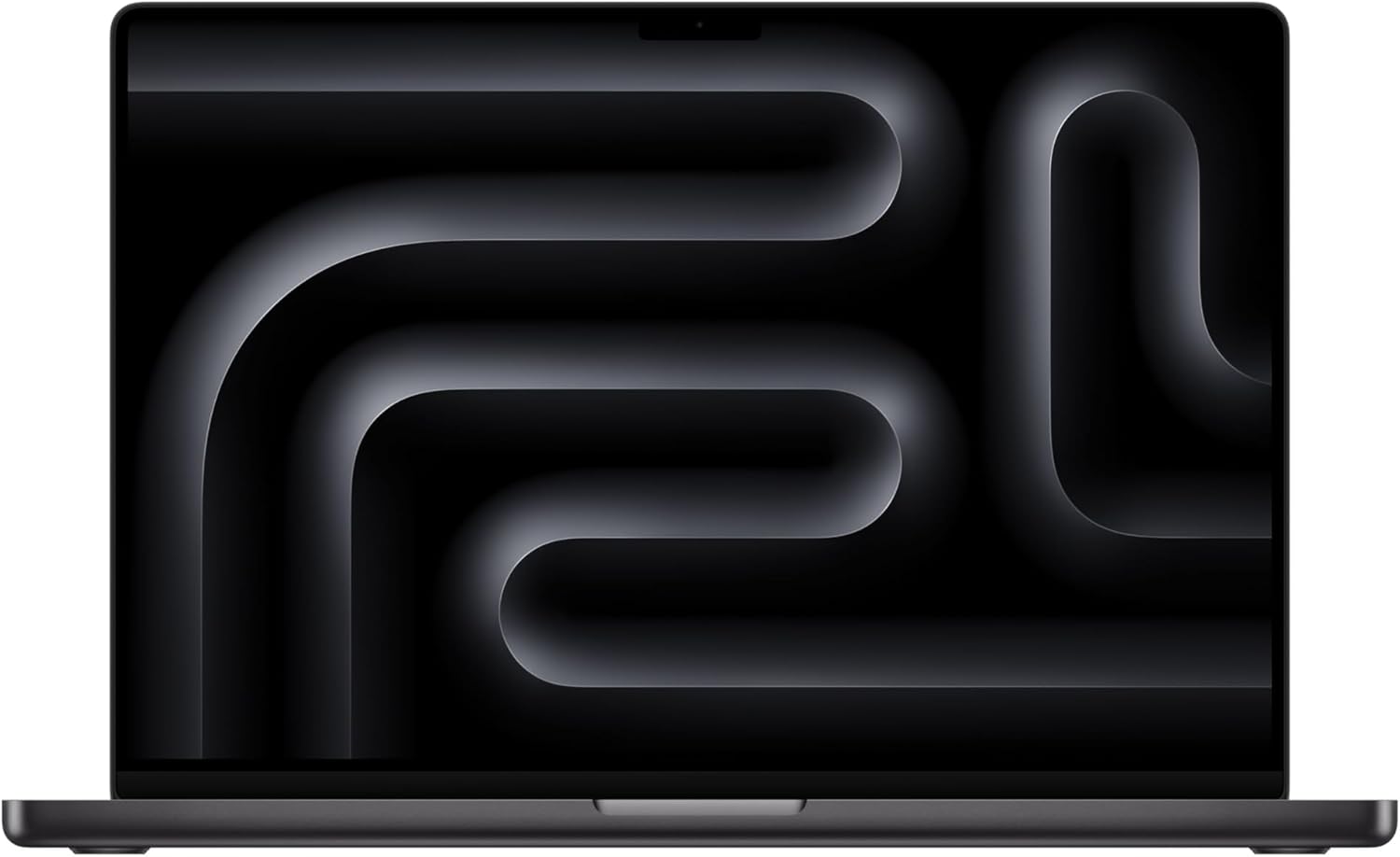
Spec sheet
MacBook Pro 16 M5 Max
- Central Processor
- Apple M5 Max with 18-core CPU
- Graphics Processor
- 40-core GPU with per-core Neural Accelerators
- Unified Memory
- 48GB unified memory architecture
- Internal Storage
- 2TB SSD (up to 2x faster performance)
- Display Panel
- 16.2-inch Liquid Retina XDR (1600 nits peak, 1000 nits sustained)
- Display Contrast
- 1,000,000:1 contrast ratio
- Wired Connectivity
- 3x Thunderbolt 5, HDMI, SDXC slot, MagSafe 3, headphone jack
- External Display Support
- Up to 4 external displays
- Wireless Connectivity
- Apple N1 chip, Wi-Fi 7 (802.11be), Bluetooth 6, Thread
- Chassis Dimensions & Weight
- 14.01 x 9.77 x 0.66 inches; 4.73 pounds
Figures as published by the manufacturer on the Amazon listing.
Compute Architecture and AI Workload Processing
The foundational hardware leap in this laptop centers on the silicon configuration: an m5 max 18 core cpu 40 core gpu array engineered specifically for high-throughput computational density. Apple silicon moves beyond standard compute clusters by embedding a discrete Neural Accelerator into each of the 40 graphics cores. This architectural shift significantly accelerates local artificial intelligence routines, transforming the macbook pro m5 max for ai workloads from a standard laptop into a dedicated personal inference node capable of sustained large language model execution and rapid fine-tuning runs.
Evaluating the m5 max vs m5 pro hardware structure reveals critical advantages for sustained rendering pipelines and computational datasets. While both tiers benefit from next-generation CPU designs and faster solid-state storage subsystems, the M5 Max doubles down on raw graphics capacity and on-device training capability. Users transitioning from older setups like the macbook m2 max will register distinct acceleration in complex 3D ray tracing, parallelized code compilation, and Apple Intelligence functions governed by macOS security layers.
Beyond theoretical compute numbers, the integration between the 18-core CPU and the GPU cores allows seamless execution of on-device training tasks. The listing indicates that Apple silicon components are explicitly tailored to run demanding on-device AI workloads such as LLM inference without relaying sensitive data across cloud endpoints. This hardware-level optimization ensures that whether executing parallel batch tasks or real-time simulation rendering, the processor pipeline remains saturated without experiencing computational stalls.
Memory Architecture and the 48GB Capacity Ceiling
The macbook pro 48gb unified memory setup provides a consolidated, low-latency pool accessible simultaneously by the central processing unit, the graphics array, and the per-core Neural Accelerators. Because the memory is unified directly on the package, data assets do not need to be duplicated across discrete PCI Express bridges. In high-bandwidth production environments, this enables instant asset sharing between render pipelines and compute frameworks, drastically lowering execution overhead during intensive processing phases.
For data scientists assessing the macbook pro m5 max 48gb model, understanding memory overhead is critical for local deployment. Running quantized large language models, expansive digital audio sessions, and complex multi-layered 3D geometry requires careful tracking of memory pressure. The 48GB pool comfortably houses medium-to-large quantized open-weights models alongside active development environments. However, practitioners handling massive unquantized parameter sets must account for the fixed nature of unified memory, as the listing confirms internal capacities cannot be altered after manufacture.
Complementing the unified memory pool is an internal 2TB solid-state drive that the listing highlights as delivering up to two times faster storage performance than previous generations. High-speed disk caching mitigates bottlenecks when swapping virtual memory under heavy dataset manipulation. In parallel, macOS features like iPhone Mirroring and background security tasks operate concurrently without competing for storage input-output bandwidth, preserving predictable execution times across professional production pipelines.
Display Specifications and Media Engine Capabilities
Visual verification on the workstation relies on an exceptional 16.2-inch Liquid Retina XDR screen. The macbook pro m5 max display specs detail 1600 nits of peak brightness for HDR content evaluation, 1000 nits of sustained full-screen brightness, and an expansive 1,000,000:1 contrast ratio. This level of luminance control enables colorists and technical directors to master HDR footage natively on location without relying solely on external mastering monitors.
Hardware media playback capabilities are comprehensive, covering advanced professional formats directly on silicon. Supported video codecs include:
- HEVC and H.264 hardware acceleration
- AV1 decoding for next-generation streaming pipelines
- ProResHDR encoding and playback
- Dolby Vision, HDR10+, HDR10, and HLG mastering profiles
Audio playback is equally robust, supporting AAC, MP3, Apple Lossless, FLAC, Dolby Digital, Dolby Digital Plus, and Dolby Atmos. The chassis incorporates a six-speaker sound system with Spatial Audio alongside three studio-quality microphones, forming a cohesive multimedia hub. For video collaboration, an upgraded 12MP Center Stage camera maintains precise subject framing during remote technical reviews.
Thunderbolt 5 Connectivity and Multi-Display Expansion
Peripheral expansion marks a substantial architectural milestone through the inclusion of macbook pro m5 max thunderbolt 5 ports. The machine integrates three dedicated Thunderbolt 5 interfaces alongside an HDMI port, an SDXC memory card slot, a 3.5mm headphone jack, and a MagSafe 3 charging port. Thunderbolt 5 delivers significant bandwidth gains, accommodating ultra-fast external NVMe scratch disks, specialized capture cards, and high-resolution display matrices without encountering peripheral interface bottlenecks.
Display expansion capabilities distinguish the M5 Max chip from lower-tier silicon. While machines equipped with an apple m3 pro or standard M5 Pro support up to three external displays, the M5 Max silicon architecture natively drives up to four external monitors simultaneously. This allows creative facilities to deploy multi-monitor mastering environments directly from the laptop, driving multiple 4K, 5K, or 6K reference displays while simultaneously leveraging high-speed peripheral arrays through the secondary ports.
Wireless networking receives a parallel architectural update via the Apple-designed N1 wireless chip. This internal controller introduces Wi-Fi 7 (802.11be) compatibility for reduced local network latency and accelerated wireless data transfers, alongside Bluetooth 6 and integrated Thread networking technology. These wireless capabilities guarantee efficient communication within device ecosystems, facilitating swift wireless transfers and robust peripheral synchronicity across busy technical workspaces.
Thermals, Chassis Form Factor, and Battery Endurance
The physical footprint of the 16-inch MacBook Pro reflects its heavy workstation classification. Measuring 14.01 inches wide, 9.77 inches deep, and 0.66 inches thick with an overall weight of 4.73 pounds, the aluminum Space Black unibody enclosure provides the thermal mass required to cool an 18-core CPU and 40-core GPU. The chassis includes practical ergonomic elements such as a backlit keyboard and an integrated fingerprint reader for secure, rapid biometric authentication.
Power management is engineered around a built-in lithium polymer battery delivering all-day battery life. A foundational technical advantage of the Apple silicon architecture emphasized in the listing is its ability to deliver the exact same exceptional processing performance whether operating on battery reserves or tethered to wall power. This eliminates the aggressive thermal throttling and graphics downclocking traditionally observed on portable workstations when disconnected from mains electricity.
When asking is macbook pro m5 max worth it from a mobility standpoint, weight and endurance must be balanced against raw performance. At 4.73 pounds, the laptop is a substantial presence in travel packs. However, the macbook pro m5 max battery life eliminates the mandatory requirement to carry heavy external power bricks for standard field assignments, ensuring predictable execution speeds across remote filming locations and mobile compute deployments.
MacBook Pro 16 M5 Max Pros and Cons
What works
- 18-core CPU and 40-core GPU configuration
- Neural Accelerator integrated into each GPU core
- High-speed 48GB unified memory architecture
- Three high-bandwidth Thunderbolt 5 ports
- Liquid Retina XDR display with 1600 nits peak
- Apple N1 wireless chip with Wi-Fi 7
What to weigh up
- Substantial 4.73-pound chassis limits ultra-portable travel
- Unified memory capacity fixed at 48GB post-purchase
- Workstation tasks may require external storage beyond 2TB
Check MacBook Pro 16 M5 Max on Amazon
Who Should Buy the MacBook Pro 16 M5 Max
Buy It If
- You run intensive local AI inference models and need on-device training accelerated by per-core Neural Accelerators.
- Your visual workflow requires up to four external displays driven concurrently alongside high-bandwidth Thunderbolt 5 storage arrays.
- You require desktop-class rendering performance that remains identical when operating on battery power in remote environments.
- You need a calibrated 16.2-inch Liquid Retina XDR screen with 1600 nits peak brightness for rigorous HDR color grading.
Skip It If
- Your local machine learning datasets or 3D scene files exceed the 48GB unified memory ceiling and require larger memory allocations.
- Your primary computing tasks consist of standard web browsing, office productivity, or lightweight document editing.
- You require a lightweight ultraportable laptop designed primarily for minimal transit weight rather than peak computational density.
Final Verdict
8.8/10Our score
The MacBook Pro 16 M5 Max establishes a rigorous technical standard for mobile computational hardware. By integrating an 18-core CPU, a 40-core GPU armed with per-core Neural Accelerators, and 48GB of high-speed unified memory, Apple has engineered an instrument explicitly capable of handling demanding machine learning inference, complex 3D simulation, and multi-stream ProRes workflows. The implementation of Thunderbolt 5, the Apple N1 Wi-Fi 7 chip, and quad-display support ensures that physical expansion matches the processing velocity of the internal silicon.
Potential adopters must assess their individual workload parameters against the hardware ceiling of this specific model. While the 2TB SSD and 48GB unified pool provide substantial bandwidth for parallel creative tasks and localized model deployment, users working with massive neural networks that exceed 48GB will find this configuration limiting. For professionals whose workflows align with its precise memory envelope and multi-display capabilities, this workstation delivers exceptional sustained performance across mobile and studio deployments alike.
FAQ
How does the M5 Max GPU architecture improve local AI model execution?
The M5 Max GPU integrates a dedicated Neural Accelerator inside each of its 40 graphics cores. This distributed hardware architecture accelerates parallel tensor mathematics directly on the graphics processor, enabling faster on-device training and lower-latency large language model inference without relying on cloud computation.
Is 48GB of unified memory sufficient for heavy professional production?
The 48GB unified memory allocation provides ample headroom for medium-to-large quantized local AI models, 4K and 8K multi-stream video editing, and complex 3D visual effects. However, because unified memory cannot be upgraded after purchase, professionals handling massive parameter sets or gigantic dataset caches should confirm their active working footprint remains within 48GB.
How many external monitors can the MacBook Pro 16 M5 Max drive simultaneously?
According to the product data, the M5 Max configuration supports up to four external displays simultaneously. This gives it a significant expansion advantage over M5 Pro configurations, which support a maximum of three external displays.
What wireless networking standards does the Apple N1 chip support?
The Apple-designed N1 wireless networking chip integrates support for Wi-Fi 7 (802.11be), Bluetooth 6, and Thread networking technology. This provides reduced latency, elevated wireless throughput, and seamless integration with compatible modern network equipment.
Does the MacBook Pro 16 M5 Max throttle performance when running on battery?
The product specifications indicate that the MacBook Pro delivers the same exceptional performance whether operating on battery power or connected to wall power. Unlike many traditional mobile workstations that throttle GPU clocks off mains electricity, Apple silicon maintains uniform execution speeds.
See this listing on Amazon We may earn a commission if you buy through this link.
More in Computers & Laptops


The weekly shortlist
Specs worth reading, once a week
New teardowns, spec sheets and buying notes from across the desk.
This demo form is not connected to a mailing service.