Acer Predator Helios 300 Breakdown: Architecture and Upgrade Specs
The Acer Predator Helios 300 (model PH315-52-78VL) is a dedicated mid-tier gaming laptop engineered to deliver high-frame-rate 1080p performance without the unwieldy bulk of halo desktop replacements. Powered by a 9th Generation Intel Core…

As Amazon Associates, we earn from qualifying purchases. This means we may receive a small commission at no extra cost to you if you click through and make a purchase.
The Acer Predator Helios 300 (model PH315-52-78VL) is a dedicated mid-tier gaming laptop engineered to deliver high-frame-rate 1080p performance without the unwieldy bulk of halo desktop replacements. Powered by a 9th Generation Intel Core i7-9750H processor and NVIDIA GeForce GTX 1660 Ti graphics, this platform targets competitive esports players who need stable computing throughput. Based on our research of the listing and technical specifications, the notebook delivers a balanced mobile architecture prioritizing practical modularity and thermal efficiency over unnecessary visual gimmicks.
This configuration suits competitive esports enthusiasts, technical students, and PC gamers seeking fluid frame rates and easy internal maintenance. Shoppers who initially research extreme halo hardware like the Acer Predator 21 X often choose this model when looking for an accessible, practical gaming machine. Conversely, power users seeking native 4K gaming, hardware ray tracing, or massive factory solid-state storage should evaluate higher-tier desktop replacements or plan for immediate storage upgrades.
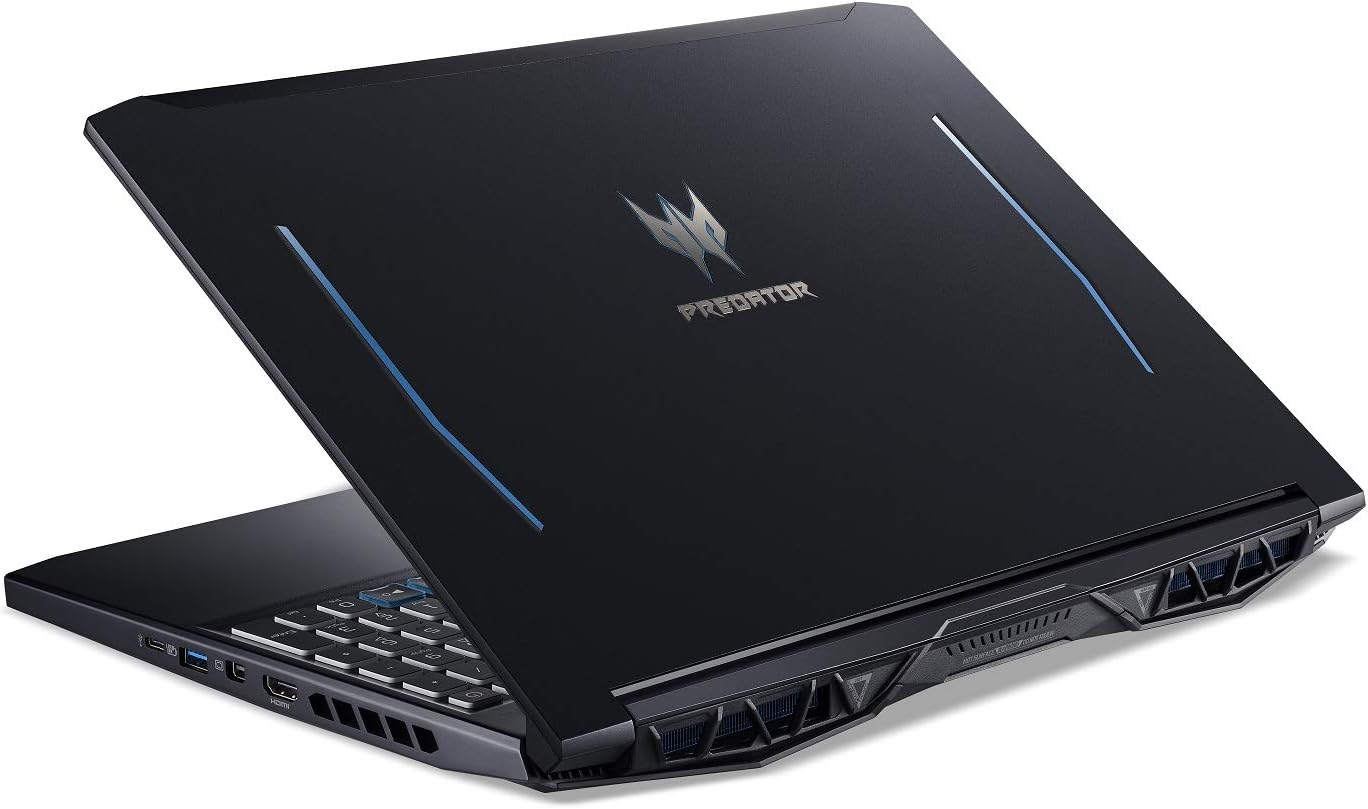
Spec sheet
Acer Predator Helios 300
- Processor
- Intel Core i7-9750H (6 cores, 12 threads, 2.6GHz base, up to 4.5GHz)
- Graphics Card
- NVIDIA GeForce GTX 1660 Ti (6GB dedicated GDDR6 VRAM)
- Display Panel
- 15.6-inch Full HD (1920 x 1080) IPS, 144Hz, 3ms Overdrive response time
- Color & Brightness
- 300 nits brightness, 72% NTSC color gamut, 16:9 aspect ratio
- System Memory
- 16GB DDR4 2666MHz SDRAM
- Storage Drive
- 256GB PCIe NVMe SSD
- Storage Expansion
- 2 x PCIe M.2 slots (1 slot open) plus 1 available hard drive bay
- Thermal Solution
- 4th Generation All-Metal AeroBlade 3D Fan cooling
- Networking
- Killer Ethernet E2500 LAN, Killer Wireless-AC 1550 (802.11ac)
- Chassis Weight
- 5.1 pounds
Figures as published by the manufacturer on the Amazon listing.
Processing Architecture and Graphics Capability
At the center of the computing architecture sits the 9th Generation Intel Core i7-9750H processor, built with six physical cores and twelve execution threads running at 2.6GHz with Turbo Boost speeds up to 4.5GHz. For hardware enthusiasts who review the absurd proportions and extreme power draw of older halo models in historical acer predator 21x specs, this laptop presents a modern, balanced alternative. The 6-core silicon handles intensive physics calculations, background streaming, and multi-threaded game engines with stable clock speeds. To see how recent processing advancements compare across generations, check our detailed acer predator helios neo 16s ai review.
Graphics rendering is handled by the dedicated NVIDIA GeForce GTX 1660 Ti containing 6GB of GDDR6 video memory. Built on NVIDIA’s Turing architecture, the acer predator helios 300 gtx 1660 ti pairing targets pure rasterization performance without the thermal penalty of first-generation ray tracing hardware. The 6GB VRAM buffer ensures high-resolution textures load smoothly in modern releases, establishing the Acer Predator Helios 300 for 1080p gaming as a reliable esports machine. For shoppers seeking a sensible acer predator 21x alternative that does not require an oversized chassis or multiple power supplies, this graphical setup offers sustained frame pacing across competitive multiplayer arenas.
Under sustained combined processing and graphics workloads, system power delivery remains stable. The balance between CPU draw and the 80-watt GPU envelope prevents major frame rate stutters during prolonged gaming matches. Memory bandwidth is supported by 16GB of DDR4 SDRAM clocked at 2666MHz, supplying adequate data throughput to feed both graphics assets and CPU compute pipelines. Evaluating the core silicon demonstrates that cohesive component engineering delivers exceptional real-world execution across demanding gaming applications.
Display Metrics and Visual Performance
The visual centerpiece is a 15.6-inch Full HD widescreen IPS panel featuring a native resolution of 1920 x 1080. The primary highlight for competitive players is the integrated acer predator helios 300 144hz display, which refreshes images more than twice as fast as standard 60Hz panels. This elevated refresh cadence translates into ultra-smooth camera tracking and reduced display latency during fast movement. While desktop monitors like the acer predator x34 oled target wide aspect ratios, this display delivers precise visual synchronization tailored directly for mobile competitive play.
Panel responsiveness is further augmented by a 3ms Overdrive response time, eliminating trailing ghost artifacts behind fast-moving characters. The display outputs 300 nits of brightness, ensuring comfortable visibility under standard indoor room lighting without distracting reflections. Color reproduction covers 72% of the NTSC color gamut, which provides vibrant, accurate color saturation for gaming worlds and video streaming. While studio colorists may require external color grading displays, this panel provides an immersive, vivid palette for recreational and competitive use.
Viewing angles remain wide and uniform due to the underlying IPS architecture, preventing contrast shifting or color washing when viewing the screen from varied angles. The standard 16:9 aspect ratio guarantees native support across modern video formats and esports titles without letterboxing. The listing does not specify G-Sync integration for the internal screen, but the combination of high refresh rates and rapid pixel response effectively minimizes visible screen tearing during intense multiplayer action.
Storage Expansion and Internal Upgrade Slots
Where many modern portable systems solder components directly to the mainboard, the internal layout of the PH315-52-78VL chassis prioritizes long-term modularity. The motherboard provides accessible acer predator helios 300 upgrade slots, featuring two dedicated PCIe M.2 solid-state drive slots alongside an independent 2.5-inch hard drive bay. Out of the box, one M.2 slot is pre-populated with a 256GB PCIe NVMe SSD, leaving the secondary M.2 slot open for storage expansion. For builders considering high-performance NVMe storage additions, our acer predator gm7 2tb ssd analysis outlines modern solid-state drive capabilities.
The standard 256GB factory capacity fills up rapidly with modern game installs often demanding over 50GB individually. However, having an accessible second PCIe M.2 slot and an empty 2.5-inch drive bay allows users to expand their storage footprint effortlessly. A secondary high-speed NVMe drive can host your primary game library, while the 2.5-inch drive bay can house a high-capacity SATA solid-state drive or mechanical hard drive for documents and media. This tiered internal architecture eliminates the frustration of having a sealed laptop chassis.
Memory expandability follows a similarly user-friendly design. The system includes 16GB of DDR4 SDRAM operating at 2666MHz installed in standard SO-DIMM sockets rather than non-removable soldered chips. Enthusiasts reviewing overall acer predator helios 300 specs will appreciate that both memory and storage interfaces can be serviced or upgraded over time. This architectural modularity ensures that the laptop can adapt to increasing software demands long after purchase.
Thermal Cooling Architecture and Acoustics
Cooling high-performance computing hardware within a 5.1-pound notebook chassis requires advanced thermal engineering. The predator helios 300 thermal cooling apparatus relies on Acer’s 4th Generation All-Metal AeroBlade 3D Fan technology. These ultrathin bionic metal blades incorporate curved serrated edges that maximize airflow efficiency while reducing aerodynamic resistance. By utilizing thin all-metal construction rather than standard thick plastic blades, the dual fans generate stronger static air pressure through the heatsink fin array.
Thermal management is reinforced by copper heat pipes spanning across both the Intel Core i7 processor and the NVIDIA GTX 1660 Ti graphics chip. Intake grilles on the bottom panel pull fresh air over the motherboard components, exhausting thermal heat outward through rear and side vents. This deliberate directional airflow keeps surface temperatures under control, ensuring that the backlit keyboard and key control clusters remain comfortable to the touch throughout extended competitive sessions.
Under everyday desktop tasks, the thermal cooling assembly operates with a subtle, low-frequency hum that blends into normal room acoustics. When launching demanding 3D gaming titles, the fans accelerate to evacuate heat generated by the combined silicon TDP. While maximum fan speeds generate noticeable ambient noise, the metal AeroBlade construction produces a steady, uniform airflow pitch rather than high-pitched whining. For an in-depth breakdown of chassis engineering, refer to our comprehensive acer predator helios 300 overview.
Acer Predator Helios 300 Pros and Cons
What works
- Fast 144Hz 3ms Full HD IPS display
- NVIDIA GeForce GTX 1660 Ti 6GB GPU
- Dual M.2 slots and 2.5-inch drive bay
- 4th Gen All-Metal AeroBlade 3D cooling
- Killer DoubleShot Pro wireless and Gigabit LAN
What to weigh up
- Modest 256GB factory solid-state drive
- Chassis weight of 5.1 pounds
- Noticeable fan noise during intensive gaming
Check Acer Predator Helios 300 on Amazon
Who Should Buy the Acer Predator Helios 300
Deciding whether is acer predator helios 300 worth it comes down to balancing high-refresh 1080p performance against factory storage limits. This laptop remains a reliable choice for players seeking strong graphical output, practical upgrade pathways, and responsive display metrics within a manageable clamshell form factor.
Buy It If
- You play competitive multiplayer titles that benefit directly from a 144Hz refresh rate and 3ms overdrive response time.
- You want open internal expansion bays, including a spare M.2 PCIe slot and an open 2.5-inch drive bay for storage upgrades.
- You require reliable 1080p gaming performance powered by a 6-core Intel Core i7-9750H CPU and 6GB GTX 1660 Ti GPU.
- You value dedicated Killer Gigabit Ethernet and Killer Wireless-AC 1550 networking for stable online gameplay.
Skip It If
- You expect massive out-of-the-box storage without purchasing a secondary solid-state drive to supplement the 256GB base SSD.
- You require advanced hardware ray tracing features or native 4K gaming capabilities found in higher-tier GPUs.
- You need an ultralight travel laptop under four pounds for strictly portable daily office commutes.
Final Verdict
9.0/10Our score
The Acer Predator Helios 300 PH315-52-78VL stands as a well-engineered 1080p gaming laptop that balances silicon capability with thermal practicality. By uniting the 6-core Intel Core i7-9750H processor with the NVIDIA GeForce GTX 1660 Ti and a smooth 144Hz IPS panel, this laptop satisfies the demands of modern esports without unnecessary thermal throttling. Its metal AeroBlade 3D fan architecture maintains disciplined temperatures under sustained loads, while dual-band Killer networking hardware ensures reliable ping times in competitive matches.
Although the initial 256GB NVMe SSD requires rapid expansion to accommodate several modern game installs, the chassis provides accessible upgrade slots including a second M.2 PCIe bay and a 2.5-inch drive bay. For gamers seeking a reliable, modular gaming machine built on proven components and fluid visual output, this system delivers enduring computing performance and dependable long-term usability.
FAQ
Does the Acer Predator Helios 300 support storage upgrades out of the box?
Yes, the notebook includes an open secondary PCIe M.2 slot and an available 2.5-inch hard drive bay alongside the pre-installed 256GB PCIe NVMe SSD, allowing straightforward internal storage expansion.
What type of display panel is installed on this laptop?
The laptop features a 15.6-inch Full HD (1920 x 1080) LED-backlit IPS display with a 144Hz refresh rate, 3ms Overdrive response time, 300-nit brightness, and a 72% NTSC color gamut.
What processor and graphics chip power the Acer Predator Helios 300?
This configuration is powered by a 9th Generation Intel Core i7-9750H 6-core processor with clock speeds up to 4.5GHz and a dedicated NVIDIA GeForce GTX 1660 Ti graphics card with 6GB of GDDR6 VRAM.
What audio features are included with the system?
The laptop integrates Waves MaxxAudio technology with MaxxBass, MaxxVolume, MaxxDialog, Waves Nx 3D audio, Acer TrueHarmony technology, two built-in stereo speakers, and Acer Purified.Voice technology with two integrated microphones.
Does the laptop include wired Ethernet connectivity?
Yes, it features a Killer Ethernet E2500 10/100/1000 Gigabit Ethernet port alongside Killer DoubleShot Pro Wireless-AC 1550 802.11ac Wi-Fi with 2×2 MU-MIMO technology.
See this listing on Amazon We may earn a commission if you buy through this link.
More in Computers & Laptops


The weekly shortlist
Specs worth reading, once a week
New teardowns, spec sheets and buying notes from across the desk.
This demo form is not connected to a mailing service.