50 Things to See with Binoculars: Technical Layout & Content Breakdown
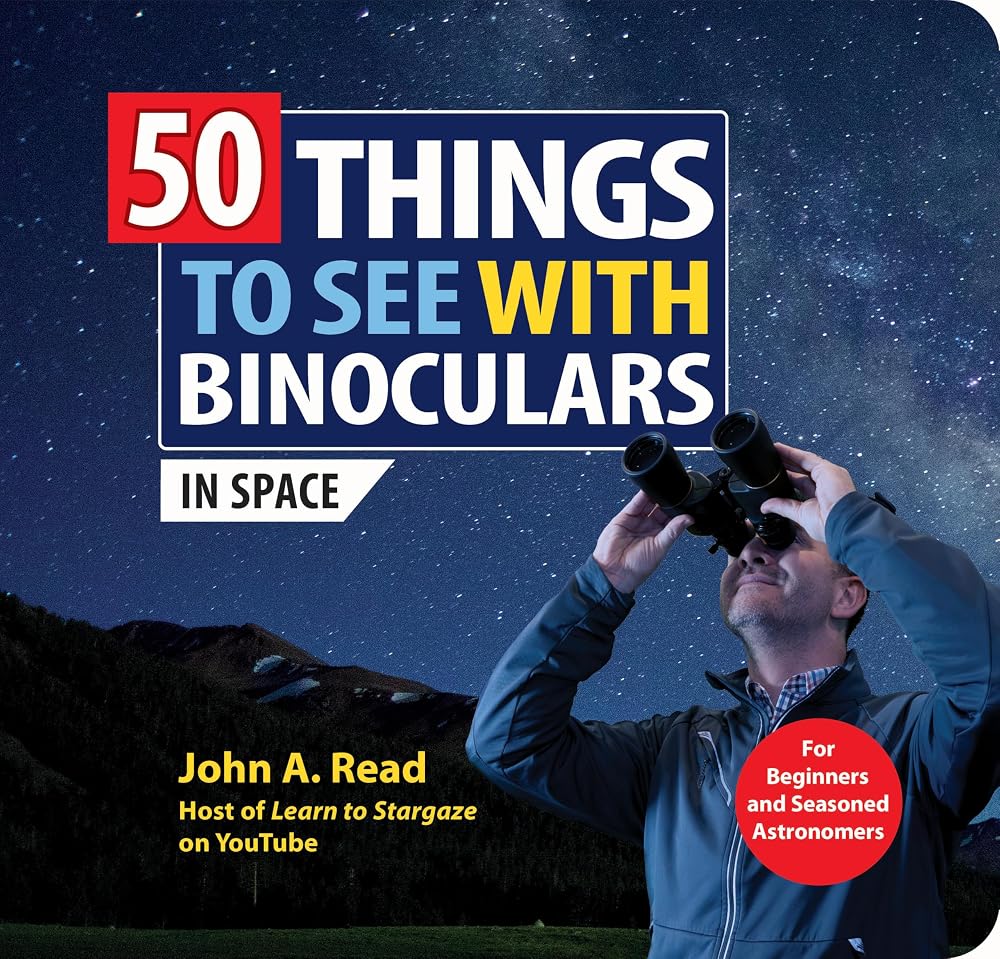
The 50 Things to See with Binoculars guide, published by Sourcebooks, is an entry-level celestial handbook designed to bridge the gap between naked-eye stargazing and instrument-assisted astronomy. In this comprehensive 50 things to see…
As Amazon Associates, we earn from qualifying purchases. This means we may receive a small commission at no extra cost to you if you click through and make a purchase.
The 50 Things to See with Binoculars guide, published by Sourcebooks, is an entry-level celestial handbook designed to bridge the gap between naked-eye stargazing and instrument-assisted astronomy. In this comprehensive 50 things to see with binoculars review, the volume proves to be an accessible, logically structured visual atlas that cuts away dense astronomical theory in favor of direct, immediate viewing success. For backyard observers seeking a structured observational path without getting bogged down by complicated mathematical ephemerides, it provides a solid foundation for nightly exploration.
This handbook suits novice observers and casual stargazers who already own a pair of handheld optics and want a straightforward roadmap across the constellations. Experienced amateur astronomers seeking precise Right Ascension and Declination coordinates, deep-sky magnitude limits, or advanced telescope star-hopping paths will find the content overly streamlined and should look toward dedicated deep-sky atlases instead.

Spec sheet
50 Things to See with Binoculars
- Publisher
- Sourcebooks
- Publication Date
- October 14, 2025
- Language
- English
- Print Length
- 128 pages
- ISBN-10
- 1464230099
- ISBN-13
- 978-1464230097
- Item Weight
- 1.18 pounds
- Dimensions
- 9.6 x 0.5 x 9.4 inches
Figures as published by the manufacturer on the Amazon listing.
Catalog Scope and Target Curation
The core utility of any backyard astronomy target guide depends entirely on how well its subject catalog balances visual appeal against optical reality. This volume isolates fifty discrete objects spanning double stars, open clusters, nebulae, and external galaxies. Rather than overwhelming newcomers with hundreds of faint targets that require massive light grasp and dark rural skies, the 50 things to see with binoculars target list emphasizes celestial landmarks that remain identifiable through standard consumer optics.
Matching your optical aperture to these selected objects determines observational success. When sweeping through targets like open star clusters or expansive emission nebulae, an entry-level platform such as the vortex triumph hd 10×42 delivers the magnification and light collection necessary to resolve pinpoint stellar cores without creating excessive handheld shake. The curated targets avoid ultra-faint objects, ensuring that users observing under moderate urban or suburban light pollution can still locate distinct focal points.
In addition to raw target identification, the book incorporates tips and techniques to help users extract maximum performance from their stargazing gear. These instructional elements guide the user on dark adaptation, steadying optical barrels, and panning across constellation boundaries. The listing does not specify whether deep-sky objects feature precise apparent magnitudes, but the curated selection remains accessible for casual field sweeps.
Star Chart Design and Spatial Legibility
Navigating the night sky demands visual references that translate directly from the printed page to the overhead view. The 50 things to see with binoculars star maps provide dedicated navigational charts for every single celestial object in the catalog. By allocating individual charting to each entry, the book eliminates the visual clutter common in condensed multi-target planispheres, helping beginners isolate the correct patch of sky without confusion.
Effective star hopping requires clear spatial relationships between prominent guide stars and subtle deep-sky targets. Because compact optics like the nocs standard issue 8×25 waterproof binoculars have distinct optical limitations in aperture and field curvature, having an uncluttered star map is essential to verify alignment. The book uses clean constellation geometry that guides the reader step by step from naked-eye anchor stars toward the target destination.
The listing does not specify whether the charts utilize a red-light-friendly color palette or standard high-contrast black-and-white printing. However, maintaining legibility under field conditions is critical for nighttime reading. The layout prioritizes simple pointer lines and bold spatial demarcations to minimize the time spent interpreting complex legends under faint illumination.
Simulated Optical Field of View Representations
One of the primary failure points for novice astronomers is unrealistic expectations fueled by long-exposure astrophotography. To combat this, the guide includes dedicated Binocular View images designed to illustrate what celestial objects actually look like through standard optical barrels. These simulated perspectives act as a binocular astronomy field of view guide, demonstrating the true visual texture, spatial scale, and faint luminosity visible through non-magnified oculars.
Using these visual simulations allows observers to calibrate their search. Diffuse galaxies appear as gentle smudges rather than bright spiral arms, and dense nebulae display subtle structural boundaries instead of vivid colors. Observers utilizing premium stabilized gear like the canon 10x42l is wp binoculars will find that the circular field-of-view illustrations closely mirror the steady, high-contrast framing achieved when micro-shakes are eliminated.
By contrasting map coordinates with realistic ocular renderings, the guide prevents the disappointment that often leads beginners to abandon the hobby. Each target profile links the macroscopic sky position shown on the chart to the microscopic circular frame seen through the ocular lenses, keeping user expectations firmly aligned with physical optical dynamics.
Physical Format and Field Ergonomics
Astronomical guidebooks face challenging physical operating conditions, including moisture, dew, and awkward angles on observing benches. Examining the 50 things to see with binoculars specs reveals physical dimensions of 9.6 x 0.5 x 9.4 inches and an overall weight of 1.18 pounds. This broad, nearly square form factor provides a generous physical canvas that accommodates wide star diagrams and side-by-side informational sidebars without cramped typography.
Carrying the handbook into the field is manageable thanks to its modest 1.18-pound footprint, making it easy to store inside an accessory tote alongside versatile observation gear such as the vortex optics diamondback binoculars. The listing does not specify whether the binding features lay-flat spiral ring construction or standard adhesive bookbinding, which represents an important consideration for stargazers who need their reference materials to remain open on a table while their hands support the binoculars.
With an official 50 things to see with binoculars page count of 128 pages, the volume maintains an economical, transportable profile. The concise depth prevents the guide from becoming cumbersome during rapid observation sessions, offering a balanced middle ground between pocket pamphlets and heavy astronomical desk atlases.
50 Things to See with Binoculars Pros and Cons
What works
- Dedicated star maps for all fifty celestial targets
- Binocular View illustrations calibrate realistic ocular expectations
- Generous square format provides expansive charting surface
- Curated catalog balances stars galaxies and nebulae
- Includes practical stargazing tips and observing techniques
What to weigh up
- Binding format unconfirmed for hands-free flat laying
- Listing does not specify RA and Dec coordinate tables
- Wide square dimensions require larger field carry pouches
Check 50 Things to See with Binoculars on Amazon
Who Should Buy the 50 Things to See with Binoculars
Buy It If
- You own standard sport or birding optics and want a straightforward celestial observing roadmap.
- You appreciate realistic simulated eyepiece views that keep visual expectations grounded.
- You want a dedicated, clutter-free star chart for each individual sky target.
- You prefer a broad, square page format with clean diagrams over dense mathematical ephemerides.
Skip It If
- You require professional deep-sky catalogs containing precise Right Ascension and Declination coordinate tables.
- You already possess advanced telescopic observing experience and can locate Messier objects from memory.
- You need a pocket-sized field manual designed strictly for compact coat-pocket carry.
Final Verdict
9.8/10Our score
When assessing whether is 50 things to see with binoculars worth it, the answer depends largely on user intent. The handbook succeeds by narrowing the vast night sky down to a manageable, highly rewarding catalog of accessible objects. By integrating realistic simulated ocular views alongside dedicated finder maps, Sourcebooks has engineered an educational asset that demystifies celestial navigation for anyone holding a pair of lenses.
While the volume lacks the rigorous numerical tables demanded by advanced observers, it delivers exceptional practical clarity within its 128-page footprint. For those seeking an intuitive entry point into binocular astronomy, this guide provides a structured, dependable field companion that transforms casual stargazing into an organized and rewarding exploration.
FAQ
What optical equipment is needed to use this guide?
The guide is tailored for standard consumer binoculars, including popular handheld formats like 7×35, 8×42, or 10×50. The listing does not specify any requirement for specialized astronomy telescopes or heavy tripod-mounted observation rigs.
Is 50 Things to See with Binoculars suitable for absolute beginners?
Yes. The book is explicitly designed as 50 things to see with binoculars for beginners, incorporating helpful viewing tips, accessible sky maps, and realistic eyepiece previews that eliminate unnecessary astronomical jargon.
Does this book cover solar and lunar targets?
The publisher listing highlights 50 celestial targets across stars, galaxies, and nebulae. The product specifications do not detail dedicated lunar surface maps or solar filter observing procedures.
How durable is the book for damp outdoor night use?
The listing does not specify whether the cover or pages feature moisture-resistant or laminated coatings. Using a protective clear sleeve or keeping the book inside a sealed carry pouch between target sweeps is advisable to guard against heavy night dew.
What are the exact physical dimensions and weight of this guide?
According to the official specifications, the book measures 9.6 x 0.5 x 9.4 inches and weighs approximately 1.18 pounds across its 128-page layout.
See this listing on Amazon We may earn a commission if you buy through this link.
More in TV & Home Theater


The weekly shortlist
Specs worth reading, once a week
New teardowns, spec sheets and buying notes from across the desk.
This demo form is not connected to a mailing service.